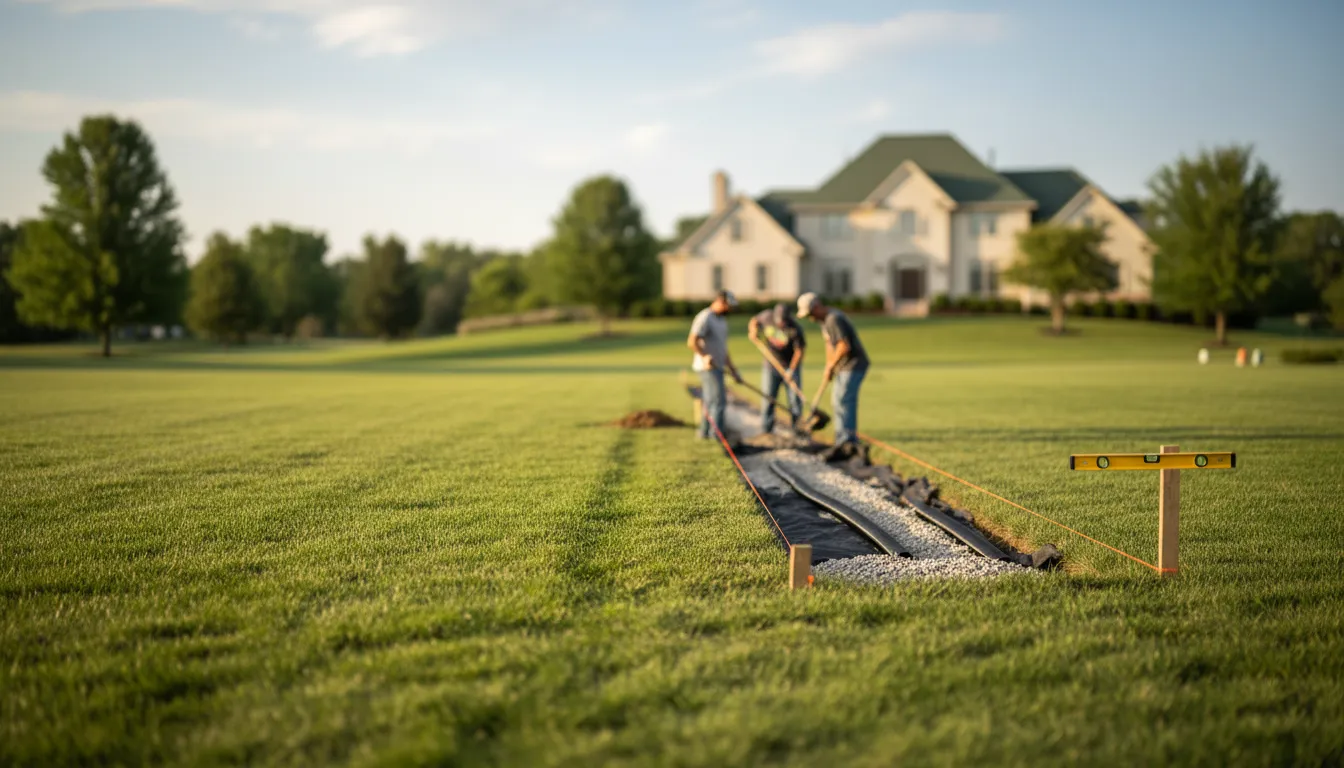
Find the Best Yard Drainage Contractors for Your Business
No obligation • Fast responses • Nationwide coverage

Why you can trust Landscape Atlas
Landscape Atlas is a leading United States resource for evaluating landscaping, lawn care, and outdoor service providers. Our team researches each category in depth, focusing on service quality, safety, and customer experience. Listings and rankings are based on independent criteria and user feedback, and companies cannot pay to influence our assessments or recommendations.
Search providers near you
Top Yard Drainage Contractors in New York, New York Ranked
A well-drained yard is the foundation of a healthy, usable outdoor space in New York City. Yard drainage and grading services focus on solving water management problems, from soggy lawns and flooded basements to erosion and runoff that can damage your property and the city's combined sewer system. Proper stormwater management protects your home's foundation, prevents mosquito breeding grounds, and contributes to cleaner local waterways. This guide will help you understand the common solutions available and how to find qualified local professionals to assess your specific situation and implement an effective plan.
Scenic View Landscaping & Design Specialist
213 Broad St, Keyport, NJ 07735
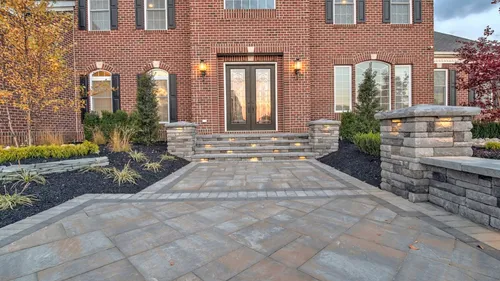
Scenic View Landscaping & Design Specialist is a landscaping and hardscaping company based near New York, NY, offering a wide range of services including sod installation, artificial turf, landscape lighting, yard drainage, tree services, and hardscaping features like pavers and retaining walls. They provide landscape design and commercial maintenance, with capabilities such as grading and drainage solutions. The company has received multiple service awards and maintains a strong reputation for detailed and attentive work. Scenic View Landscaping & Design Specialist serves the New York, NY area and surrounding communities.
Top Notch Tree & Excavating LLC
83 Grant St #2, Ramsey, NJ 07446
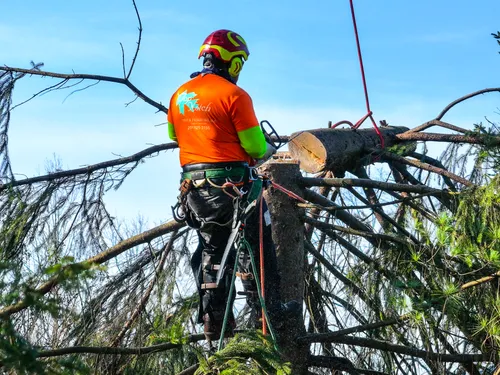
Top Notch Tree & Excavating LLC is a family-owned business serving New York, NY, and northern New Jersey with over 20 years of experience. They provide a wide range of services including tree removal, stump grinding, land clearing, excavation, grading, and storm damage response. The company owns and operates its own equipment, allowing for efficient and timely project completion. Their team is certified and trained in safety practices, handling projects from small tree trimming to large-scale site preparation.
Hillsdale Landscaping & Construction
27 Legion Pl, Hillsdale, NJ 07642
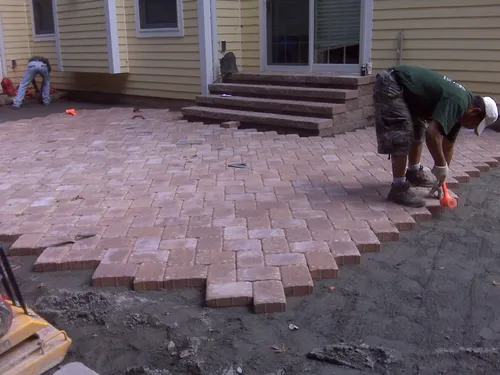
Hillsdale Landscaping & Construction is a landscaping and hardscaping company based near New York, NY. They provide landscape design, yard drainage solutions, grading services, and installation of paver walkways, patios, and driveways. Their services include water management to address issues like basement water and yard puddles, as well as plantings and garden design to enhance privacy and rejuvenate properties.
Zadlock Outdoor Services
37 McCaffery Rd, Manalapan Township, NJ 07726
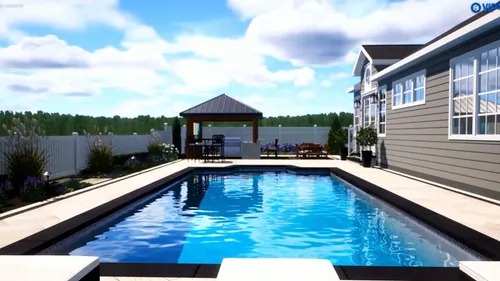
Zadlock Outdoor Services is a landscaping company based near New York, NY, offering a range of services including landscape design, tree removal, stump grinding, yard drainage, grading, and general landscaping. They provide customized landscape solutions tailored to clients' ideas and budgets, with services extending to commercial maintenance, plant health care, and outdoor living installations. Their team serves the New York area and nearby locations, focusing on efficient project management and clear communication. Zadlock Outdoor Services emphasizes upfront pricing and timely responses to inquiries, helping clients understand their projects fully.
Haughey Brothers Landscaping LLC
New York, NY
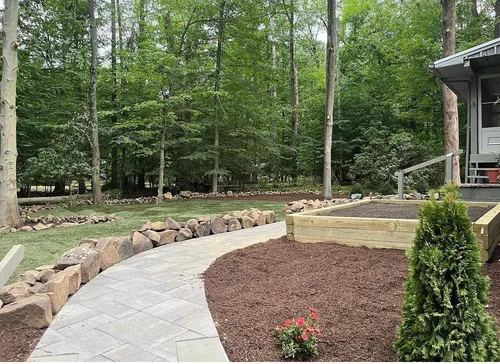
Haughey Brothers Landscaping LLC is a family-owned landscaping company serving New York, NY, and nearby areas in Union County, New Jersey. They specialize in creating luxury outdoor living spaces, offering services such as landscape design, custom hardscaping, lawn care, fence installation, sod and artificial turf installation, yard drainage, and landscape lighting. Their team focuses on transforming yards into functional and beautiful retreats with attention to detail and craftsmanship. The company has several years of experience and provides services for both residential and commercial properties. They also offer snow removal and winter maintenance services to support year-round outdoor care.
Managing stormwater is a critical concern for New York City homeowners and property managers. The city's dense infrastructure, combined sewer system, and frequent heavy rainfall events can turn a poorly drained yard into a recurring headache. Effective yard drainage is not just about convenience; it's about property protection and environmental stewardship. This page explores the various approaches to surface water management and site grading tailored for the unique challenges of NYC.
Why Proper Drainage is Essential in NYC
New York's landscape presents specific challenges. Impervious surfaces like concrete and asphalt prevent rainwater from soaking into the ground, leading to excessive runoff. This runoff can overwhelm local drainage, pool in low spots on your property, and even back up into basements through foundation cracks. Furthermore, NYC's Department of Environmental Protection (DEP) promotes stormwater capture and green infrastructure to reduce the burden on the sewer system and improve water quality in the harbor. Investing in good property grading and drainage solutions helps you comply with best practices, protect your investment, and contribute to a more resilient city.
Common Yard Drainage & Grading Solutions
Professionals in New York employ a range of techniques, often combining several for a comprehensive system. The right solution depends on your yard's slope, soil type, and the specific water problem.
Grading and Re-Sloping
The most fundamental solution is land grading. This involves strategically moving soil to create a gentle slope (typically a minimum 2% grade) away from your home's foundation toward a suitable discharge point, such as a street gutter or a designated rain garden area. Proper yard sloping ensures surface water flows away naturally, preventing pooling near your home's most vulnerable structures.
Green Infrastructure and Soak-Up Strategies
The DEP and EPA encourage green infrastructure that mimics natural water absorption. These are often the most sustainable and aesthetically pleasing options.
- Rain Gardens: A shallow, planted depression designed to collect and absorb runoff from roofs, driveways, or lawns. Filled with native, water-tolerant plants and engineered soil, they filter pollutants and allow water to percolate slowly into the ground.
- Rain Barrels and Cisterns: Simple systems attached to downspouts that capture roof runoff for later use in watering gardens. They reduce the volume of water entering your yard drainage system during a storm.
- Permeable Pavements: For driveways, patios, or walkways, materials like permeable pavers, porous concrete, or gravel grids allow water to seep through the surface into a stone reservoir below, reducing runoff.
Structural Drainage Systems
For more significant water issues or where grading alone is insufficient, subsurface systems are installed.
- French Drains: A trench filled with gravel and containing a perforated pipe that collects and redirects groundwater or surface water. It's a classic solution for channeling water away from problem areas to a safe discharge location.
- Dry Wells: Underground chambers filled with gravel or a storage crate that collect runoff from downspouts or drains and allow it to slowly infiltrate into the surrounding soil 1.
- Channel Drains: Surface-level drains, often covered with a grate, installed in driveways or patios to intercept surface flow before it becomes a problem.
Find the perfect yard drainage contractors for your needs
Get personalized recommendations and expert advice
Downspout and Runoff Management
A critical first step is often downspout disconnection from the sewer system. Redirecting downspout water into a rain barrel, swale (a shallow, grassy channel), or directly into a garden bed is a simple yet effective form of residential stormwater management. Ensuring downspouts extend at least 5-10 feet away from your foundation is a basic but vital part of any drainage plan.
The Professional Process: From Assessment to Installation
Tackling a drainage project effectively typically follows a structured process, especially for projects beyond simple downspout extensions.
- Site Assessment and Diagnosis: A qualified professional will inspect your property during or after a rain event to identify the source of water, its flow path, and where it pools. They will evaluate soil composition, check the existing property grading, and look for issues like foundation cracks.
- Design and Planning: Based on the assessment, a plan is developed. This may include a grading plan, the placement of French drains or dry wells, or the design of a rain garden. For complex projects or those requiring permits, a landscape architect or engineer may be involved. This stage must consider NYC's Unified Stormwater Rule and other local regulations.
- Preparation: This involves obtaining any necessary permits, marking underground utilities (always call 811 before digging), and sourcing materials.
- Installation: The physical work begins. This can involve:
- Excavation and Grading: Using machinery to move earth and establish the correct slope.
- Trenching: Digging trenches for drainage pipes or dry wells.
- Pipe and Fabric Installation: Laying perforated pipe, wrapping it in filter fabric to prevent clogging, and backfilling with gravel.
- Rain Garden Construction: Excavating the basin, creating an engineered soil mix, and planting selected natives.
- Paving: Installing the base layers and setting permeable pavers.
- Finishing and Testing: Final grading, planting, mulching, and sodding are completed. The system is then tested, often with a hose, to ensure water flows as designed.
Understanding Costs for NYC Projects
Costs for yard drainage and grading in New York vary widely based on the solution's complexity, property size, accessibility, and labor rates. Below are general price ranges, but obtaining multiple quotes for your specific project is essential.
- Rain Barrels: A relatively low-cost entry point, typically ranging from $100 to $300 plus installation.
- DIY/Small Rain Garden: For a homeowner-installed garden, costs are primarily for plants, soil amendments, and mulch, ranging from $200 to $1,000 2.
- French Drain (Simple): Installing a basic linear drain can cost between $500 and $2,000 or more, depending on length and depth 3.
- Permeable Pavers (Small Area): Material and installation for a patio or walkway can range from $1,000 to $4,000+.
- Professional Grading & Comprehensive Drainage Systems: For significant site regrading or multi-component systems involving excavation, piping, and catch basins, homeowners should expect costs from $2,000 to $10,000 or significantly higher for large, complex properties 4 5.
Key Local Regulations and Considerations
Before starting any major project, it's crucial to be aware of New York City and State regulations. The NYC DEP has specific rules regarding stormwater management, especially for new development or major re-grading 6 7. The New York State Stormwater Management Design Manual provides guidelines that professionals follow 8. Always check if your project requires a permit. Hiring a licensed and insured professional familiar with local codes is the best way to ensure your drainage improvement is effective, durable, and compliant 7 9.
Frequently asked questions
Sources
Footnotes
-
Urban Stormwater Runoff Capture and Management Resource ... - https://water.ca.gov/-/media/DWR-Website/Web-Pages/Programs/California-Water-Plan/Docs/RMS/2025/Urban-Stormwater-RMS---2025.pdf ↩
-
What You Can Do to Soak Up the Rain | US EPA - https://www.epa.gov/soakuptherain/what-you-can-do-soak-rain ↩
-
14 Ways To Manage Stormwater Runoff - Lawn Love - https://lawnlove.com/blog/manage-stormwater-runoff/ ↩
-
Drainage & Site Work New York - Mcgowan 1928 - https://mcgowan1928.com/drainage-site-work-new-york/ ↩
-
Homeowners' Guide to Landscaping for Water Runoff - https://www.lyngsogarden.com/community-resources/homeowners-guide-to-landscaping-for-water-runoff/ ↩
-
Climate Resiliency - DEP - NYC.gov - https://www.nyc.gov/site/dep/environment/climate-resiliency.page ↩
-
NYC Stormwater Management Program - https://www.nyc.gov/assets/dep/downloads/pdf/water/stormwater/ms4/nyc-swmp-plan-full.pdf ↩ ↩2
-
New York State Stormwater Managment Design Manual - https://cms4files1.revize.com/tonawandany/Engineer/Stormwater%20Management%20Design%20Manual%20-%20Jan%202015.pdf ↩
-
Stormwater Control Measures - http://dos.ny.gov/stormwater-control-measures ↩