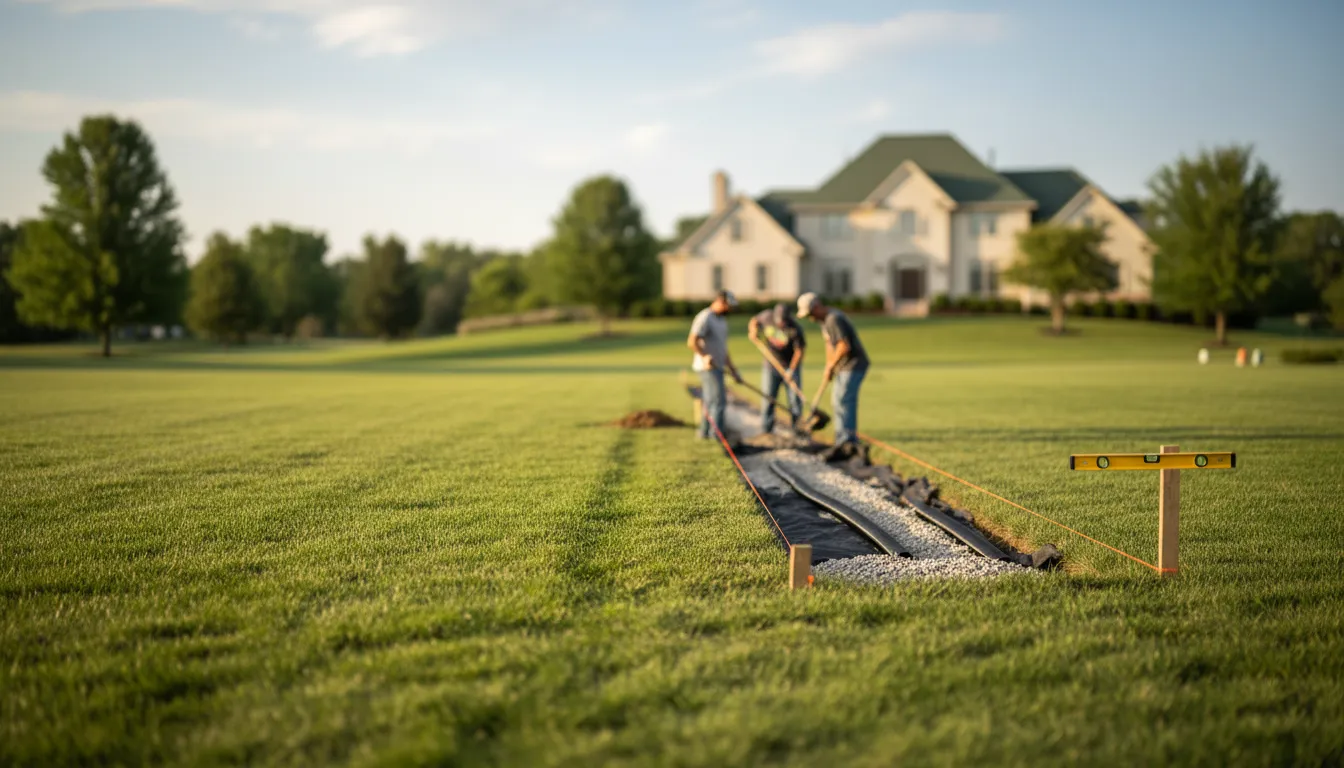
Find the Best Yard Drainage Contractors for Your Business
No obligation • Fast responses • Nationwide coverage

Why you can trust Landscape Atlas
Landscape Atlas is a leading United States resource for evaluating landscaping, lawn care, and outdoor service providers. Our team researches each category in depth, focusing on service quality, safety, and customer experience. Listings and rankings are based on independent criteria and user feedback, and companies cannot pay to influence our assessments or recommendations.
Search providers near you
Top Yard Drainage Contractors in Kent, Washington Ranked
A soggy lawn, a flooded patio, or water pooling against your foundation are more than just nuisances; they can lead to serious property damage, soil erosion, and unhealthy landscapes. Effective yard drainage and grading are essential services for managing the Pacific Northwest's ample rainfall, protecting your home's structural integrity, and creating a usable, beautiful outdoor space. This guide will help you understand the common solutions for water management in Kent, from simple regrading to complex drainage systems, so you can find the right local expertise to solve your property's unique challenges.
North East Landscaping Services
12259 155th Ave SE, Renton, WA 98059
North East Landscaping Services is a family-owned landscaping company with over 20 years of experience serving residential and commercial clients in Seattle, WA. They provide a comprehensive range of outdoor services including lawn care, fertilization, weed control, sod and artificial turf installation, fence and deck construction, landscape lighting, tree services, yard drainage, sprinkler installation and repair, as well as hardscaping like pavers and retaining walls. The company emphasizes quality workmanship and building lasting relationships with clients, handling projects of all sizes with care and honesty.
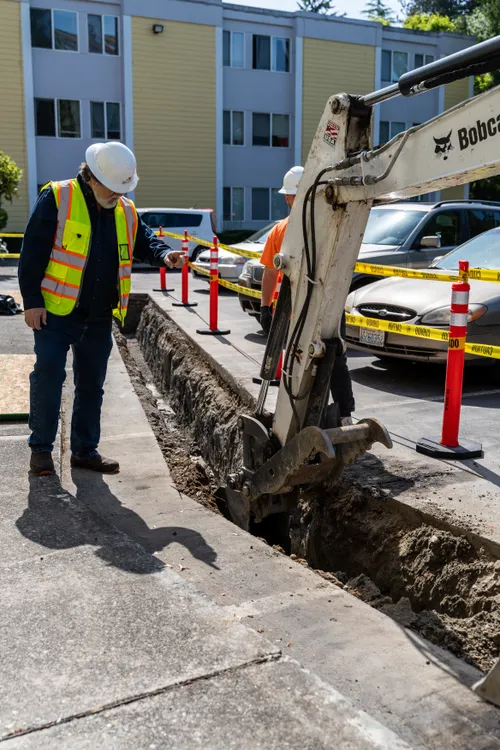
ACES FOUR Enterprises - Sewer Repair & Replacement
537 S Southern St, Seattle, WA 98108
ACES FOUR Enterprises - Sewer Repair & Replacement is a yard drainage and sewer contractor based in Seattle, WA. They provide a range of services including sewer repair, drain cleaning, water line installation, excavation, and demolition. Their capabilities include hydro jetting for sewer line cleaning and comprehensive drainage solutions such as foundation waterproofing and trench drain installation. With an in-house crew boasting 45 years of experience, they focus on careful planning, obtaining necessary permits, and maintaining clean job sites throughout their projects.
Badger Excavation
Seattle, WA
Badger Excavation is a Seattle, WA-based contractor offering excavation, land clearing, grading, and hardscaping services. Their work includes road building, driveways, site and foundation preparation, septic systems, brush removal, and installation of concrete landscape curbing and retaining walls. With 15 years of experience, the owner personally oversees quality and ensures clear communication throughout projects.
Precision Landscape LLC
16203 122nd Ave SE, Renton, WA 98058
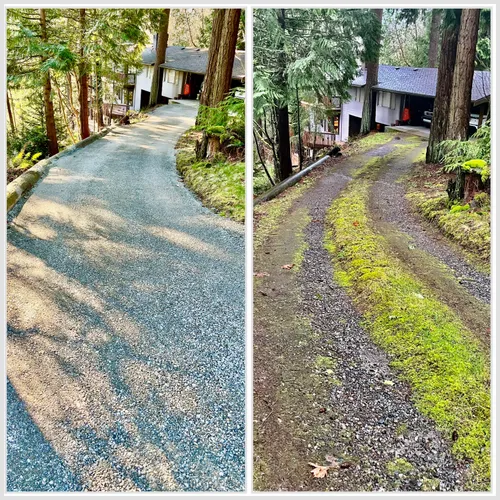
Precision Landscape LLC is a landscaping company based in Seattle, WA, offering a wide range of services including sod installation, artificial turf, tree removal, stump grinding, yard drainage, grading, land clearing, and brush removal. Serving residential and commercial clients throughout King County, they provide customized landscaping solutions supported by specialized equipment to improve efficiency and project outcomes. Their capabilities include comprehensive tree services and land clearing to prepare properties for various uses. With over 15 years of experience, Precision Landscape LLC is licensed, bonded, and insured to handle diverse landscaping needs.
Hone Landscape Company
31604 NE 40th St, Carnation, WA 98014
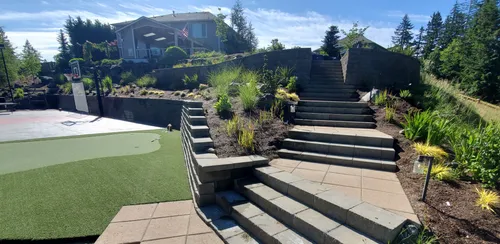
Hone Landscape Company is a landscaping and hardscaping contractor serving Seattle, WA, and nearby communities. They offer a full range of services including landscape design, sod and artificial turf installation, outdoor lighting, yard drainage solutions, and the construction of patios, retaining walls, and driveways. The company emphasizes a principles-based approach focused on clear communication and integrity. They have experience managing drainage problems and creating sustainable landscapes, ensuring projects are completed from design through installation with detailed estimates and ongoing customer updates.
Why Proper Drainage is Critical for Kent Homes
Kent's climate, with its wet winters and potential for heavy rain, makes managing stormwater a priority for every homeowner. Without a proper slope or drainage plan, water can saturate the soil around your foundation, leading to basement leaks, cracked walls, and costly repairs. In your yard, standing water kills grass, creates muddy bogs, and can even become a breeding ground for mosquitoes. Implementing the right surface and subsurface drainage solutions is an investment that preserves your property value and enhances your outdoor living experience.
Common Yard Drainage Problems and Signs You Need Help
How do you know if your property needs drainage work? Look for these telltale signs:
- Persistent Puddling: Water that stands for more than 24 hours after rain ends.
- Soil Erosion: Gullies or washed-away soil in planting beds or on slopes.
- Soggy Lawn: Spongy, constantly wet grass, often with moss or fungus.
- Water in the Basement or Crawl Space: Dampness, seepage, or actual flooding.
- Downspouts Dumping at the Foundation: Gutters that discharge water directly next to the house.
- Cracks in Foundation or Driveway: Can be exacerbated or caused by hydrostatic pressure from saturated soil.
If you're noticing any of these issues, it's time to consider professional yard grading or the installation of a dedicated drainage system.
Core Solutions for Water Management
Professional drainage contractors in Kent utilize a toolbox of techniques to redirect water. The right solution depends on your property's specific topography, soil type, and the source of the water.
Regrading and Swales
The first line of defense is often correcting the land's slope, or grade. The building code standard is a 6-inch drop in the first 10 feet of slope away from your foundation1. Regrading involves moving soil to create this positive slope. For broader areas, contractors may install swales-gentle, shallow ditches covered with grass or rock that channel surface water to a safe discharge point like a storm drain or wooded area. This is a fundamental form of surface drainage.
French Drains and Subsurface Systems
When water is pooling due to a high water table or percolating through the soil, a subsurface solution is needed. A French drain is a trench filled with gravel and a perforated pipe wrapped in fabric, which collects groundwater and redirects it away from problem areas. These are excellent for relieving hydrostatic pressure against foundations and drying out perpetually wet sections of a lawn.
Catch Basins and Trench Drains
For capturing large volumes of surface runoff from driveways, patios, or low spots, catch basins (also called drain inlets) are key. These are grates set into the ground connected to a solid pipe that carries the water underground to a discharge location. Trench drains are similar, using a long, linear grate ideal for the edge of a pavement or walkway.
Rain Gardens and Dry Creek Beds
For an eco-friendly and landscaped solution, many Kent homeowners opt for rain gardens or dry creek beds. A rain garden is a shallow, planted depression that collects runoff from roofs or driveways, allowing it to slowly infiltrate the soil while being filtered by native plants. A dry creek bed uses rock and stone to create a decorative channel that handles water flow during storms while adding visual interest to the landscape.
Downspout Management and Dry Wells
Often, the problem starts at the roof. Simply extending downspouts several feet away from the house can make a dramatic difference. For a more permanent solution, downspouts can be connected to solid pipe buried in a trench that leads to a dry well-an underground pit filled with gravel that disperses water safely into the subsoil.
Find the perfect yard drainage contractors for your needs
Get personalized recommendations and expert advice
The Professional Installation Process: What to Expect
Hiring a professional for drainage work ensures the system is designed correctly and built to last. Here's a typical process:
- Site Assessment & Diagnosis: A specialist will visit your property, often after or during rain, to identify all water sources, flow paths, and soil conditions. This is the most critical step for a successful solution.
- Design & Detailed Quote: Based on the assessment, the contractor will design a system, select appropriate materials (pipe type, gravel, basins), and provide you with a written, detailed estimate outlining the scope and cost.
- Permitting: While basic yard grading may not require a permit, significant drainage work, especially if tying into municipal storm systems, might. A reputable Kent contractor will know local codes and handle any necessary permits.
- Excavation: Trenches are dug for pipes or areas are reshaped for regrading and swales. This is the most labor-intensive phase.
- Installation: Pipes are laid, catch basins set, gravel and fabric are placed, and any landscaping features like rain gardens are constructed.
- Backfill & Restoration: The trenches are filled, compacted, and the surface is restored with topsoil, sod, seed, or decorative rock.
- Testing: The contractor should test the system with water to ensure everything flows as intended before considering the job complete.
Understanding Investment and Cost Factors
The cost for drainage and grading solutions in Kent varies significantly based on the complexity of the problem and the solution chosen. Prices can range from a few hundred dollars for minor grading adjustments to several thousand for integrated systems. Here's a general breakdown:
- Minor Grading/Soil Correction: $500 - $2,000 for creating proper slope away from a foundation or filling in a low spot 2.
- Basic French Drain: $1,000 - $3,000+, depending on length, depth, and accessibility3.
- Catch Basin System: $1,500 - $4,000+ for installing basins, connecting pipe, and proper discharge4 5.
- Rain Garden or Dry Creek Bed: $1,000 - $5,000+, with higher costs reflecting plant material, rock selection, and intricate landscaping6 7 8.
- Comprehensive Solutions: For whole-yard drainage involving multiple techniques, costs can easily reach $5,000 - $10,000 or more9 10.
The best way to get an accurate price is to obtain multiple quotes from established local professionals who can assess your specific situation.
Choosing the Right Provider in Kent
When looking for a drainage and grading expert, prioritize those with:
- Local Experience: Knowledge of Kent's soil types, climate, and common water tables is invaluable.
- Good References & Portfolio: Ask for examples of past projects similar to yours.
- Clear Communication: They should explain the problem, the proposed solution, and the cost in terms you understand.
- Proper Licensing & Insurance: Essential for protecting yourself and your property.
A tailored assessment from a local Kent-based landscape or drainage professional is the key first step, as every yard has unique characteristics that demand a custom approach.
Frequently asked questions
Sources
Footnotes
-
2021 International Residential Code (IRC) - R401.3 Drainage. - https://codes.iccsafe.org/s/IRC2021P3/chapter-4-foundations/IRC2021P3-Pt03-Ch04-SecR401.3 ↩
-
Control Heavy Runoff - Solving Drainage and Erosion Problems - https://www.fairfaxcounty.gov/soil-water-conservation/drainage-problem-control-runoff ↩
-
Yard Grading 101: Everything you need to know - This Old House - https://www.thisoldhouse.com/lawns/yard-grading ↩
-
13 Ways to Keep Your Yard Dry, and a Guide to Choosing the Right Type ... - https://blog.landscapedrains.com/types-of-yard-drains ↩
-
Solving Yard Drainage Problems: A Homeowners Guide - JD ... - https://www.jdconstruction-ct.com/blog/comprehensive-drainage-solutions/solving-yard-drainage-problems ↩
-
7 Ways to Improve Drainage in Your Yard - LawnStarter - https://www.lawnstarter.com/blog/landscaping/improve-drainage-in-your-yard/ ↩
-
8 Ways to Stop Yard Flooding This Spring After Heavy Rain - PuroClean - https://www.puroclean.com/blog/yard-flooding/ ↩
-
How to Prevent Waterlogging in Your Garden: Creative Drainage Solutions - https://www.haywood-landscapes.co.uk/haywood-blog/how-to-prevent-waterlogging-in-your-garden-creative-drainage-solutions ↩
-
Landscape drainage | Vital Landscapes | Kent, WA - https://www.vitallandscapes.net/landscape-drainage-installation/ ↩
-
11 Tips to Handle Stormwater Drainage on Slopes - Valor - https://www.valorenv.com/11-tips-to-handle-stormwater-drainage-on-slopes/ ↩