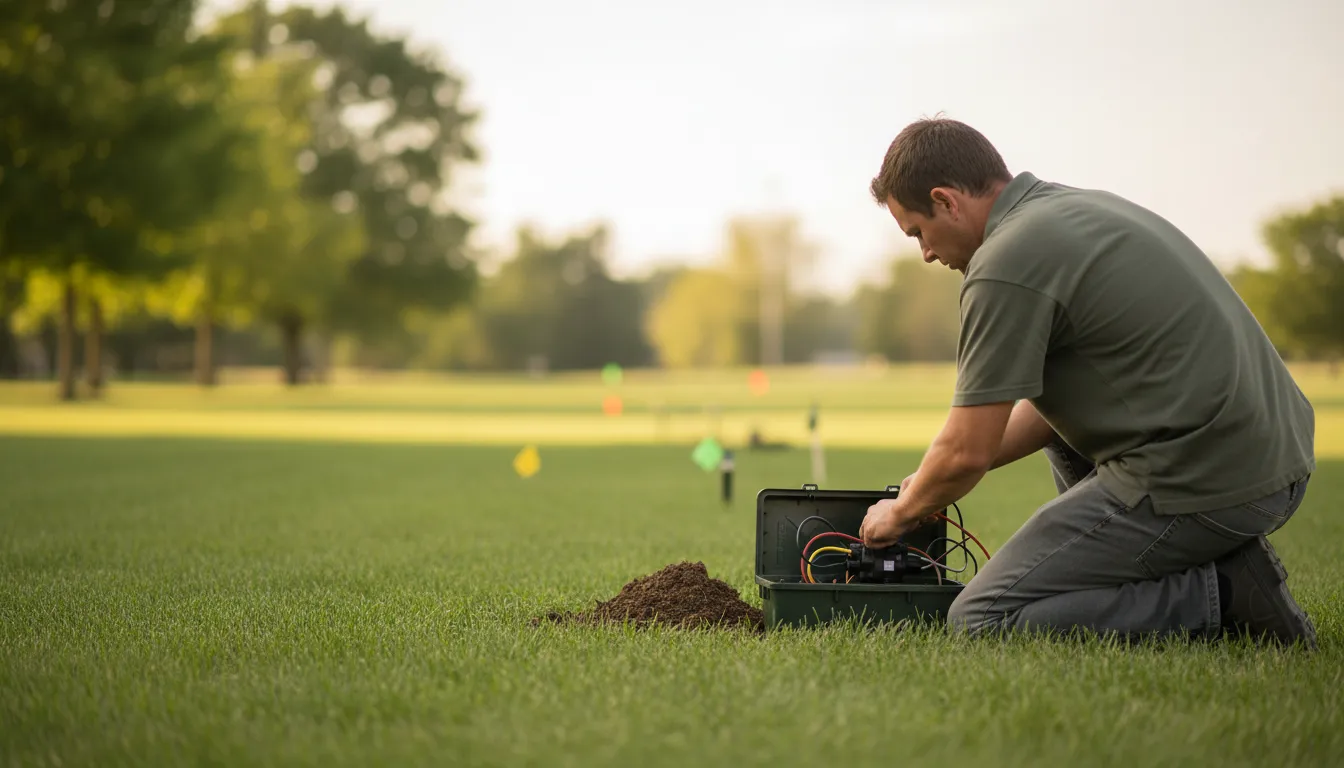
Find the Best Sprinkler & Irrigation Companies for Your Business
No obligation • Fast responses • Nationwide coverage

Why you can trust Landscape Atlas
Landscape Atlas is a leading United States resource for evaluating landscaping, lawn care, and outdoor service providers. Our team researches each category in depth, focusing on service quality, safety, and customer experience. Listings and rankings are based on independent criteria and user feedback, and companies cannot pay to influence our assessments or recommendations.
Search providers near you
Top Sprinkler & Irrigation Companies in Dallas, Texas Ranked
A well-designed sprinkler and irrigation system is the cornerstone of a healthy, vibrant landscape in Dallas. It ensures your lawn, garden, and foundation plantings receive the precise amount of water they need to thrive in our challenging climate, conserving a precious resource while protecting your property investment. This guide will help you understand the components, best practices, and local considerations for efficient landscape watering, connecting you with the knowledge to find qualified professionals for your project.
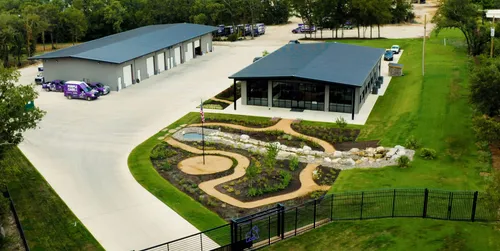
Purple Care Keller Lawn Care & Pest Control
1722 Keller Pkwy, Keller, TX 76248
Purple Care Keller Lawn Care & Pest Control has been serving residential and commercial properties in Arlington, TX since 1993. They offer lawn care, pest control, and irrigation services tailored to each property's needs. Their capabilities include proprietary lawn fertilization and weed control formulas, pest exclusion and remediation, and premium irrigation system installation and repair. The company partners with Texas A&M University to implement sustainable agricultural technologies and focuses on eco-friendly solutions to maintain healthy lawns and pest-free environments.
Casas Irrigation Drainage & More
110A Rose Ln Suite 204, Frisco, TX 75036
Casas Irrigation Drainage & More provides drainage, irrigation, and landscape lighting services in Dallas, TX. They offer sprinkler installation, repair, and maintenance, along with grading and yard drainage solutions tailored to local environmental needs. Their expertise includes fixing broken sprinkler heads, underground leaks, low water pressure, and uneven coverage to maintain healthy lawns and efficient water use. The company serves the Dallas area with a focus on customized outdoor lighting and irrigation systems designed to enhance both function and appearance.

Landscape Express
2801 Justin Rd Building 100, Flower Mound, TX 75028
Landscape Express is a full-service landscaping company based near Fort Worth, TX. They offer a wide range of services including lawn mowing, fence installation, landscape lighting, tree care, sprinkler system installation and repair, hardscaping, and landscape design. The company serves residential, commercial, property management, and HOA clients, providing custom designs and installations for outdoor living spaces, retaining walls, walkways, and irrigation systems. Landscape Express has been operating for over five years and is a second-generation family business, emphasizing community ties and customer satisfaction.
Sprinkler Repair Ledgers
2323 Fenwick Dr, Dallas, TX 75228
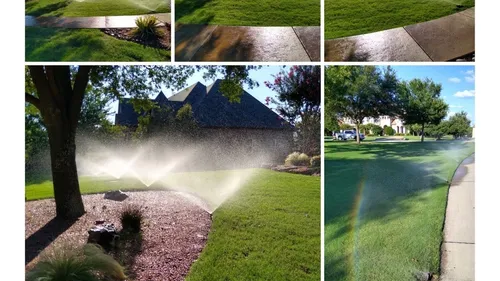
Sprinkler Repair Ledgers is a family-owned business in Dallas, TX, specializing in sprinkler installation, repair, and irrigation services. They provide efficient service including sprinkler head replacement and system updates, ensuring sprinkler systems operate effectively. The company is known for clear communication and practical maintenance advice without upselling.

Hernandez Lawn Service
Plano, TX
Hernandez Lawn Service is a landscaping contractor based in Plano, TX, offering a wide range of services for residential and commercial properties. Their expertise includes landscape design, flower bed installation and maintenance, stonework such as patios and retaining walls, irrigation system design and installation, and land clearing to prepare sites for new landscaping projects. The company emphasizes customized solutions to meet client preferences and property needs, ensuring efficient water use and durable hardscape features. Hernandez Lawn Service also serves several surrounding areas, including Dallas, Frisco, and McKinney, TX.
Understanding Your Dallas Irrigation System
An efficient irrigation system is more than just sprinkler heads popping up. It's a carefully engineered network designed to deliver water uniformly and responsibly. In Dallas, a typical automatic sprinkler system is divided into zones, each controlled by a valve that opens based on a schedule from a central controller. This zoning allows you to tailor watering to different areas-like thirsty turf versus drought-tolerant shrub beds-maximizing efficiency.
The core components include:
- Backflow Preventer: A critical, legally required device that stops irrigation water from flowing backward into your home's drinking water supply, protecting public health.
- Controller/Timer: The "brain" of the system. Modern smart controllers can connect to Wi-Fi and automatically adjust watering schedules based on local weather data, saving significant water and money.
- Piping & Valves: A network of PVC pipes delivers water from the main line to each zone, controlled by electric valves.
- Sprinkler Heads & Emitters: These are the delivery points. Rotary or spray heads are used for lawns, while drip irrigation-a network of tubing with small emitters-is ideal for flower beds, gardens, and foundation plantings, applying water slowly and directly to the root zone with minimal waste.
The Importance of Professional Design and Zoning
A DIY approach to irrigation often leads to dry spots, runoff, and high water bills. Professional design ensures "head-to-head coverage," meaning the spray from one sprinkler head reaches the adjacent head, providing uniform distribution across your lawn. Proper zoning groups plants with similar water needs and sun exposure together. For instance, a sunny turf zone will run more frequently than a shaded bed of native plants. This precise control is the first step toward a water-wise landscape and is essential for navigating Dallas's clay soils and summer heat.
Smart Watering Practices for the North Texas Climate
Dallas's weather demands a smart watering strategy. The intense summer sun and heat can evaporate up to 50% of water applied during the day. The golden rule is to water before 10 a.m. or after 6 p.m. to minimize this loss and allow foliage to dry, reducing disease risk 1 2.
For our dense, clay-rich soils, the "cycle and soak" method is highly recommended. Instead of one long watering session that causes runoff, you program your system to run a zone for a short period (e.g., 5-15 minutes), then pause for an hour or two to let the water soak in deeply. The cycle then repeats. This method promotes deeper root growth and prevents water waste 3.
Your watering frequency should change with the seasons. Lawns may need watering 2-3 times per week in peak summer but only once every couple of weeks in the cooler spring and fall. Always factor in recent rainfall; a simple rain sensor that shuts off your system during a storm is a wise investment.
Find the perfect sprinkler & irrigation companies for your needs
Get personalized recommendations and expert advice
Installation and Maintenance Insights
Investing in a new lawn sprinkler system involves several factors that influence cost, including property size, number of zones, type of heads (standard vs. high-efficiency), and the complexity of the layout. For a typical Dallas home, professional installation can range significantly, often cited between $3,000 and $7,000+, with simpler systems starting around $2,000 and expansive or complex projects exceeding $8,000 4 5.
Regular maintenance is non-negotiable. A seasonal check-up by a professional ($75-$150) can identify leaks, clogged heads, or misaligned spray patterns. Addressing a leaky valve or broken head promptly ($100-$500+) prevents water waste and damage to your landscape 6 7. Winterization is also crucial to prevent freezing pipes from bursting during our occasional hard freezes.
Navigating Texas Regulations and Efficiency
Texas takes water conservation and safety seriously. State law requires that the design, installation, maintenance, and alteration of any irrigation system be performed by a licensed irrigator. They are trained in hydraulics, design, and local codes 8. Furthermore, the annual testing of your backflow prevention assembly by a certified tester is often mandated by your local water municipality to ensure continued drinking water safety.
Embracing efficiency is both an environmental and economic win. The North Texas Municipal Water District and other authorities promote water-efficient landscaping principles, which include using native and adapted plants, proper mulching, and integrating smart irrigation technology. Resources like WaterMyYard.org can provide customized watering schedules based on local weather station data, taking the guesswork out of irrigation.
Choosing the Right System for Your Landscape
Not every area of your yard needs the same solution. A hybrid system is often most effective:
- Rotor/Spray Systems: Best for large, open turf areas. Rotors are ideal for bigger spaces, while spray heads work well for smaller, rectangular lawns.
- Drip Irrigation: The champion of efficiency for planted beds, vegetable gardens, trees, and shrubs. It applies water slowly at the soil surface, drastically reducing evaporation and runoff while promoting plant health 9.
- Subsurface Drip Irrigation (SDI): A specialized drip system buried under turf, which virtually eliminates evaporation and is excellent for water conservation, though it requires professional installation and maintenance.
Frequently asked questions
Sources
Footnotes
-
Fundamentals of Efficient Irrigation in Dallas Fort Worth - https://leesprinklerdrainage.com/fundamentals-of-efficient-irrigation-irrigation-systems-dallas-fort-worth/ ↩
-
Water Efficient Irrigation | North Texas Municipal Water District, TX - https://ntmwd.com/504/Water-Efficient-Irrigation ↩
-
How to Water Efficiently in Central Texas - https://travis-tx.tamu.edu/about-2/horticulture/basic-landscape-design/waterwise-landscaping/how-to-water-efficiently-in-central-texas/ ↩
-
Professional Sprinkler System Installation: 7 Top Benefits 2025 - https://randalllandscaping.com/professional-sprinkler-system-installation/ ↩
-
Sprinkler System Installation - The Lawn Firm - https://thelawnfirm.com/sprinkler-system-installation/ ↩
-
How Much Does a Sprinkler System Installation Cost in DFW ... - https://onpointdfw.com/how-much-does-a-sprinkler-system-installation-cost-in-dfw-in-2025/ ↩
-
Irrigation Systems: Maintenance Guide for North Texas Weather - https://green-golawns.com/blog/irrigation-systems-maintenance-guide-for-north-texas-weather/ ↩
-
Landscape Irrigation. A "Take Care of Texas" Guide (GI-409) - https://www.ugra.org/assets/pdfs/TCOTirrigationGI-409.pdf ↩
-
Irrigation Systems - Lawns of Dallas - https://lawnsofdallas.com/irrigation-systems ↩