Find the Best Sprinkler & Irrigation Companies for Your Business
No obligation • Fast responses • Nationwide coverage

Why you can trust Landscape Atlas
Landscape Atlas is a leading United States resource for evaluating landscaping, lawn care, and outdoor service providers. Our team researches each category in depth, focusing on service quality, safety, and customer experience. Listings and rankings are based on independent criteria and user feedback, and companies cannot pay to influence our assessments or recommendations.
Search providers near you
Top Sprinkler & Irrigation Companies in Leander, Texas Ranked
A well-designed sprinkler and irrigation system is the cornerstone of a healthy, vibrant landscape in Leander. It ensures your lawn, garden beds, and trees receive the precise amount of water they need, conserving a precious resource while promoting deep root growth and resilience against the Texas heat. This guide will help you understand the components, design principles, and maintenance of a modern irrigation system, empowering you to make informed decisions for your property.
Sprinkler Repair Pros
Austin, TX
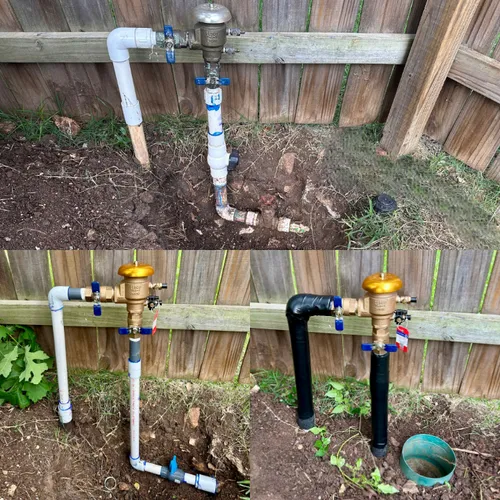
Sprinkler Repair Pros is a licensed irrigation and sprinkler service provider based in Austin, TX, serving the city and Central Texas communities including Round Rock. They offer full-service sprinkler repair, irrigation installation, system upgrades, and outdoor improvements such as sod installation and hardscaping. The team specializes in repairing leaks, broken pipes, and valves, as well as installing commercial-grade irrigation systems designed for water efficiency. Established in 2008, they bring over 14 years of experience and focus on smart water-saving solutions and flexible scheduling to meet customer needs.

Southern Love Landscaping & Design
111 Congress Ave. Suite 400, Austin, TX 78701
Southern Love Landscaping & Design is a landscaping and outdoor living company based in Austin, TX. They offer a wide range of services including custom landscaping, fire pits, patios, sod installation, irrigation installation and repair, fence installation, retaining walls, and landscape lighting. The company serves Austin and nearby areas such as Cedar Park and Round Rock, providing tailored outdoor solutions that enhance both residential and commercial properties. Their expertise includes building durable retaining walls and designing functional irrigation systems to support healthy landscapes. Southern Love Landscaping & Design emphasizes personalized service and craftsmanship to meet client needs.

Alvaro’s Landscaping and Tree service
Austin, TX
Alvaro's Landscaping and Tree Service is a landscaping and tree care company based in Austin, TX. With over 15 years of experience, they offer a wide range of services including landscaping design, tree removal, stump grinding, lawn care, sod installation, sprinkler repair, and fence installation. Their team works with both residential and commercial properties, providing customized solutions to meet client needs. They are fully licensed and insured, prioritizing safety and customer satisfaction throughout each project.

American Irrigation Repair
3560 E University Ave, Georgetown, TX 78626
American Irrigation Repair offers sprinkler installation, repair, and irrigation services in Austin, TX. They handle a range of irrigation system needs including valve replacements, sprinkler head repairs, and system tune-ups. The company is known for using quality materials and providing clear explanations of their work. With over 11 years of experience serving the Austin area, they maintain ongoing service contracts and perform semi-annual inspections to ensure systems operate efficiently. Their team is equipped to address complex issues such as double-check valve repairs and city water pressure challenges.

Cutters Landscaping
9600 Great Hills Trl Suite 150W, Austin, TX 78759
Cutters Landscaping is a landscaping company based in Austin, TX, offering services to both residential and commercial clients. Their expertise includes landscape design, hardscaping, decking, outdoor living spaces, and irrigation installation and repair. They focus on creating personalized outdoor environments that blend softscape and hardscape elements to enhance property aesthetics and functionality. The company emphasizes clear project coordination and client collaboration to meet individual preferences and budgets. Cutters Landscaping is known for its comprehensive approach to landscaping and irrigation services in the Austin area.
How a Modern Irrigation System Works
At its core, an automatic sprinkler system is a network of components working together to deliver water efficiently. The process begins with the controller, a computerized timer that sends signals to open and close valves according to a programmed schedule. Your property is divided into zones, which are areas with similar watering needs, such as sunny turf, shaded grass, or flower beds. Each zone is controlled by an electric valve that regulates water flow. When a zone is activated, water travels through underground pipes to the sprinkler heads, which distribute it across the landscape. Modern systems often incorporate smart technology, using local weather data and soil moisture sensors to automatically adjust watering, preventing waste from rain or over-saturation.
Key Components of Your System
Understanding the parts of your lawn watering system demystifies its operation and helps with troubleshooting.
- Controller/Timer: The brain of the operation. Basic models run on simple schedules, while smart controllers can be managed via smartphone and adjust watering based on hyper-local conditions 1.
- Valves: These are usually housed in valve boxes buried in the ground. They act as gates, opening to allow water to a specific zone when signaled by the controller.
- Sprinkler Heads: The delivery endpoints. They come in several types, each for a specific purpose:
- Rotary/Rotor Heads: Ideal for large, open lawn areas. They rotate a stream of water in a full or partial circle, covering a wide radius.
- Spray Heads: Used for smaller, more confined areas like narrow side yards or specific garden sections. They emit a fixed fan-shaped spray pattern.
- Drip Irrigation: This is a highly efficient method for gardens, shrubs, and trees. It uses emitters to deliver water slowly and directly to the root zone, minimizing evaporation and runoff 2.
- Sensors & Smart Features: Add-ons like rain sensors, freeze sensors, and soil moisture probes can override scheduled watering to prevent unnecessary irrigation, saving water and money 3.
Designing for Efficiency and Even Coverage
A successful irrigation installation in Leander starts with a thoughtful design. The goal is head-to-head coverage, meaning the spray from one sprinkler head reaches the adjacent head 4. This ensures every square foot receives uniform water distribution without dry spots or wasteful overspray onto hardscapes. Zones must be carefully planned according to sun exposure, soil type, and plant material; for example, turfgrass typically needs more frequent watering than established native planting beds. A critical local consideration is Leander's varied water pressure. A professional design will account for this, potentially using pressure-regulating valves to ensure each head operates at its optimal pressure for a consistent spray pattern and to prevent misting.
Optimal Watering Practices for Leander Lawns
Setting your system correctly is as important as its installation. Following these guidelines can lead to a healthier landscape and lower water bills.
- Frequency: During the peak summer heat (May-September), aim to water established lawns 3 to 4 times per week. New sod or seed will require more frequent, shorter cycles.
- Time of Day: Always water in the early morning, ideally between 4:00 AM and 6:00 AM. This minimizes water loss to evaporation from sun and wind and allows grass blades to dry before nightfall, reducing the risk of fungal disease.
- Duration (Cycle and Soak): Run times vary by head type. Rotor zones often need 20-30 minutes, while spray zones may only need 10-15 minutes 5. For sloped or clay-heavy soils common in the area, using multiple shorter cycles (cycle and soak) allows water to penetrate without running off.
- Seasonal Adjustment: This is crucial. Reduce watering frequency significantly in the spring and fall. In the winter, most lawns go dormant and require little to no irrigation; the focus should shift to occasional deep watering for trees and shrubs 6 7.
Find the perfect sprinkler & irrigation companies for your needs
Get personalized recommendations and expert advice
Understanding Installation and Service Costs
Investing in an irrigation system involves upfront costs that vary based on your property's size and complexity. For a standard residential installation with 4 to 6 zones, homeowners can expect a range of approximately $2,800 to $3,500 or more 8. Larger properties or those with complex landscaping, multiple zones, or specialty drip irrigation for extensive gardens can see costs rise to $4,200 and above 8. Adding a smart controller with weather-based technology can increase the project cost by $200 to $500 8.
Maintenance and repairs are ongoing considerations. Annual system check-ups and adjustments typically cost between $150 and $300 9. Repair costs depend on the issue: simple fixes like a broken spray head or adjusting a controller may range from $80 to $320, while repairs requiring excavation to access a broken pipe or valve can cost between $100 and $490 10 9.
Maintaining Your System Year-Round
Proactive maintenance protects your investment and ensures efficiency. Each spring, perform a full system audit: run each zone to check for broken, clogged, or misaligned heads; ensure controllers and sensors are functioning; and inspect valve boxes for debris. Before the first freeze, a professional winterization is essential. This involves blowing compressed air through the lines to remove all water, preventing frozen pipes from cracking and causing costly damage 11. Regularly monitor your water bill for unexpected spikes, which can indicate a leak in a zone valve or a broken pipe underground.
Frequently asked questions
Sources
Footnotes
-
Sprinkler System Installation in Leander, TX - https://fixmyheads.com/service-area/leander-tx/sprinkler-system-installation/ ↩
-
Ultimate Guide to Sprinkler and Irrigation Systems - https://heartlandsprinklers.com/green-tips/ultimate-guide-to-sprinkler-and-irrigation-systems/ ↩
-
Lawn Sprinkler & Irrigation System Installation In Leander, Texas - https://www.a-zlandscape.com/lawn-sprinkler-irrigation-installations/ ↩
-
Easy, step-by-step, underground sprinkler system layout guide - https://images.thdstatic.com/catalog/pdfImages/a9/a9564496-8fb7-4141-8758-5f660a7a9310.pdf ↩
-
Leander TX Sprinkler Installation - https://sprinklermedics.com/leander/sprinkler-installation/ ↩
-
Irrigation Company Leander, TX - Heartland Sprinklers - https://heartlandsprinklers.com/service-area/irrigation-company-leander/ ↩
-
How Does A Lawn Sprinkler System Work? - https://ryanlawn.com/blog/how-does-a-lawn-sprinkler-system-work/ ↩
-
How much does it cost to install lawn irrigation system? 2025 - https://cutterslandscape.com/how-much-does-it-cost-to-install-lawn-irritagation-system/ ↩ ↩2 ↩3
-
Sprinkler Repair and Installation Pricing | San Antonio AAIS - https://sanantoniosprinklers.com/sprinkler-repair-and-installation-pricing/ ↩ ↩2
-
How Much Does Sprinkler Repair Cost in 2026? - LawnStarter - https://www.lawnstarter.com/blog/cost/sprinkler-repair-price/ ↩
-
Leander - Andy's Sprinkler, Drainage & Lighting - https://sprinklerdrainage.com/location/austin/leander-sprinkler-drainage-and-lighting/ ↩