Find the Best Yard Drainage Contractors for Your Business
No obligation • Fast responses • Nationwide coverage

Why you can trust Landscape Atlas
Landscape Atlas is a leading United States resource for evaluating landscaping, lawn care, and outdoor service providers. Our team researches each category in depth, focusing on service quality, safety, and customer experience. Listings and rankings are based on independent criteria and user feedback, and companies cannot pay to influence our assessments or recommendations.
Search providers near you
Top Yard Drainage Contractors in Avondale, Arizona Ranked
Managing water flow on your property is a critical aspect of homeownership in Avondale. The city's intense monsoon rains can quickly overwhelm a yard, leading to standing water, soil erosion, and potential damage to your home's foundation. Proper yard drainage and grading involves reshaping the land and installing systems to control surface and subsurface water, directing it safely away from structures. This guide will help you understand the common solutions for water management in Avondale, from simple grading to complex drain installations, so you can make informed decisions about protecting your property.

fixthedrip.com
26840 N Black Cyn Hwy, Phoenix, AZ 85083
fixthedrip.com is a landscaping and irrigation company based in Phoenix, AZ, serving both commercial and residential properties. They specialize in irrigation system installation and repair, yard drainage, grading, and planting services. The company offers smart Wi-Fi controllers to automate irrigation and provides durable drip tubing options designed to last a lifetime. Established in 1973, fixthedrip.com brings nearly 50 years of experience to Arizona landscapes, with licensed, bonded, and insured technicians. Their repairs come with a one-year warranty, and new installations carry a three-year warranty.
Green Forever Arizona
1507 S Country Club Dr, Mesa, AZ 85210
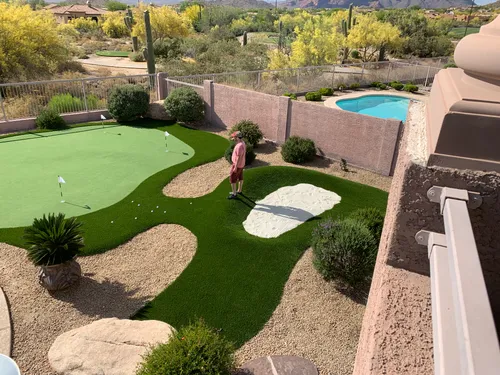
Green Forever Arizona is a landscaping company based in Phoenix, AZ, specializing in artificial turf installation, yard drainage and grading, landscaping, and hardscaping services. They offer residential synthetic grass, pet-friendly turf, custom putting greens, paver installations, and durable patio cover structures designed for Arizona's climate. Their turf installation process includes site preparation with grading and stone base layers to ensure proper drainage and a natural look. Green Forever Arizona focuses on creating low-maintenance, eco-friendly outdoor spaces that combine comfort and style.
GOAL Landscaping Peoria
8844 W Cinnabar Ave, Peoria, AZ 85345
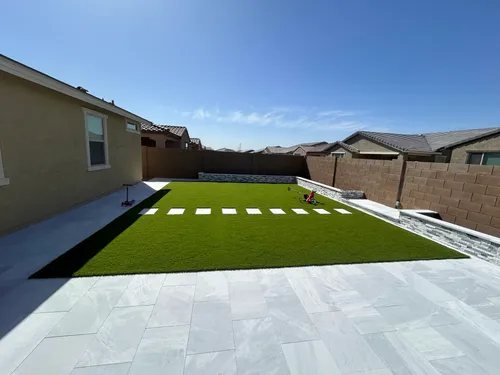
GOAL Landscaping Peoria is a landscaping company based in Phoenix, AZ, specializing in custom outdoor design and installation. They offer a wide range of services including artificial turf installation, landscape lighting, yard drainage, sprinkler systems, hardscaping with pavers and retaining walls, and outdoor kitchens. Their team focuses on creating functional and beautiful outdoor spaces tailored to client needs, using high-quality materials and expert craftsmanship. GOAL Landscaping serves multiple areas including Phoenix and surrounding cities, providing comprehensive landscaping solutions such as irrigation systems and fire features.
Curb Appeal Arizona
Mesa, AZ
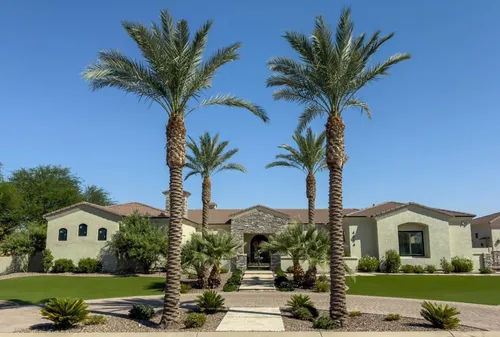
Curb Appeal Arizona provides residential and commercial landscaping services in Mesa, AZ, along with nearby cities such as Tempe, Chandler, and Scottsdale. They offer a range of services including lawn mowing, fertilization, weed control, sod installation, artificial turf, landscape design, tree removal, stump grinding, yard drainage, grading, and sprinkler installation and repair. The company focuses on enhancing property appearance through tailored maintenance and design solutions. Their team is noted for thorough communication and attention to detail, ensuring proper watering and turf care to maintain healthy, attractive outdoor spaces.
Prime Landscape Design
Gilbert, AZ
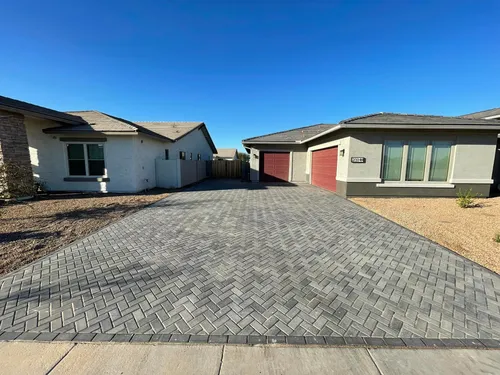
Prime Landscape Design is a landscaping company based in Gilbert, AZ, offering a range of outdoor services including artificial grass installation, paver patios, custom pergolas, outdoor kitchens, landscape lighting, yard drainage, and land clearing. They emphasize proper base preparation, drainage solutions, and use of professional-grade materials suited for Arizona's climate. The company owns its equipment, which helps maintain quality control and efficient project completion. Prime Landscape Design is a licensed and insured contractor that stands behind its work with warranties and local service availability.
Understanding Avondale's Drainage Challenges
Avondale's climate presents a unique set of challenges for property owners. The region experiences long periods of dry weather punctuated by intense, short-duration monsoon storms from July through September. This rainfall pattern means the ground can become hard and impermeable, causing heavy runoff that traditional lawns and flat landscapes cannot absorb. Without proper planning, this runoff can pool in low spots, flood patios, or, most concerningly, seep toward your home's slab.
The city manages this public runoff through a Municipal Separate Storm Sewer System (MS4), which is designed to move water from streets and public areas directly to retention basins or washes. However, it is the homeowner's responsibility to manage water on their private property. Avondale's ordinances, detailed in Chapter 8 of the city code, address drainage and flood control to ensure private improvements don't negatively impact neighboring properties or the public system. This makes understanding effective water management strategies not just a matter of curb appeal, but of regulatory compliance and community responsibility.
Core Principles of Effective Water Management
Successful landscape drainage in Avondale revolves around a few key principles: capturing, conveying, and containing or infiltrating water.
- Positive Slope (Grading): The first and most fundamental principle is ensuring the ground slopes away from your home's foundation. A minimum slope of 2% (a 2-inch drop over 8 feet) is often recommended to direct surface water away from the structure.
- Interception: This involves placing barriers or collection points in the path of flowing water. A berm (a small, landscaped mound) can divert water around a patio, while a channel drain across a driveway can intercept sheet flow.
- Subsurface Drainage: When water saturates the soil, surface grading isn't enough. Subsurface solutions like French drains collect this groundwater through a perforated pipe buried in a gravel-filled trench, safely redirecting it.
- Infiltration: Instead of just moving water to another location, the goal in sustainable landscaping is to allow it to soak into the ground. This is where features like dry wells and rain gardens become valuable, especially in a desert environment where replenishing groundwater is beneficial.
Common Drainage & Grading Solutions for Avondale Homes
Based on local soil conditions and typical lot layouts, several solutions are particularly well-suited for properties in the area.
Regrading and Earth Shaping
Often the first line of defense, regrading involves moving soil to create the proper slope away from your home and toward a safe discharge point. For larger properties or significant corrections, this may require small machinery. Swales-broad, shallow, vegetated channels-are a natural-looking form of grading used to guide water across a landscape. They are often paired with berms to create a gentle routing system that can be integrated into your overall landscape design.
French Drain Systems
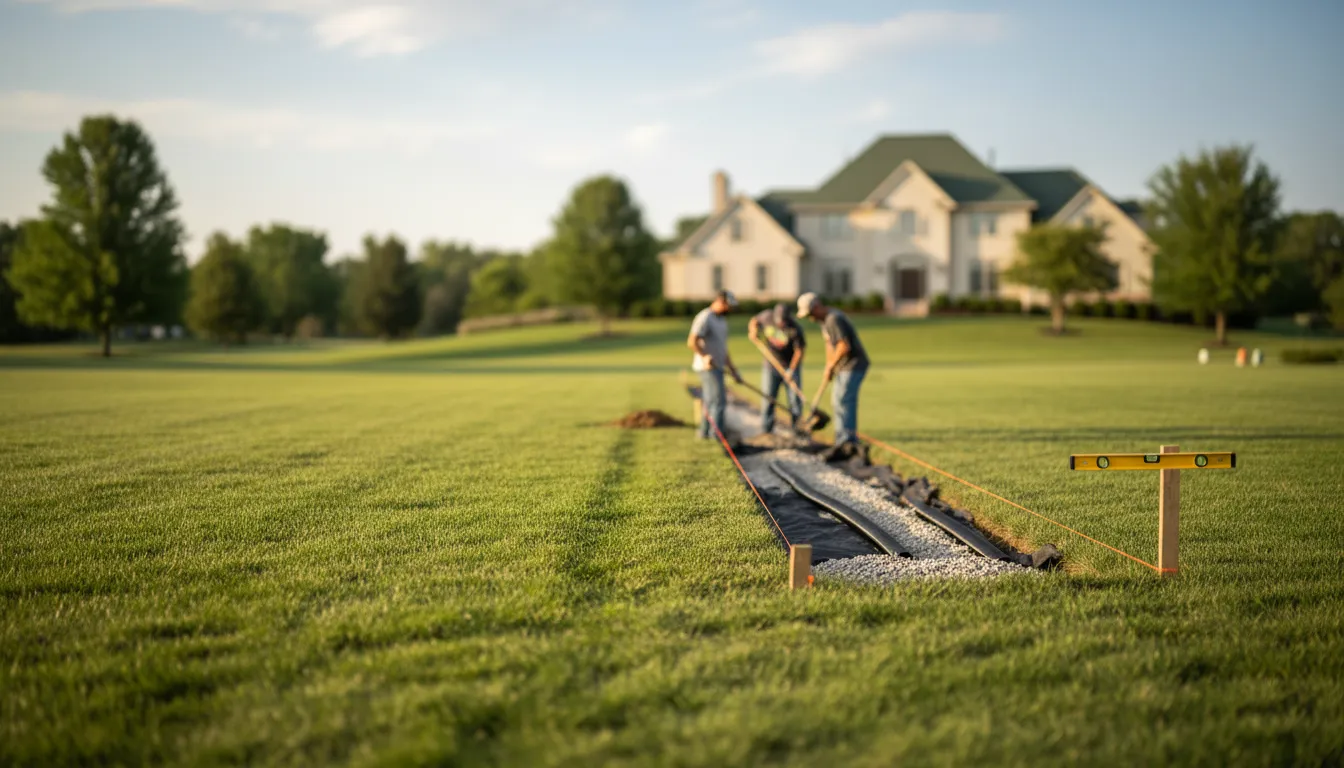
A French drain is a versatile workhorse for solving subsurface water issues. It consists of a trench lined with landscape fabric, filled with gravel, and containing a perforated pipe. The fabric prevents soil from clogging the gravel and pipe. These systems are excellent for relieving soggy lawns, preventing water from pooling against foundation walls, or intercepting water at the bottom of a slope. In Avondale, they are frequently used to collect water from downspouts and yard runoff, channeling it to a dry well or a designated drainage easement.
Surface Drain Inlets: Catch Basins and Channel Drains
For capturing water from specific hard surfaces like driveways, walkways, or pool decks, surface inlets are the solution. A catch basin is a box set into the ground with a grated top; it collects water from a low spot and connects to an underground pipe. A channel drain is a long, narrow trench with a grate, ideal for spanning the width of a driveway or across a patio to stop water from flowing into a garage or living area. These systems are crucial for managing the rapid runoff from non-porous surfaces during a downpour.
Infiltration Features: Dry Wells and Rain Gardens
Once water is collected, it needs a destination. Simply piping it to the street may not always be permissible or desirable. A dry well is an underground chamber filled with rock or rubble that allows collected water to slowly percolate into the surrounding soil. A rain garden is a shallow, landscaped depression planted with native, water-tolerant plants. It is designed to temporarily hold and absorb runoff from roofs or paved areas, filtering pollutants and recharging groundwater-a practice sometimes called "rainscaping". These features align well with sustainable landscaping goals in Arizona.
Find the perfect yard drainage contractors for your needs
Get personalized recommendations and expert advice
The Professional Installation Process
Tackling a significant drainage issue is a multi-step process that benefits from professional planning and execution.
- Site Assessment and Design: A thorough inspection identifies the source of water, flow paths, soil type, and discharge points. A solution is then designed, which may combine several of the methods above. Professionals will also check for existing utility lines.
- Permitting: In Avondale, many drainage projects, especially those that alter lot grading or connect to the public right-of-way, may require a permit. It's essential to check with the city's Construction Services department to ensure compliance with local codes.
- Excavation and Installation: This is the physical work: digging trenches for pipes, shaping swales, or excavating for dry wells. Pipes are laid with proper slope, basins are set and leveled, and all components are connected.
- Backfill and Restoration: Trenches are backfilled with gravel and soil, and the landscape is restored. This may include laying new sod, spreading mulch, or replanting affected areas.
- Inspection and Final Grade: For permitted work, a city inspection may be required. The final step is ensuring all surfaces are properly graded and smooth, ready to handle the next rain event.
Understanding Project Costs
The investment for water management solutions varies dramatically based on the scale and complexity of the problem. Here's a general overview of potential cost ranges:
- DIY/Minor Grading: For small areas requiring soil amendment and hand tools, costs might range from $100 to $500 for materials like soil, fabric, and pipe.
- French Drain Installation: A professionally installed, simple 50-foot French drain system can range from $500 to $2,000, depending on depth, materials, and labor.
- Catch Basin System: Installing one or more catch basins with connecting pipework is more involved, typically costing between $1,500 and $4,000 or more.
- Rain Garden or Dry Well: Creating an infiltration feature can cost between $300 and $1,500, influenced by size, plants, and soil amendments 1 2.
- Major Regrading or Swale Construction: Projects requiring heavy equipment to move significant amounts of earth can range from $2,000 to over $10,000.
Always obtain multiple detailed quotes that include design, materials, labor, permitting fees, and landscape restoration.
Navigating Local Regulations
Before starting any project, review Avondale's regulations. Key considerations include:
- You cannot alter grading in a way that directs water onto a neighbor's property in a manner that causes damage or creates a nuisance 3.
- Discharging water directly into the public street or storm sewer may have specific requirements or restrictions.
- Any work near property lines or within easements may have special rules.
- Erosion control measures during construction are often required to prevent sediment from leaving your site.
Consulting the city's Public Works department (for stormwater guidelines) and Engineering/Construction Services department (for permits) is a crucial first step 4 5.
Frequently asked questions
Sources
Footnotes
-
Control Heavy Runoff - Solving Drainage and Erosion Problems - https://www.fairfaxcounty.gov/soil-water-conservation/drainage-problem-control-runoff ↩
-
Rainscaping Your Yard to Protect Water Quality - https://www.aces.edu/blog/topics/fish-water/rainscaping-your-yard-to-protect-water-quality/ ↩
-
Chapter 8 - DRAINAGE AND FLOOD CONTROL | Avondale, AZ - https://library.municode.com/az/avondale/codes/code_of_ordinances?nodeId=CD_ORD_CH8DRFLCO ↩
-
Stormwater | City of Avondale - https://www.avondaleaz.gov/government/departments/public-works/sustainability/stormwater ↩
-
Construction Services | City of Avondale - https://www.avondaleaz.gov/government/departments/engineering-department/construction-services ↩