Find the Best Yard Drainage Contractors for Your Business
No obligation • Fast responses • Nationwide coverage

Why you can trust Landscape Atlas
Landscape Atlas is a leading United States resource for evaluating landscaping, lawn care, and outdoor service providers. Our team researches each category in depth, focusing on service quality, safety, and customer experience. Listings and rankings are based on independent criteria and user feedback, and companies cannot pay to influence our assessments or recommendations.
Search providers near you
Top Yard Drainage Contractors in Scottsdale, Arizona Ranked
Proper yard drainage and land grading are essential for protecting your Scottsdale home from water damage, soil erosion, and foundation issues. While the Sonoran Desert is known for its dryness, the region experiences intense, seasonal monsoon rains that can overwhelm poorly managed landscapes. Effective drainage solutions channel water away from your home's foundation, prevent pooling, and can even help conserve precious water resources. This guide will help you understand the common problems and professional solutions available, so you can make informed decisions about managing stormwater on your property.

fixthedrip.com
26840 N Black Cyn Hwy, Phoenix, AZ 85083
fixthedrip.com is a landscaping and irrigation company based in Phoenix, AZ, serving both commercial and residential properties. They specialize in irrigation system installation and repair, yard drainage, grading, and planting services. The company offers smart Wi-Fi controllers to automate irrigation and provides durable drip tubing options designed to last a lifetime. Established in 1973, fixthedrip.com brings nearly 50 years of experience to Arizona landscapes, with licensed, bonded, and insured technicians. Their repairs come with a one-year warranty, and new installations carry a three-year warranty.
Green Forever Arizona
1507 S Country Club Dr, Mesa, AZ 85210
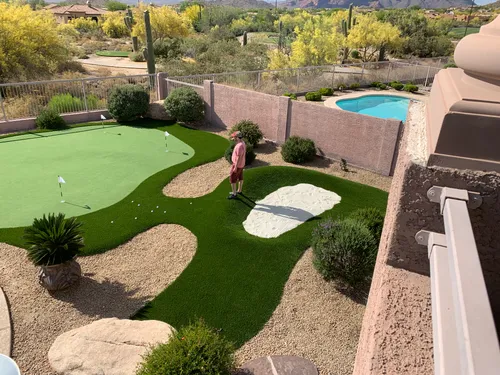
Green Forever Arizona is a landscaping company based in Phoenix, AZ, specializing in artificial turf installation, yard drainage and grading, landscaping, and hardscaping services. They offer residential synthetic grass, pet-friendly turf, custom putting greens, paver installations, and durable patio cover structures designed for Arizona's climate. Their turf installation process includes site preparation with grading and stone base layers to ensure proper drainage and a natural look. Green Forever Arizona focuses on creating low-maintenance, eco-friendly outdoor spaces that combine comfort and style.
BV Lawn Care
21269 E Lords Wy, Queen Creek, AZ 85142
BV Lawn Care is a locally owned lawn care and landscaping company serving Mesa, AZ, and the surrounding East Valley cities. With over 30 years of experience, they offer a wide range of services including lawn mowing, fertilization, weed control, sod installation, tree trimming and removal, yard drainage, sprinkler installation and repair, land clearing, and hardscaping. Their team is skilled in irrigation system repairs and installations, providing comprehensive care for residential landscapes. BV Lawn Care has established a strong presence in the community with multiple locations and a long history of serving local families.
AZ Grass Pros
5334 W Northern Ave, Glendale, AZ 85301
AZ Grass Pros is a locally owned landscaping company based in Phoenix, AZ, with decades of experience in the area's unique desert environment. They offer a range of services including artificial turf installation, landscape lighting, yard drainage, hardscaping, and landscape design. Their expertise includes creating sustainable outdoor spaces and installing features such as pergolas and outdoor kitchens. AZ Grass Pros serves Phoenix and nearby communities including Peoria, Scottsdale, Queen Creek, Gilbert, and Chandler.
GOAL Landscaping Peoria
8844 W Cinnabar Ave, Peoria, AZ 85345
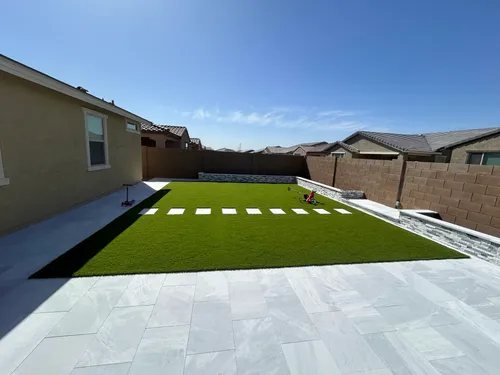
GOAL Landscaping Peoria is a landscaping company based in Phoenix, AZ, specializing in custom outdoor design and installation. They offer a wide range of services including artificial turf installation, landscape lighting, yard drainage, sprinkler systems, hardscaping with pavers and retaining walls, and outdoor kitchens. Their team focuses on creating functional and beautiful outdoor spaces tailored to client needs, using high-quality materials and expert craftsmanship. GOAL Landscaping serves multiple areas including Phoenix and surrounding cities, providing comprehensive landscaping solutions such as irrigation systems and fire features.
Why Scottsdale Homes Need Professional Drainage Solutions
The unique climate and soil conditions in Scottsdale present specific challenges for homeowners. The hard, compacted desert soil has low permeability, meaning rainwater doesn't soak in easily and instead runs off quickly. During the summer monsoon season, heavy downpours can drop a significant amount of water in a short time, leading to flash flooding in low-lying areas of your yard. Without a proper grading plan or drainage system, this runoff can flow toward your home, potentially seeping into basements or crawl spaces, saturating the soil around your foundation, and causing costly structural damage over time.
Beyond foundation protection, managing yard drainage effectively helps prevent:
- Soil Erosion: Fast-moving water can wash away topsoil and mulch, leaving unsightly gullies and damaging plant roots.
- Plant Damage: Pooling water can drown desert-adapted plants that require well-drained soil, leading to root rot.
- Mosquito Breeding: Standing water that remains for more than a few days becomes a prime breeding ground for mosquitoes.
- Hardscape Damage: Water can undermine patios, walkways, and retaining walls, causing them to crack or settle unevenly.
Investing in a professionally designed and installed drainage system is a proactive measure that safeguards your property's value and integrity.
Core Principles of Effective Yard Grading
The first and most fundamental line of defense against water intrusion is proper land grading. This refers to the shaping and sloping of the earth to direct surface water flow. The goal is to create a landscape where water naturally moves away from your home and toward a safe discharge point, such as a street gutter, dry well, or drainage swale.
For effective protection, the ground immediately surrounding your home should slope away from the foundation. A standard guideline is a minimum slope of 5% (which translates to a 6-inch drop over a 10-foot span) for at least the first 10 feet from your home's perimeter 1 2. This "positive grade" ensures that rainwater and irrigation runoff are directed away from your foundation walls. Over time, soil can settle or be washed away, so it's important to periodically check your home's grading, especially after heavy rains.
Professional grading contractors assess your entire property's topography to identify low spots where water collects and high spots that may be directing flow incorrectly. They use specialized equipment to move and compact soil, creating a smooth, consistent slope that not only solves drainage problems but also provides a stable base for lawns, gardens, and hardscapes.
Common Drainage Solutions for Scottsdale Properties
When grading alone isn't enough to handle Scottsdale's intense rainfall, additional drainage systems are employed. Local professionals often recommend a combination of the following techniques, tailored to your property's specific needs.
French Drains and Dry Wells
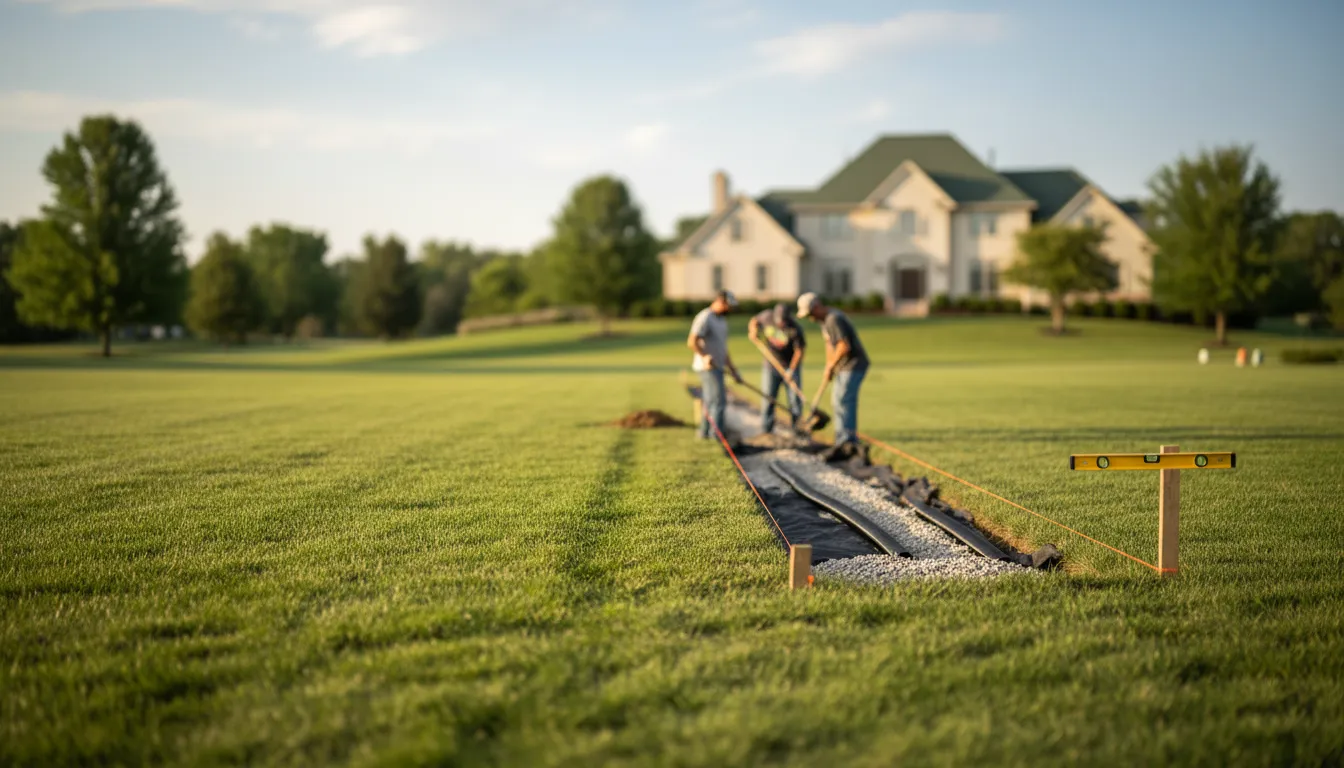
A French drain is a gravel-filled trench containing a perforated pipe that is wrapped in landscape fabric. It is designed to intercept and collect subsurface water (or surface water that has seeped into the ground) and redirect it to a safer location. The pipe is laid with the perforations facing down to collect water from the saturated soil, and the gravel allows water to flow easily into the pipe. The trench is often covered with soil and sod, making it a discreet solution.
The collected water is typically channeled to a dry well-a large, underground pit filled with gravel or a pre-fabricated chamber that allows water to slowly percolate back into the soil over a wider area, away from the foundation. This is an excellent solution for properties with heavy clay soil or specific spots where water consistently pools.
Downspout and Gutter Management
Your roof collects a massive amount of water during a storm. If downspouts simply discharge this water right next to your foundation, you are funneling thousands of gallons directly to the most vulnerable part of your home. A critical and often inexpensive first step is to ensure downspouts are extended at least 5 to 10 feet away from the house. Solutions include:
- Attachable downspout extensions.
- Buried drain pipes (smooth-walled, solid PVC) that channel water to a pop-up emitter in the middle of the yard or to a dry well.
- Routing water into a rain barrel for later use in irrigation, which is a great water conservation tactic.
Green Infrastructure and Sustainable Practices
Scottsdale encourages "green infrastructure" solutions that manage stormwater while beautifying the landscape and supporting local ecology.
- Rain Gardens: These are shallow, landscaped depressions planted with native, water-tolerant plants. They are designed to capture runoff from roofs, driveways, or lawns, allowing it to soak into the ground while filtering pollutants. Plants like desert willow, fairy duster, and penstemon are well-suited for Arizona rain gardens 3.
- Permeable Paving: For driveways, patios, or walkways, using permeable pavers, porous concrete, or gravel grids allows rainwater to seep through the surface into the ground below, reducing runoff volume and replenishing groundwater.
- Swales: These are broad, shallow channels often lined with grass or rocks. They are designed to slow down and convey runoff, allowing some water to infiltrate along the way. Swales can be a natural-looking alternative to concrete drainage channels.
Find the perfect yard drainage contractors for your needs
Get personalized recommendations and expert advice
The Professional Drainage Installation Process
Hiring a qualified professional for drainage and grading work ensures the system is designed correctly and built to last. The process typically follows these key stages:
- Site Assessment and Diagnosis: A specialist will visit your property, ideally during or shortly after a rain event, to observe where water pools, flows, and originates. They will identify the soil type, evaluate the existing grading, and locate underground utilities.
- Custom Design and Planning: Based on the assessment, the professional will design a comprehensive solution. This plan may include a mix of regrading, French drains, downspout extensions, and other features. They will determine the optimal slope, pipe size, trench depth, and discharge locations.
- Site Preparation and Excavation: The work area is marked, and any existing landscaping or hardscape in the way is carefully removed. Using excavators or trenchers, crews dig the necessary trenches for drains or reshape the soil for grading 4.
- System Installation: This is the core construction phase. For a French drain, this involves laying landscape fabric in the trench, adding a layer of gravel, placing the perforated pipe, and covering it with more gravel before wrapping the fabric over the top. For grading, fill dirt is brought in, spread, and compacted to precise slopes. Permeable pavers or rain garden plants are installed at this stage if included in the plan.
- Backfilling and Final Grading: Trenches are filled with soil, and the entire work area is given a final grade to ensure a smooth, even surface that blends with the rest of your yard. New sod, seed, or mulch is applied as needed.
- Inspection and Cleanup: The contractor should walk you through the completed system, showing you how it works and where the discharge points are. The job site is thoroughly cleaned of all debris and equipment.
Understanding the Investment: Drainage Project Costs
The cost of drainage and grading work in Scottsdale varies significantly based on the size of your property, the complexity of the problem, and the solutions chosen. Here is a general overview of potential costs based on common project scopes 5 6 7:
- Professional Consultation/Assessment: Many companies offer free estimates, while some dedicated engineering or design firms may charge a fee of up to $200 for a detailed site analysis and plan.
- Simple Downspout Extensions or Redirects: Installing above-ground extensions or burying a short run of solid pipe to move water away from the foundation can range from $100 to $500.
- Rain Garden Installation: Creating a small to medium-sized rain garden, including excavation, soil amendment, and native plants, may cost between $200 and $1,000 or more.
- French Drain Installation: For a standard linear foot of French drain (including trenching, pipe, gravel, and fabric), homeowners might expect to pay $50 to $100 per foot. A typical project for one problem area could range from $500 to $2,000.
- Full Yard Grading/Resloping: Regrading an entire yard to correct drainage is a larger undertaking. Costs depend on the square footage and amount of soil moved, often ranging from $1,000 to $5,000+.
- Permeable Paving: Material and installation costs for permeable surfaces are higher than standard concrete or asphalt, typically $10 to $25 per square foot.
It's important to get multiple detailed quotes from licensed and insured contractors who specialize in drainage work. A proper solution, though an investment, can prevent repair costs that are far greater, such as foundation stabilization, which can run into the tens of thousands of dollars.
Frequently asked questions
Sources
Footnotes
-
Swales, Drains, and Site Grading for Stormwater Control - https://basc.pnnl.gov/resource-guides/swales-drains-and-site-grading-stormwater-control ↩
-
Grading Yard for Drainage: A Homeowner's Step-by-Step Guide - https://tamuradesigns.com/grading-yard-for-drainage/ ↩
-
Sonoran Desert Green Infrastructure Resource Library - https://www.americanrivers.org/wp-content/uploads/2020/06/AR_GreenInfrastructureResourceLibrary_Part3.pdf ↩
-
How Land Grading Helps with Yard Drainage - Dirt Connections - https://www.dirtconnections.com/how-land-grading-helps-with-yard-drainage/ ↩
-
A Scottsdale Homeowner's Guide to Drainage - https://www.scottsdaleaz.gov/docs/default-source/scottsdaleaz/stormwater/homeowners-guide-to-drainage.pdf?sfvrsn=aa2b0ce3_3 ↩
-
What You Can Do to Soak Up the Rain | US EPA - https://www.epa.gov/soakuptherain/what-you-can-do-soak-rain ↩
-
Landscape Drainage & Erosion Control in Phoenix, and ... - https://www.goodmanslandscape.com/drainage-erosion-control/ ↩