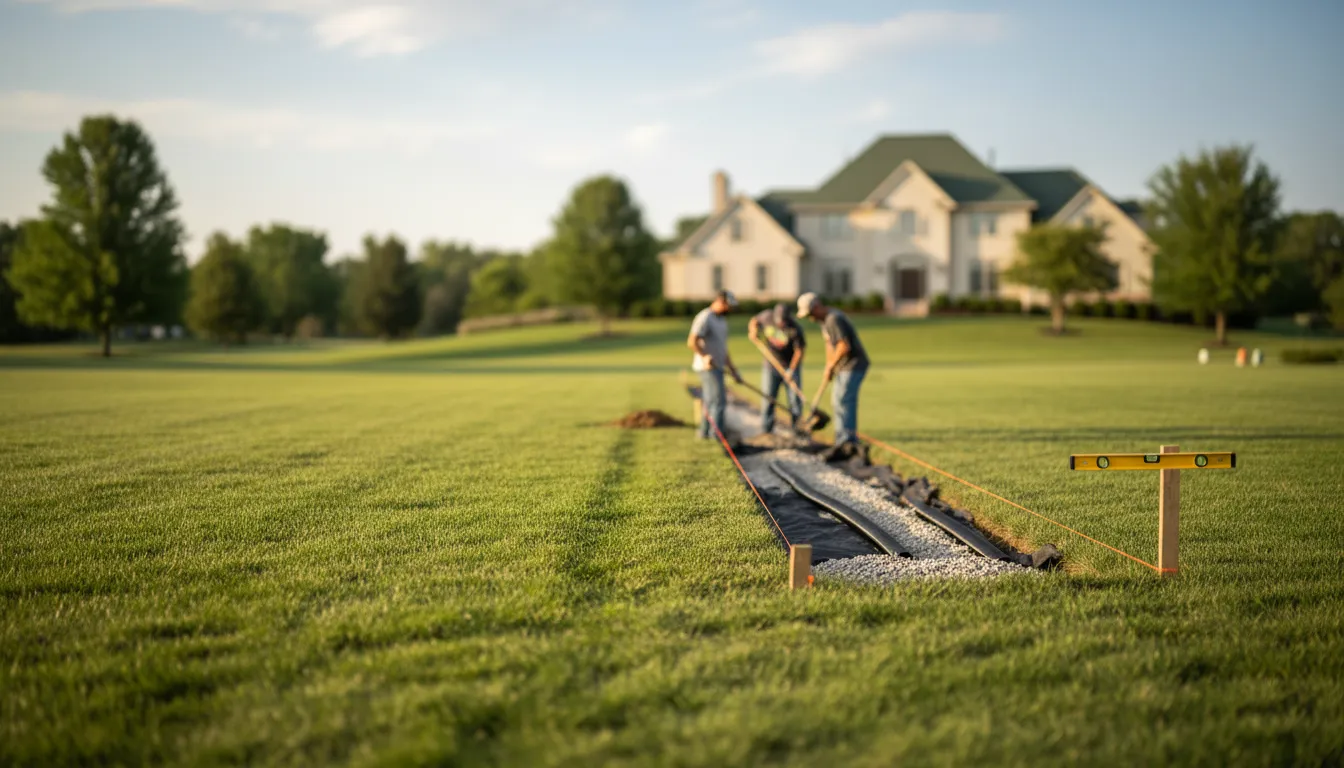
Find the Best Yard Drainage Contractors for Your Business
No obligation • Fast responses • Nationwide coverage

Why you can trust Landscape Atlas
Landscape Atlas is a leading United States resource for evaluating landscaping, lawn care, and outdoor service providers. Our team researches each category in depth, focusing on service quality, safety, and customer experience. Listings and rankings are based on independent criteria and user feedback, and companies cannot pay to influence our assessments or recommendations.
Search providers near you
Top Yard Drainage Contractors in Phoenix, Arizona Ranked
Proper yard drainage and grading are essential for protecting your Phoenix home from water damage, soil erosion, and foundation issues. The Sonoran Desert's intense monsoon rains can overwhelm a poorly prepared landscape, leading to costly repairs. This guide explains the core principles of effective water management, the specific solutions available for local properties, and how to connect with experienced professionals who can assess your unique situation and implement a lasting fix.

fixthedrip.com
26840 N Black Cyn Hwy, Phoenix, AZ 85083
fixthedrip.com is a landscaping and irrigation company based in Phoenix, AZ, serving both commercial and residential properties. They specialize in irrigation system installation and repair, yard drainage, grading, and planting services. The company offers smart Wi-Fi controllers to automate irrigation and provides durable drip tubing options designed to last a lifetime. Established in 1973, fixthedrip.com brings nearly 50 years of experience to Arizona landscapes, with licensed, bonded, and insured technicians. Their repairs come with a one-year warranty, and new installations carry a three-year warranty.
Green Forever Arizona
1507 S Country Club Dr, Mesa, AZ 85210
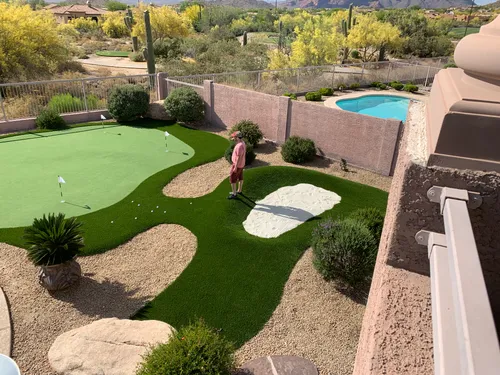
Green Forever Arizona is a landscaping company based in Phoenix, AZ, specializing in artificial turf installation, yard drainage and grading, landscaping, and hardscaping services. They offer residential synthetic grass, pet-friendly turf, custom putting greens, paver installations, and durable patio cover structures designed for Arizona's climate. Their turf installation process includes site preparation with grading and stone base layers to ensure proper drainage and a natural look. Green Forever Arizona focuses on creating low-maintenance, eco-friendly outdoor spaces that combine comfort and style.
BV Lawn Care
21269 E Lords Wy, Queen Creek, AZ 85142
BV Lawn Care is a locally owned lawn care and landscaping company serving Mesa, AZ, and the surrounding East Valley cities. With over 30 years of experience, they offer a wide range of services including lawn mowing, fertilization, weed control, sod installation, tree trimming and removal, yard drainage, sprinkler installation and repair, land clearing, and hardscaping. Their team is skilled in irrigation system repairs and installations, providing comprehensive care for residential landscapes. BV Lawn Care has established a strong presence in the community with multiple locations and a long history of serving local families.
AZ Grass Pros
5334 W Northern Ave, Glendale, AZ 85301
AZ Grass Pros is a locally owned landscaping company based in Phoenix, AZ, with decades of experience in the area's unique desert environment. They offer a range of services including artificial turf installation, landscape lighting, yard drainage, hardscaping, and landscape design. Their expertise includes creating sustainable outdoor spaces and installing features such as pergolas and outdoor kitchens. AZ Grass Pros serves Phoenix and nearby communities including Peoria, Scottsdale, Queen Creek, Gilbert, and Chandler.

Turfscapes of Arizona
Phoenix, AZ
Turfscapes of Arizona is a family-owned landscaping company based in Phoenix, AZ, specializing in artificial turf installation, hardscaping, yard drainage, grading, and land clearing services. They serve residential and commercial clients throughout the Phoenix area and surrounding communities. Their expertise includes synthetic lawns, putting greens, bocce courts, sports fields, and pet-friendly turf installations, all designed to provide low-maintenance, water-saving landscapes. The company also offers custom stonework, paver installation, erosion prevention, and rock spreading. With decades of combined experience, Turfscapes of Arizona uses advanced synthetic turf products featuring UV protection and heat-reducing properties to withstand the desert climate. Their professional installation teams apply specialized techniques to ensure durability and proper drainage for long-lasting results.
Why Drainage is Critical in the Phoenix Valley
While Phoenix is known for its arid climate, its seasonal monsoon storms deliver intense, concentrated rainfall that can quickly pool and cause significant problems. Inadequate drainage can lead to water seeping into your home's foundation, creating cracks and structural instability. It can also ruin landscaping, create muddy bogs, and foster mosquito breeding grounds. Effective surface and subsurface water control isn't just about convenience; it's a vital investment in your property's longevity and value. Proper grading and drainage systems work by directing this sudden influx of water away from structures and into safe dispersal areas.
Core Principles: Grading and Slope
The first and most fundamental line of defense is correct grading. This refers to the shaping of the land's surface to control water flow. The goal is to create a gentle, consistent slope that channels water away from your home's foundation.
- The Golden Rule: Building codes, including those referenced in Phoenix, typically require the ground to slope away from foundations at a minimum of 5% (a 6-inch drop over 10 feet) for at least the first 10 feet 1 2. This ensures surface runoff doesn't pool against your walls.
- Assessment is Key: A professional will assess your property's existing slope, identify low spots where water collects, and determine the natural flow paths. They'll look for areas where soil may have settled over time, creating negative grade (sloping toward the house).
- Regrading Solutions: Correcting grading issues may involve bringing in fill dirt and topsoil to raise low areas, excavating to reshape the land, or installing berms (raised mounds of soil) to strategically divert water flow 3.
Common Drainage Solutions for Phoenix Homes
When grading alone isn't enough, or when dealing with subsurface water, a variety of drainage systems can be installed. The right choice depends on your property's specific challenges, soil type, and budget.
French Drains
A French drain is a versatile subsurface solution for collecting and redirecting groundwater or water that has seeped into the soil. It consists of a trench lined with filter fabric, filled with gravel, and containing a perforated pipe at the bottom. Water enters the pipe through the perforations and is carried to a designated discharge point, such as a dry well or a lower area of the property. They are ideal for solving soggy lawns or water in basements/crawl spaces.
Swales and Dry Creek Beds
These are above-ground, landscaped channels designed to manage surface runoff. A swale is a shallow, grassy depression that slows and guides water. A dry creek bed is a more decorative version, using rocks and boulders to create a natural-looking channel that handles water flow during storms while serving as a landscape feature when dry. Both are excellent for managing runoff from downspouts or directing water across slopes.
Dry Wells and Infiltration Basins
For properties without a natural downhill discharge point, a dry well provides a solution. It's an underground pit, often several feet wide and deep, filled with gravel or rubble. Drainage pipes from French drains or downspouts empty into the well, where water slowly percolates into the surrounding soil. This is a common and effective endpoint for drainage systems in Phoenix, preventing water from being dumped onto a neighbor's property.
Trench Drains and Channel Drains
These are surface-level drains, often made of concrete, polymer, or metal grates, installed across driveways, patios, or walkways where water tends to pool 4. They capture sheet flow and channel it into an underground pipe system. They are crucial for protecting hardscapes and preventing ice or slick spots.
Rain Gardens and Permeable Paving
These are more integrative, eco-friendly approaches. A rain garden is a strategically placed depression planted with native, water-tolerant vegetation that collects runoff and allows it to infiltrate the ground, filtering pollutants in the process 5. Permeable paving for patios or driveways uses special materials that allow water to pass through the surface into a stone reservoir below, reducing overall runoff 6.
Find the perfect yard drainage contractors for your needs
Get personalized recommendations and expert advice
The Professional Installation Process
Tackling significant drainage issues is a multi-step process best handled by experts familiar with local soils and regulations.
- Site Assessment and Diagnosis: A contractor will inspect your property during or after a rain event to trace water sources, flow patterns, and problem areas. They will evaluate soil composition and check the existing grade.
- System Design and Planning: Based on the assessment, a plan is created. This includes choosing the right combination of solutions (e.g., regrading a slope, adding a French drain that feeds into a dry well), mapping the pipe routes, and identifying the final discharge location.
- Permitting: The City of Phoenix requires a review and permit for significant grading and drainage projects that alter the flow of water or involve moving large amounts of earth. A reputable contractor will handle this process, ensuring the design meets municipal standards.
- Excavation and Installation: This is the construction phase, involving digging trenches for pipes, shaping the land for swales or grading, and constructing dry wells or other structures.
- Backfill and Restoration: Once pipes and structures are in place, they are covered with filter fabric, gravel, and soil. The area is then landscaped to restore grass, plants, or mulch, blending the system into your yard.
Understanding Investment and Value
The cost for drainage work in Phoenix varies widely based on the project's scale and complexity. Here's a general overview based on local market data:
- Professional Consultation/Assessment: Often ranges from $100 to $300, with this fee frequently being credited toward the project cost if you proceed.
- Simple Grading/Regrading: Adjusting the slope of a specific area can range from a few hundred dollars to over $1,000, depending on the amount of soil moved and labor required.
- Standard French Drain or Trench Drain System: Installing a linear drainage system typically falls between $1,500 and $5,000. Factors include length, depth, and difficulty of excavation 7 8.
- Complex Integrated Systems: Projects involving multiple solutions, large dry wells, significant regrading, or retention features can range from $3,000 to $10,000 or more 9 10. These costs account for greater material use, more labor, and potential engineering or permitting fees.
Note: These are estimated ranges. For accurate pricing, it is essential to get detailed quotes from licensed and insured Phoenix-area contractors who can evaluate your specific property.
Maintaining Your Drainage System
A well-installed system is low-maintenance but not no-maintenance. Periodically inspect grates on trench drains to clear debris. Ensure the openings of French drains are not clogged with soil or leaves. Check that downspouts are securely connected to drain pipes. After heavy storms, look for new pooling areas that might indicate a blockage or a shift in the grade. Keeping your system clear ensures it functions optimally when the next monsoon arrives.
Frequently asked questions
Sources
Footnotes
-
Grading and Drainage | City of Phoenix - https://www.phoenix.gov/administration/departments/pdd/site-development/civil-plan-reviews/grading-drainage.html ↩
-
2021 International Residential Code (IRC) - R401.3 Drainage. - https://codes.iccsafe.org/s/IRC2021P3/chapter-4-foundations/IRC2021P3-Pt03-Ch04-SecR401.3 ↩
-
Yard Grading 101: Everything you need to know - This Old House - https://www.thisoldhouse.com/lawns/yard-grading ↩
-
How To Install An Outdoor Drainage System To Prevent Flooding - https://fixedtoday.com.au/blog/how-to-install-an-outdoor-drainage-system ↩
-
How to Prevent Waterlogging in Your Garden: Creative Drainage Solutions - https://www.haywood-landscapes.co.uk/haywood-blog/how-to-prevent-waterlogging-in-your-garden-creative-drainage-solutions ↩
-
Achieving the Perfect Slope: Ensuring Drainage in Permeable Hardscapes - https://romexhardscapes.com/achieving-perfect-slope-for-drainage/ ↩
-
Grading Services - Drain + Tree Landscape Drainage Contractor - https://www.draintree.com/drainage ↩
-
6 Ways to Divert Water - The Home Depot - https://www.homedepot.com/c/ai/6-ways-to-divert-water/9ba683603be9fa5395fab90120dc3412 ↩
-
Landscape Drainage & Erosion Control in Phoenix, and ... - https://www.goodmanslandscape.com/drainage-erosion-control/ ↩
-
How to Solve Yard Drainage Problems | Lowe's - https://www.lowes.com/n/how-to/solve-simple-drainage-problems ↩