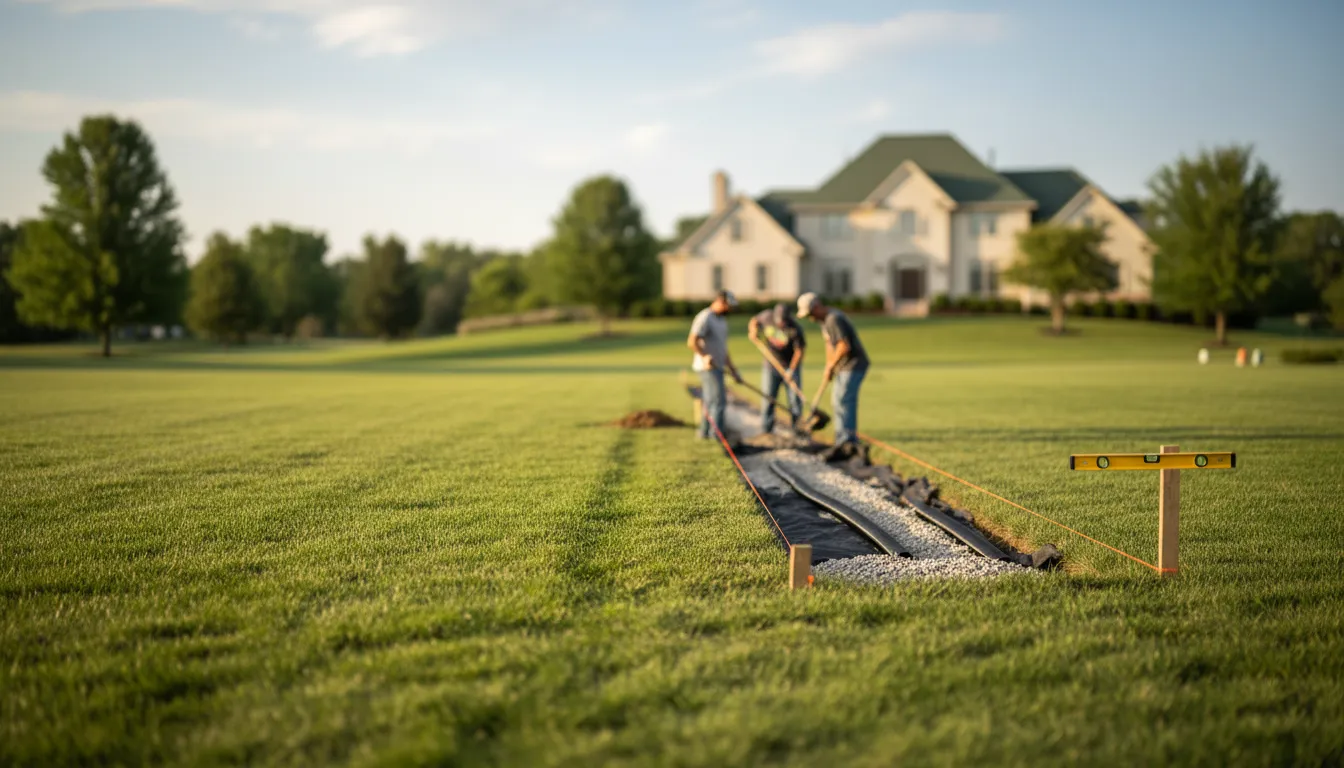
Find the Best Yard Drainage Contractors for Your Business
No obligation • Fast responses • Nationwide coverage

Why you can trust Landscape Atlas
Landscape Atlas is a leading United States resource for evaluating landscaping, lawn care, and outdoor service providers. Our team researches each category in depth, focusing on service quality, safety, and customer experience. Listings and rankings are based on independent criteria and user feedback, and companies cannot pay to influence our assessments or recommendations.
Search providers near you
Top Yard Drainage Contractors in Casa Grande, Arizona Ranked
Managing water flow on your property is a critical aspect of homeownership in Casa Grande. While our desert climate is known for its dryness, the intense, seasonal monsoon rains can create significant drainage and erosion challenges. Proper yard drainage and grading involves strategically shaping the land and installing systems to control runoff, protecting your home's foundation, preventing soil loss, and maintaining a healthy, usable landscape. This guide will help you understand the common solutions and considerations for managing stormwater on your Casa Grande property.
BV Lawn Care
21269 E Lords Wy, Queen Creek, AZ 85142
BV Lawn Care is a locally owned lawn care and landscaping company serving Mesa, AZ, and the surrounding East Valley cities. With over 30 years of experience, they offer a wide range of services including lawn mowing, fertilization, weed control, sod installation, tree trimming and removal, yard drainage, sprinkler installation and repair, land clearing, and hardscaping. Their team is skilled in irrigation system repairs and installations, providing comprehensive care for residential landscapes. BV Lawn Care has established a strong presence in the community with multiple locations and a long history of serving local families.
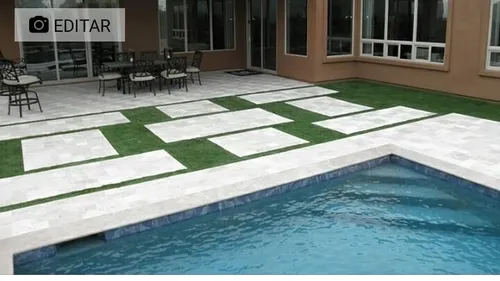
Gamboa’s Hardscape
9307 South 51st Drive Unit 361, Laveen Village, AZ 85339
Gamboa's Hardscape is a hardscaping and landscaping company based in Phoenix, AZ, serving both residential and commercial clients. With over 20 years of experience, they offer a range of services including paver installation, artificial turf installation, concrete work, landscape design, irrigation, and landscape lighting. Their team specializes in creating customized outdoor spaces, such as retaining walls, custom fire pits, and safe play areas with artificial turf. Gamboa's Hardscape focuses on personalized solutions tailored to clients' style preferences and project needs.
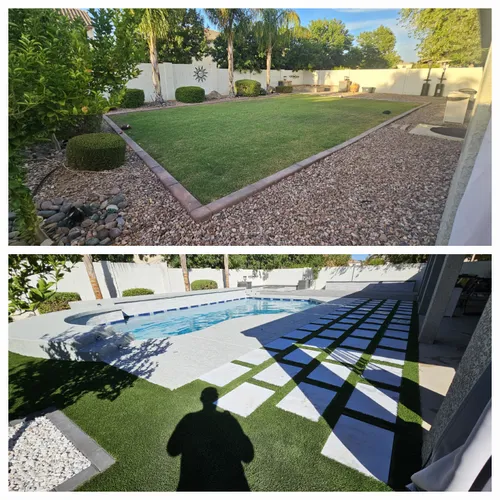
J & E Landscape, LLC
3498 E Superior Rd, San Tan Valley, AZ 85143
J & E Landscape, LLC is a landscaping and outdoor living company serving Chandler, AZ, and nearby communities including Queen Creek, San Tan Valley, and Apache Junction. They offer a wide range of services such as landscape maintenance, hardscape construction, artificial turf installation, irrigation system work, tree services, and landscape lighting installation. Their expertise includes building durable paver patios and walkways designed to withstand local soil conditions and climate. Established in 2018 with roots in generations of landscaping experience, J & E Landscape, LLC focuses on quality craftsmanship and tailored outdoor solutions.
Economy Landscape LLC
Tucson, AZ
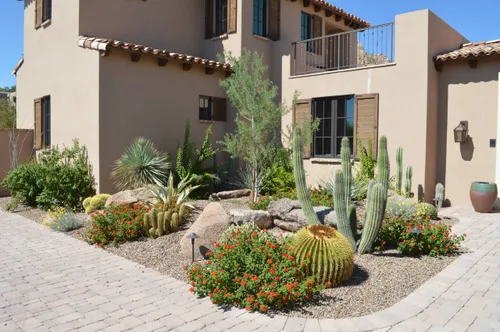
Economy Landscape LLC is a landscaping company based in Tucson, AZ, with over 20 years of experience in transforming outdoor spaces for residential and commercial clients. They offer a wide range of services including hardscape design and installation, outdoor living spaces, pergolas, landscape lighting, garden design with native plants, advanced irrigation systems, drainage solutions, privacy enhancements, water features, and weed control. Their expertise includes building driveways, patios, retaining walls, and installing efficient irrigation and drainage systems to manage water runoff effectively. Economy Landscape LLC focuses on using high-quality materials and a personalized approach to meet client needs.
Lambert Landscape
35366 N Brawley Rd, San Tan Valley, AZ 85142
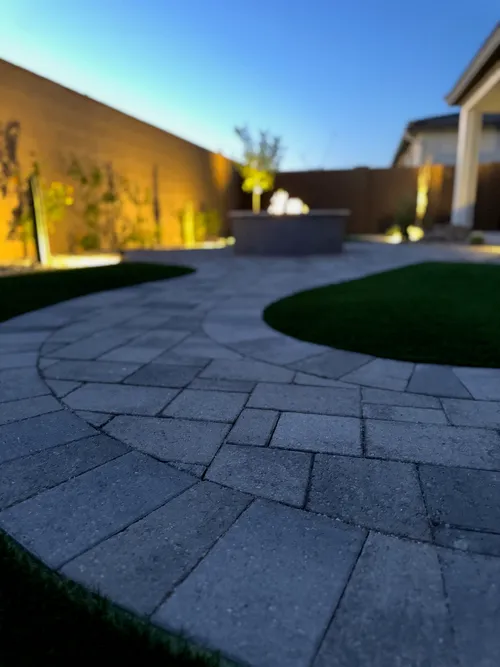
Lambert Landscape is a full-service landscaping and lawn care company based in Chandler, AZ. They provide a range of services including lawn mowing, fertilization, weed control, sod and artificial turf installation, landscape lighting design and installation, yard drainage, sprinkler system installation and repair, and hardscaping such as pavers and retaining walls. Their approach integrates landscape design with irrigation and lighting to create cohesive outdoor spaces suited to local conditions. With over 20 years of experience and more than 2,300 projects completed, Lambert Landscape serves Chandler and surrounding communities, offering expertise in efficient irrigation systems and durable paving installations.
Why Stormwater Management Matters in the Desert
It may seem counterintuitive, but drainage is a major concern in arid regions. Casa Grande experiences intense, short-duration rainfall during the summer monsoon season. When rain falls on sun-baked, compacted soil or impervious surfaces like concrete, it runs off quickly rather than soaking in. This uncontrolled runoff can pool in low areas of your yard, saturate soil near your foundation leading to cracks, carve gullies into your landscape, and even contribute to localized flooding 1. Effective site grading and drainage solutions are not just about puddles; they are about safeguarding your property's structural integrity and value.
Common Drainage Problems in Casa Grande Yards
Identifying the issue is the first step toward a solution. Common signs you need drainage work include:
- Persistent Pooling: Water that stands for hours or days after a rain, creating muddy zones or killing grass.
- Soil Erosion: Channels or gullies forming in your landscape, especially on slopes, or soil washing away from plant roots.
- Foundation Moisture: Dampness in your crawl space or basement, or visible cracks in your home's exterior walls and foundation.
- Water Flowing Toward the House: The ground slope directs rainwater toward your home instead of away from it.
- Soggy Lawn Patches: Areas that are constantly wet and spongy, indicating poor subsurface drainage.
Core Solutions for Yard Drainage and Grading
A combination of techniques is often used to create a comprehensive stormwater management plan for your property.
Regrading and Slope Correction
The most fundamental solution is ensuring the ground slopes away from your home's foundation. Professionals recommend a minimum slope of 5% (a 6-inch drop over 10 feet) for at least the first 10 feet surrounding your house 2. Regrading involves moving and compacting soil to create this crucial slope, directing surface water away from vulnerable areas. In Casa Grande, this process can be complicated by caliche, a hard layer of calcium carbonate common in desert soils, which may require specialized equipment to break through 3.
Swales and Berms
These are landscape features that work together to manage surface flow. A swale is a broad, shallow, vegetated channel designed to gently convey runoff. A berm is a raised mound of soil. Strategically placed, a berm can divert water into a swale, which then guides it safely to a drainage outlet, rain garden, or permeable area 4. They are a natural-looking, effective way to handle sheet flow across your property.
Subsurface Drainage: French Drains and Dry Wells
When water collects below the surface or in low spots, subsurface solutions are key.
- French Drains: A gravel-filled trench containing a perforated pipe collects groundwater and redirects it. The pipe is sloped to carry water to a desired discharge point, such as a street gutter or a dry well.
- Dry Wells: These are underground chambers filled with gravel or rubble that collect water from downspouts or drain pipes and allow it to slowly percolate into the surrounding soil. They are excellent for infiltrating water where discharging to the surface isn't feasible.
Surface Capture: Catch Basins and Channel Drains
For managing heavy surface flow from driveways, patios, or walkways, capture systems are ideal.
- Catch Basins: These are grated inlets installed in low points where water pools. They connect to an underground pipe system that carries the water away.
- Channel Drains: Long, narrow drains with grates, often used along the edge of a driveway or across a walkway to intercept flowing water before it causes problems.
Rainscaping: Rain Gardens and Permeable Pavers
These solutions focus on absorbing and filtering runoff naturally.
- Rain Gardens: A shallow depression planted with native, water-tolerant plants. It collects runoff from roofs or paved areas, allowing it to soak into the ground while being filtered by the plants and soil. This is a beautiful and eco-friendly Best Management Practice (BMP) for stormwater.
- Permeable Pavers: Unlike solid concrete, these pavers have gaps filled with gravel that allow water to pass through into a stone reservoir below, where it slowly infiltrates the soil. They significantly reduce runoff volume from patios, walkways, and driveways.
Find the perfect yard drainage contractors for your needs
Get personalized recommendations and expert advice
The Professional Installation Process
While some basic grading or small rain garden projects can be DIY, most effective drainage systems require professional assessment and installation. Here's a typical process 5:
- Site Assessment and Diagnosis: A specialist will inspect your property during or after a rain to identify problem areas, determine soil type (like caliche), and trace natural water flow paths.
- System Design and Planning: Based on the assessment, a plan is created. This may combine several solutions-for example, regrading the soil near the house, adding a catch basin in a low patio corner, and channeling that water to a new rain garden in a corner of the yard.
- Site Preparation and Excavation: The area is marked, and any existing landscaping is carefully moved or removed. Excavation begins for trenches, basins, or grading changes.
- Installation and Construction: Pipes are laid, basins are set, gravel beds are prepared, and soil is shaped and compacted to precise slopes. For rain gardens, specific soil mixes and plants are installed.
- Backfill and Restoration: Trenches are filled, and the site is cleaned. Sod, seed, or mulch is applied to restore the landscape, leaving a functional system that blends with your yard.
Understanding Costs for Drainage Projects in Casa Grande
Costs can vary widely based on your lot size, soil conditions, and the complexity of the solutions required. Here is a general overview of potential costs 6 7:
- DIY Basic Projects: Simple regrading, creating a swale, or installing a small rain garden may cost between $100 and $500 for materials like soil, plants, and mulch.
- Professional Regrading: Reshaping your yard's slope typically ranges from $500 to over $2,000, heavily influenced by yard size and the difficulty of moving caliche-heavy soil.
- French Drains: Installed cost often falls between $15 and $30 per linear foot, including materials and labor.
- Catch Basin / Channel Drain: Installing a single basin or drain section can range from $300 to $800 or more, depending on depth and connections.
- Rain Garden / Dry Well: Professional installation of a more complex infiltration system like a rain garden or dry well can range from $500 to $2,500+.
- Permeable Pavers: This is a premium solution, with installed costs often starting at $15 to $30 per square foot or more.
Investing in proper drainage protects your much larger investment-your home. By understanding the options and processes, you can make informed decisions to solve water problems and create a more resilient, enjoyable outdoor space in Casa Grande.
Frequently asked questions
Sources
Footnotes
-
Stormwater Management Program | Casa Grande, AZ - https://casagrandeaz.gov/337/Stormwater-Management-Program ↩
-
Swales, Drains, and Site Grading for Stormwater Control - https://basc.pnnl.gov/resource-guides/swales-drains-and-site-grading-stormwater-control ↩
-
Control Heavy Runoff - Solving Drainage and Erosion Problems - https://www.fairfaxcounty.gov/soil-water-conservation/drainage-problem-control-runoff ↩
-
Tailored Drainage Solutions for Sloped Yards | Rainscapes - https://rainscapes.com/tailored-drainage-solutions-for-sloped-yards/ ↩
-
Simple Steps to Manage Stormwater in Your Backyard - JP Operations - https://www.jpoperations.com/blog/simple-steps-to-manage-stormwater-in-your-backyard ↩
-
Stormwater Best Management Practices - https://spcwater.org/topics/stormwater-management/stormwater-best-management-practices-2/ ↩
-
Rainscaping Your Yard to Protect Water Quality - https://www.aces.edu/blog/topics/fish-water/rainscaping-your-yard-to-protect-water-quality/ ↩