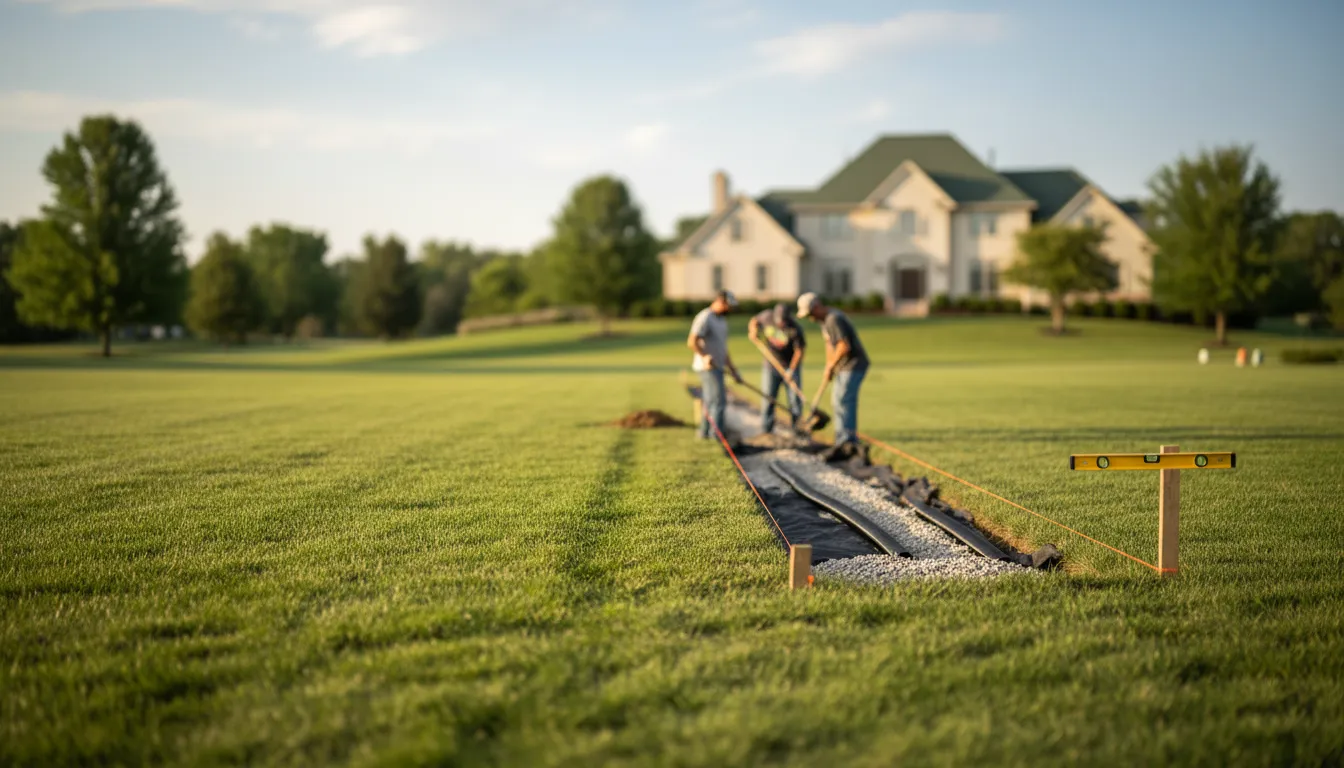
Find the Best Yard Drainage Contractors for Your Business
No obligation • Fast responses • Nationwide coverage

Why you can trust Landscape Atlas
Landscape Atlas is a leading United States resource for evaluating landscaping, lawn care, and outdoor service providers. Our team researches each category in depth, focusing on service quality, safety, and customer experience. Listings and rankings are based on independent criteria and user feedback, and companies cannot pay to influence our assessments or recommendations.
Search providers near you
Top Yard Drainage Contractors in Maricopa, Arizona Ranked
Managing water flow on your property is a critical aspect of homeownership in Maricopa. Proper yard drainage and land grading protect your home's foundation, prevent soil erosion, and can even help conserve water in our desert climate. This guide explains the importance of effective stormwater management and outlines the common solutions used by local professionals, helping you understand your options for keeping your property safe and dry.
GOAL Landscaping Peoria
8844 W Cinnabar Ave, Peoria, AZ 85345
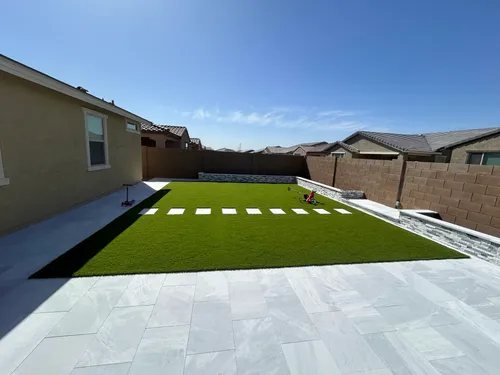
GOAL Landscaping Peoria is a landscaping company based in Phoenix, AZ, specializing in custom outdoor design and installation. They offer a wide range of services including artificial turf installation, landscape lighting, yard drainage, sprinkler systems, hardscaping with pavers and retaining walls, and outdoor kitchens. Their team focuses on creating functional and beautiful outdoor spaces tailored to client needs, using high-quality materials and expert craftsmanship. GOAL Landscaping serves multiple areas including Phoenix and surrounding cities, providing comprehensive landscaping solutions such as irrigation systems and fire features.
The Grounds Guys of Arrowhead in Phoenix
Glendale, AZ
The Grounds Guys of Arrowhead in Phoenix provides comprehensive landscaping services in Glendale, AZ. They offer lawn and grounds maintenance, landscape design, irrigation installation and repair, hardscaping including patios and retaining walls, tree and shrub care, and eco-friendly landscaping options. Their team customizes each project to fit the property's layout and local climate, ensuring efficient water use and sustainable practices. The company is part of a national network and emphasizes clear communication and upfront pricing to support both residential and commercial clients.
Century West Landscaping LLC
Glendale, AZ
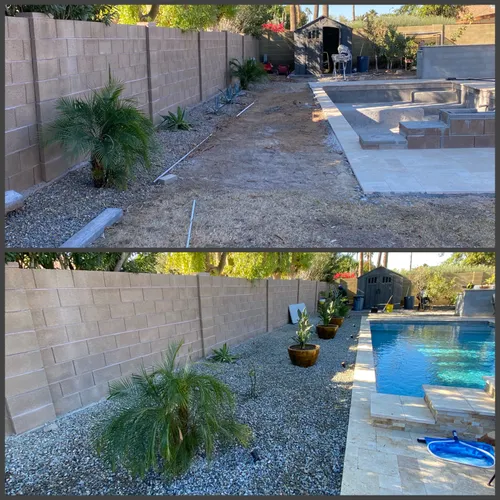
Century West Landscaping LLC is a full-service landscaping company based in Glendale, AZ, serving homeowners in the Phoenix and Scottsdale regions. They offer a range of services including lawn mowing, sod installation, artificial turf, landscape design, yard drainage, and grading. The company is experienced in transforming outdoor spaces to enhance property value and functionality. One of their notable capabilities is installing storm water drainage systems efficiently. Century West Landscaping is recognized for its attention to detail and customer communication throughout projects.
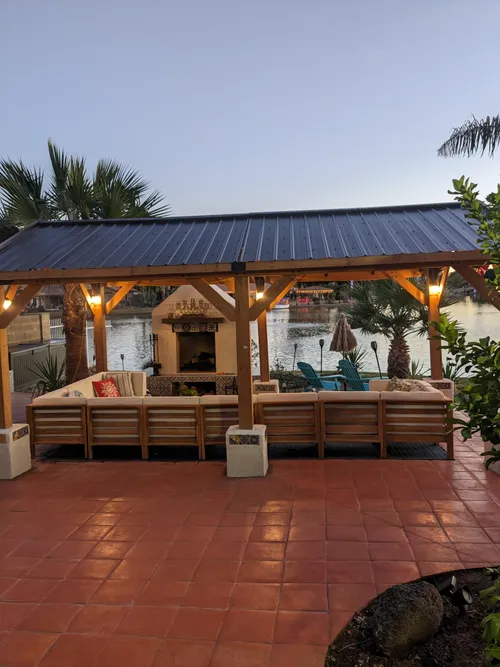
The Grounds Guys of West Valley
Glendale, AZ
The Grounds Guys of West Valley provides comprehensive landscaping and lawn care services in Glendale, AZ. Their offerings include lawn mowing, fertilization, weed control, irrigation installation and repair, hardscaping such as patios and retaining walls, tree services, and landscape lighting. They emphasize eco-friendly and drought-tolerant landscaping solutions tailored to the local climate. The company also delivers custom landscape design and maintenance programs for both residential and commercial properties. Their team focuses on precise landscape edging, garden bed maintenance, and drainage improvements to enhance property appearance and functionality.
Why Proper Drainage is Essential in Maricopa
The Sonoran Desert climate is defined by intense, seasonal monsoon rains. When these heavy downpours hit, water needs a clear path away from your home's foundation. Without proper grading or drainage systems, water can pool, leading to foundation cracks, basement or crawl space flooding, and landscape erosion. Furthermore, Maricopa County has specific drainage regulations designed to ensure that new development and significant property alterations do not negatively impact neighboring properties or public infrastructure. Investing in good drainage isn't just about protecting your home; it's about responsible water management in our community.
Core Principles: Grading and Positive Flow
The foundation of any good drainage plan is grading. This refers to the slope of the land. The goal is to create a "positive grade" or slope that directs surface water away from your home and toward a safe discharge area, such as a street gutter, dry well, or landscaped infiltration zone 1. A common guideline is a slope of at least 5% (a 6-inch drop over 10 feet) for the first 10 feet surrounding your foundation 2.
Site grading is often the first step a professional will assess. They will evaluate how water currently flows across your lot during a rain event and design a plan to correct any negative slopes that channel water toward your house. For some projects, especially those involving significant earth moving or that impact county drainage easements, an engineered grading and drainage plan reviewed by Maricopa County may be required.
Common Drainage Solutions for Maricopa Homes
There are several effective techniques for controlling runoff. Often, a combination of methods is used to create a comprehensive system.
1. Surface Drainage Techniques
- Swales: These are broad, shallow, vegetated channels designed to guide water across your property. They are a natural-looking and effective way to manage sheet flow from roofs and driveways.
- Downspout Management: One of the simplest and most effective steps. Extending downspouts at least 5-10 feet away from your foundation, using splash blocks or buried pipe extensions, prevents concentrated roof water from saturating the soil right next to your home.
2. Subsurface and Infiltration Systems
- French Drains: A trench filled with gravel containing a perforated pipe. It collects groundwater and surface water, redirecting it to a desired outlet. This is a key solution for yards with persistent soggy spots or subsurface water issues.
- Dry Wells: An underground structure, often a large pit filled with gravel, that collects stormwater from downspouts or drains and allows it to slowly infiltrate into the surrounding soil.
- Permeable Paving: For driveways, patios, or walkways, materials like permeable pavers or pervious concrete allow rainwater to soak through the surface into a stone base below, reducing runoff.
3. Water Harvesting and Landscaping
- Rainwater Harvesting: Installing rain barrels or larger cisterns captures roof runoff for later use in irrigation, turning a drainage challenge into a water-saving resource.
- Rain Gardens / Bioretention Basins: These are landscaped depressions planted with native, water-tolerant plants. They are designed to collect runoff, allow it to pond temporarily, and then filter it into the ground. This is an attractive, eco-friendly solution that supports local pollinators 3.
Find the perfect yard drainage contractors for your needs
Get personalized recommendations and expert advice
The Professional Process: From Assessment to Maintenance
Understanding the typical workflow for a drainage project can help you know what to expect when working with a local specialist.
- Observation and Assessment: The process begins with a site evaluation, ideally during or after a rain. The professional will identify problem areas, pooling zones, and the sources of water (roof, driveway, neighboring property).
- Design and Planning: A solution is designed, specifying slopes, pipe routes, and the location of drains, swales, or basins. For complex issues, this may involve formal engineering plans, especially if county review is triggered by the scope of work.
- Permitting: In Maricopa County, any development that affects drainage patterns, including significant regrading or installation of drainage structures, may require a drainage review or permit from the Planning and Development Department 4 5. A reputable professional will know when this is necessary and can often manage the process.
- Implementation: This is the construction phase, involving excavation, pipe installation, grading and compacting soil, and installing any surface features like pavers or plants.
- Maintenance: All systems require some upkeep. This includes cleaning debris from drain inlets, ensuring downspouts are clear, aerating soil around infiltration areas, and maintaining plants in rain gardens or swales.
Understanding Investment and Value
The cost of drainage work varies widely based on the complexity of the problem, the size of your property, soil conditions, and the solutions chosen.
- DIY Solutions: Homeowners can tackle some minor improvements themselves. Installing rain barrels ($50-$200), adding downspout extensions ($20-$100), or creating a simple swale with hand tools are lower-cost options 6.
- Professional Grading and Basic Systems: For professional regrading or installing a simple French drain or dry well system, homeowners might invest between $1,000 and $5,000, depending on the linear footage and depth required.
- Larger or Engineered Projects: Comprehensive solutions combining multiple techniques, such as a full-yard regrading with subsurface drainage and permeable paving, or projects requiring engineered plans for county approval, can range from $5,000 to $10,000 or more 7.
While not always inexpensive, proper drainage is a valuable investment that protects your home's structural integrity and can prevent far costlier repairs from water damage.
Integrating with Desert Landscaping
Good drainage and beautiful landscaping are not mutually exclusive. In fact, many drainage solutions can be seamlessly integrated into your outdoor living space. A swale can be planted with decorative grasses. A rain garden becomes a vibrant habitat for birds and butterflies. Permeable pavers come in a variety of styles to match any patio design. By working with professionals knowledgeable in both hydrology and horticulture, you can create a yard that is both functional against the monsoon rains and aesthetically pleasing year-round 8 9.
Frequently asked questions
Sources
Footnotes
-
Swales, Drains, and Site Grading for Stormwater Control - https://basc.pnnl.gov/resource-guides/swales-drains-and-site-grading-stormwater-control ↩
-
Grading Yard for Drainage: A Homeowner's Step-by-Step Guide - https://tamuradesigns.com/grading-yard-for-drainage/ ↩
-
What You Can Do to Soak Up the Rain | US EPA - https://www.epa.gov/soakuptherain/what-you-can-do-soak-rain ↩
-
Drainage Review | Maricopa County, AZ - https://www.maricopa.gov/1635/Drainage-Review ↩
-
Drainage Regulations | Maricopa County, AZ - https://www.maricopa.gov/463/Drainage-Regulations ↩
-
Control Heavy Runoff - Solving Drainage and Erosion Problems - https://www.fairfaxcounty.gov/soil-water-conservation/drainage-problem-control-runoff ↩
-
Residential Engineered Grading and Drainage DD-4002-01 - https://www.maricopa.gov/6424/Residential-Engineered-Grading-and-Drain ↩
-
Sonoran Desert Green Infrastructure Resource Library - https://www.americanrivers.org/wp-content/uploads/2020/06/AR_GreenInfrastructureResourceLibrary_Part3.pdf ↩
-
Attractive Ways to Manage Stormwater Runoff - https://piedmontmastergardeners.org/attractive-ways-to-manage-stormwater-runoff/ ↩