Find the Best Yard Drainage Contractors for Your Business
No obligation • Fast responses • Nationwide coverage

Why you can trust Landscape Atlas
Landscape Atlas is a leading United States resource for evaluating landscaping, lawn care, and outdoor service providers. Our team researches each category in depth, focusing on service quality, safety, and customer experience. Listings and rankings are based on independent criteria and user feedback, and companies cannot pay to influence our assessments or recommendations.
Search providers near you
Top Yard Drainage Contractors in Brea, California Ranked
Effective yard drainage and proper land grading are essential for protecting your Brea home from water damage, soil erosion, and foundation issues. Managing runoff from local rainfall is not just about protecting your property; it's also about responsible water stewardship in our community. This guide will help you understand the common solutions, from simple grading to complex French drain systems, so you can find the right local expertise to solve your specific water management challenges.
Droughtscape
Angeles Crest Hwy, La Cañada Flintridge, CA 91011
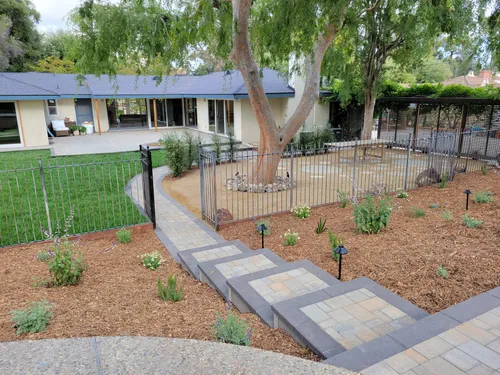
Droughtscape is a landscaping and outdoor construction company based in Los Angeles, CA. With over 45 years of experience, they specialize in drought and fire-resistant landscape design and installation, hardscaping, irrigation, fencing, artificial turf, and more. Their services cover a wide range of outdoor improvements including interlocking pavers, decks, pergolas, retaining walls, and yard drainage. Droughtscape serves multiple neighborhoods in the Los Angeles area, focusing on water-saving and sustainable landscaping solutions that suit various home styles. They emphasize clear communication and quality craftsmanship to provide a smooth project experience.
Greenplace Inc
2151 Pacific Ave A205, Costa Mesa, CA 92627
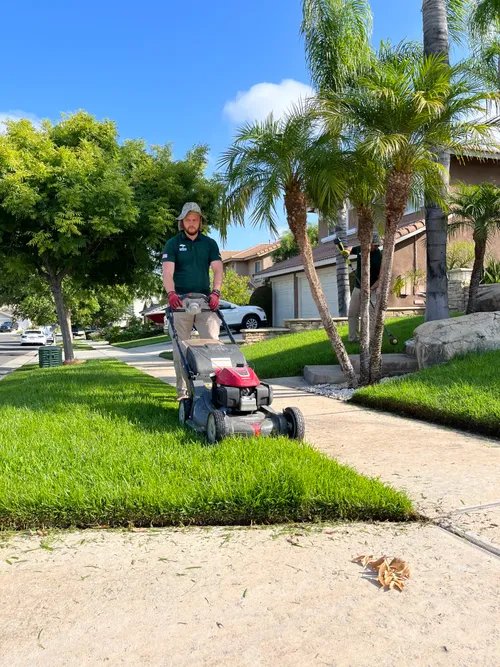
Greenplace Inc is a landscaping company based in Santa Ana, CA, offering a wide range of services including landscape design, hardscaping, lawn care, irrigation installation and repair, artificial turf, and yard drainage solutions. They serve both residential and commercial clients throughout Southern California, including Orange County and Los Angeles. Greenplace specializes in creating custom outdoor environments that combine aesthetic appeal with practical features such as smart irrigation systems to optimize water use. Founded by Volodymyr Dragan and Viktor Peshekhonov, the company emphasizes craftsmanship and long-term vision in their work. Their licensed team is known for detailed project management and responsiveness to client needs.
Irrigation Pros
Los Angeles, CA
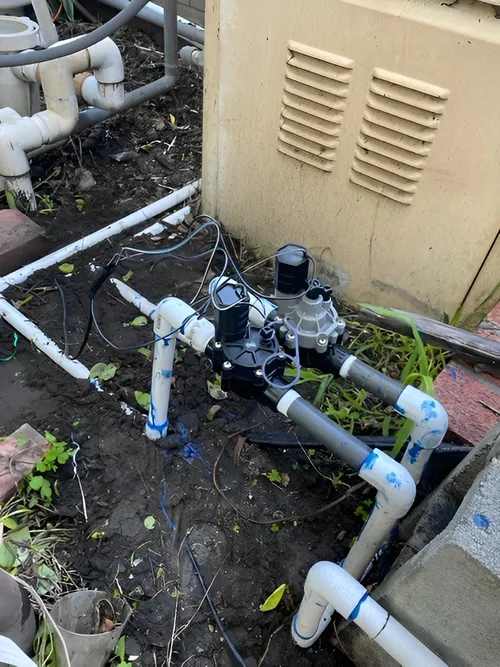
Irrigation Pros is a locally owned landscaping company serving Orange County, including Santa Ana, Irvine, Newport Beach, and Mission Viejo. They specialize in sprinkler repair, sod installation, drainage solutions, and artificial turf installation. Their services focus on efficient irrigation systems tailored to the local climate, preventing water waste and yard damage. The company offers top-grade sod and drip irrigation systems designed for sustainability and water savings. Irrigation Pros operates with years of experience in the area and provides 24/7 availability for urgent sprinkler and drainage issues.
SoCal Landscape and Trees
2233 Casitas Ave, Altadena, CA 91001
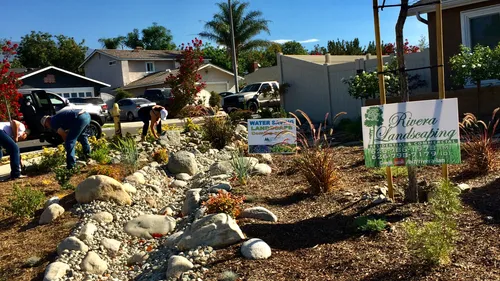
SoCal Landscape and Trees is a landscaping company based in Altadena, serving Los Angeles, CA, and nearby areas. They provide a variety of services including tree removal, lot clearing, irrigation design, hardscape design, concrete work, grading, and routine lawn care. The company emphasizes sustainable practices and community restoration, focusing on enhancing the natural beauty of local foothill neighborhoods. One of their key capabilities is custom irrigation design aimed at promoting plant health and water efficiency. SoCal Landscape and Trees is committed to each project with a personal connection to the community.

Lucky Smartscape
999 Corporate Dr Suite 100 #3425, Ladera Ranch, CA 92694
Lucky Smartscape is a landscaping company based in Irvine, CA, offering comprehensive outdoor design and installation services. Their expertise includes landscape design, yard drainage, sprinkler installation and repair, as well as hardscaping with pavers and retaining walls. They provide custom irrigation and drainage solutions to enhance water efficiency and prevent pooling, ensuring functional and attractive outdoor spaces. Lucky Smartscape also specializes in creating entertainment areas such as barbecue spots, outdoor kitchens, and fire pits, combining beauty and practicality for enjoyable gatherings.
Why Proper Drainage is Critical for Brea Homes
In Brea, managing stormwater isn't just a home maintenance task-it's a crucial part of property preservation. Without a well-designed drainage plan, water can pool around your foundation, leading to costly structural repairs, create muddy, unusable areas in your yard, and even contribute to neighborhood flooding. Proper surface grading and subsurface drainage systems work together to channel water away from structures and into areas where it can be safely absorbed or redirected. This proactive approach aligns with local environmental goals, as the City of Brea emphasizes residential pollution prevention by ensuring runoff is managed properly and doesn't carry contaminants into the storm drain system 1.
Common Yard Drainage Problems in Brea
Identifying the issue is the first step toward a solution. Homeowners in Brea often face several specific water management challenges:
- Foundation Pooling: Water collecting at the base of your home after rain, which is a primary sign of improper grading.
- Soggy Lawns or Muddy Patches: Areas that stay wet long after a storm has passed, indicating poor percolation or a hidden spring.
- Erosion: Soil being washed away from planting beds, slopes, or underneath downspouts, creating gullies and exposing roots.
- Basement or Crawl Space Dampness: While less common in some Brea homes, moisture intrusion in lower levels is a serious red flag for perimeter drainage failure.
- Overwhelmed Gutters and Downspouts: Water overflowing from gutters or dumping too close to the foundation, often because extensions are missing or the discharge point is a low spot.
Core Solutions for Effective Water Management
A range of landscape drainage techniques can be employed, often in combination, to create a comprehensive solution for your property.
Regrading and Soil Contouring
The most fundamental solution is regrading, which involves reshaping the soil's slope. The goal is to create a grade that slopes away from your home's foundation at a minimum of 2% (about 2.5 inches over 10 feet), with 5% being ideal for more reliable drainage. This is often the first and most cost-effective step, correcting the basic direction of surface water flow.
Subsurface Drainage Systems
When surface grading isn't enough, underground systems are installed to intercept and redirect water.
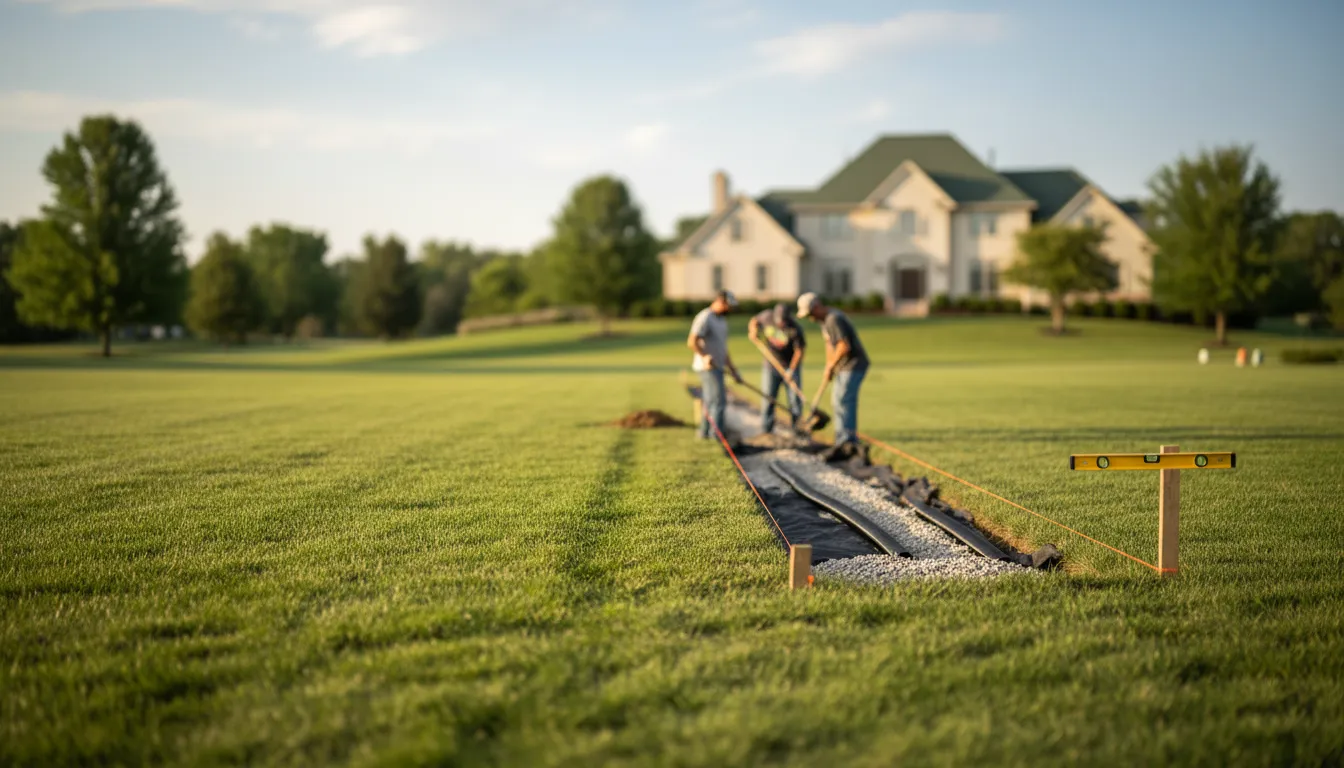
- French Drains: A trench filled with gravel and containing a perforated pipe that collects and redirects groundwater and surface runoff. They are excellent for relieving hydrostatic pressure against foundations and draining soggy swales.
- Dry Wells: An underground pit filled with gravel or a specialized chamber that collects water from downspouts or drains and allows it to percolate slowly into the surrounding soil. These are ideal for properties with good soil absorption but need a place to store large volumes of water temporarily.
- Catch Basins and Channel Drains: These are grated inlets placed in low spots or along driveways and patios. They connect to solid piping to swiftly channel surface water away to a safe discharge point like a street gutter or dry well.
Sustainable and Absorptive Practices
Modern drainage design incorporates solutions that work with nature to manage and even utilize rainwater.
- Rain Gardens and Bioswales: Shallow, landscaped depressions planted with native, water-tolerant plants. They are designed to capture runoff from roofs and paved areas, allowing it to soak into the ground while filtering pollutants-a practice encouraged by Brea's water-efficient landscape guidelines.
- Rainwater Harvesting: Installing rain barrels or cisterns to capture water from your roof. This not only reduces runoff but provides a free water source for irrigation.
- Permeable Paving: Replacing solid concrete or asphalt with permeable pavers, gravel, or other porous materials for patios and walkways allows rainwater to seep through into the ground below, reducing overall runoff volume.
Find the perfect yard drainage contractors for your needs
Get personalized recommendations and expert advice
The Professional Installation Process
Understanding the typical workflow for a drainage project can help you know what to expect when you consult with a Brea contractor.
- Site Assessment and Diagnosis: A professional will inspect your property during or after a rain event to identify the sources of water, flow paths, and low spots. They may also perform simple percolation tests to gauge soil absorption.
- Solution Design and Planning: Based on the assessment, they will design a system that may combine several methods (e.g., regrading the soil, adding a French drain, and directing water to a new rain garden). For larger projects, a permit from the City of Brea may be required.
- Site Preparation and Excavation: The work area is marked, and any necessary vegetation is cleared. Excavation begins for trenches, basins, or the reshaping of the land.
- System Installation: Pipes are laid, catch basins are set, gravel is placed, and any necessary connectors to downspouts or existing drainage are made. For regrading projects, soil is moved and compacted to the new specified slope.
- Backfill and Restoration: Trenches are filled, and the surface is restored with topsoil and sod or seed. The area is cleaned up, leaving your landscape functional and intact.
Understanding Project Costs in Brea
The investment for yard drainage solutions in Brea varies widely based on the complexity, scale, and whether you undertake parts of the project yourself. Here's a general overview of potential costs:
- DIY Rain Barrel Installation: The simplest intervention, with costs mainly for the barrel and connection kit, typically ranging from $50 to $200+.
- Basic Professional Regrading: For correcting the slope of a modest area, costs can range from $200 to $1,000 or more, depending on the amount of soil moved and labor involved 2.
- French Drain Installation: A professionally installed French drain system is more involved, with costs often between $1,000 and $3,000+, influenced by length, depth, and accessibility 3.
- Dry Well System: Installing a dry well involves significant excavation and materials, with projects commonly costing between $1,500 and $4,000+ 4.
- Rain Garden Construction: A professionally designed and installed rain garden, including soil amendments and plants, may range from $500 to $2,500+ 5 6.
For an accurate estimate tailored to your Brea property's specific needs, it is essential to get detailed quotes from local landscape and drainage specialists 7.
Local Considerations for Brea Property Owners
When planning a drainage project in Brea, keep these local factors in mind:
- Pollution Prevention: The City of Brea actively promotes practices that prevent runoff from carrying pollutants like oils, fertilizers, and soil into the storm drains. Solutions like rain gardens that filter water are particularly aligned with this goal.
- Water Efficiency: Brea's landscape guidelines encourage the use of climate-appropriate plants and efficient water management 8. Integrating drainage solutions with water-wise landscaping can create a beautiful, functional, and compliant outdoor space.
- Soil Conditions: Local soil types can affect which solutions are most effective. A professional can advise on whether your soil has good percolation for a dry well or if you need a system that redirects water entirely off-site.
Frequently asked questions
Sources
Footnotes
-
Residential Pollution Prevention | Brea, CA - Official Website - https://www.cityofbrea.gov/420/Residential-Pollution-Prevention ↩
-
How to Grade a Yard: Step-by-Step Guide for Proper Drainage - https://www.schmittwaterproofing.com/blog/yard-grading-101-how-to-grade-a-yard-for-proper-drainage-step-by-step/ ↩
-
12 Residential Backyard Drainage Solutions - Protect Your Yard - https://wilsonslawncare.com/12-residential-backyard-drainage-solutions/2024/ ↩
-
Understanding Residential Drainage Solutions | Dry Wells, French Drains & Grading - https://landdesignassociates.com/residential-drainage-solutions/ ↩
-
Making Your Yard RainReady - https://rainready.org/sites/default/files/factsheets/Factsheet-RainReady-Yard_0.pdf ↩
-
Rainwater Management - A Guide for Homeowners - https://nr.tulaliptribes.com/Content/documents/Rainwater-Management.pdf ↩
-
TOP 10 BEST Drainage Design in Brea, CA - Updated 2025 - Yelp - https://m.yelp.com/search?find_desc=Drainage+design&find_loc=Brea%2C+CA ↩
-
Water Efficient Landscape Guidelines - Brea, CA - https://cityofbrea.gov/DocumentCenter/View/14288/Water-Efficient-Landscape-Guidelines ↩