Find the Best Yard Drainage Contractors for Your Business
No obligation • Fast responses • Nationwide coverage

Why you can trust Landscape Atlas
Landscape Atlas is a leading United States resource for evaluating landscaping, lawn care, and outdoor service providers. Our team researches each category in depth, focusing on service quality, safety, and customer experience. Listings and rankings are based on independent criteria and user feedback, and companies cannot pay to influence our assessments or recommendations.
Search providers near you
Top Yard Drainage Contractors in Garden Grove, California Ranked
Proper yard drainage and grading are essential for protecting your Garden Grove home from water damage, soil erosion, and foundation issues. Effective water management directs runoff away from your property, preventing costly repairs and maintaining a healthy, usable outdoor space. This guide explains the common solutions and processes for residential drainage in our area, helping you understand your options and connect with qualified local professionals to assess your specific needs.
Greenplace Inc
2151 Pacific Ave A205, Costa Mesa, CA 92627
Greenplace Inc is a landscaping company based in Santa Ana, CA, offering a wide range of services including landscape design, hardscaping, lawn care, irrigation installation and repair, artificial turf, and yard drainage solutions. They serve both residential and commercial clients throughout Southern California, including Orange County and Los Angeles. Greenplace specializes in creating custom outdoor environments that combine aesthetic appeal with practical features such as smart irrigation systems to optimize water use. Founded by Volodymyr Dragan and Viktor Peshekhonov, the company emphasizes craftsmanship and long-term vision in their work. Their licensed team is known for detailed project management and responsiveness to client needs.
Irrigation Pros
Los Angeles, CA
Irrigation Pros is a locally owned landscaping company serving Orange County, including Santa Ana, Irvine, Newport Beach, and Mission Viejo. They specialize in sprinkler repair, sod installation, drainage solutions, and artificial turf installation. Their services focus on efficient irrigation systems tailored to the local climate, preventing water waste and yard damage. The company offers top-grade sod and drip irrigation systems designed for sustainability and water savings. Irrigation Pros operates with years of experience in the area and provides 24/7 availability for urgent sprinkler and drainage issues.

Lucky Smartscape
999 Corporate Dr Suite 100 #3425, Ladera Ranch, CA 92694
Lucky Smartscape is a landscaping company based in Irvine, CA, offering comprehensive outdoor design and installation services. Their expertise includes landscape design, yard drainage, sprinkler installation and repair, as well as hardscaping with pavers and retaining walls. They provide custom irrigation and drainage solutions to enhance water efficiency and prevent pooling, ensuring functional and attractive outdoor spaces. Lucky Smartscape also specializes in creating entertainment areas such as barbecue spots, outdoor kitchens, and fire pits, combining beauty and practicality for enjoyable gatherings.
Artisan Landscape Construction
Santa Ana, CA
Artisan Landscape Construction is a landscape contractor based in Santa Ana, CA, specializing in transforming outdoor spaces through design, construction, and management. Their services include hardscape installation such as patios, walkways, retaining walls, and water features, as well as grading, drainage, tree care, irrigation, and landscape maintenance for various property types. The company emphasizes the use of construction documents and design plans to ensure precise project execution and offers multi-year agreements for ongoing landscape and tree services.
Ariel Builders Landscape Specialist
Anaheim, CA
Ariel Builders Landscape Specialist offers comprehensive landscaping and remodeling services in Anaheim, CA. They focus on energy-efficient outdoor projects including drought-tolerant landscaping, artificial turf installation, and innovative design layouts featuring greenery, trees, and plants. Their services also include landscape lighting, hardscaping with pavers and stone, yard drainage solutions, and irrigation system installation and repair to maintain lawns and shrubbery. Ariel Builders Landscape Specialist integrates walkways, retaining walls, and decorative elements to enhance outdoor spaces.
Why Drainage Matters in Garden Grove
Inadequate drainage is more than just a nuisance; it's a threat to your property's structural integrity. Southern California experiences periods of intense rainfall, and without a proper system to manage that water, your yard can turn into a swampy mess. More critically, water pooling near your home's foundation can lead to cracks, basement or crawl space flooding, and mold growth. Proper site grading and drainage systems are not just improvements-they are protective investments for your home's value and safety. They also help you comply with local Garden Grove and California building codes, which often mandate specific runoff management to protect the municipal storm drain system.
Common Residential Drainage Solutions
Homeowners in Garden Grove have several effective methods for managing stormwater and surface runoff. The right solution depends on your yard's specific topography, soil type, and the source of the water problem.
Positive Grading and Soil Slope
The first and most fundamental line of defense is ensuring your yard has a "positive grade." This means the ground slopes away from your home's foundation at a minimum of a 5% grade for at least the first ten feet1 2. Regrading your yard involves moving and compacting soil to create this crucial slope, directing water toward the street, a drainage swale, or another safe discharge point. This is often the core of any comprehensive drainage plan.
French Drains
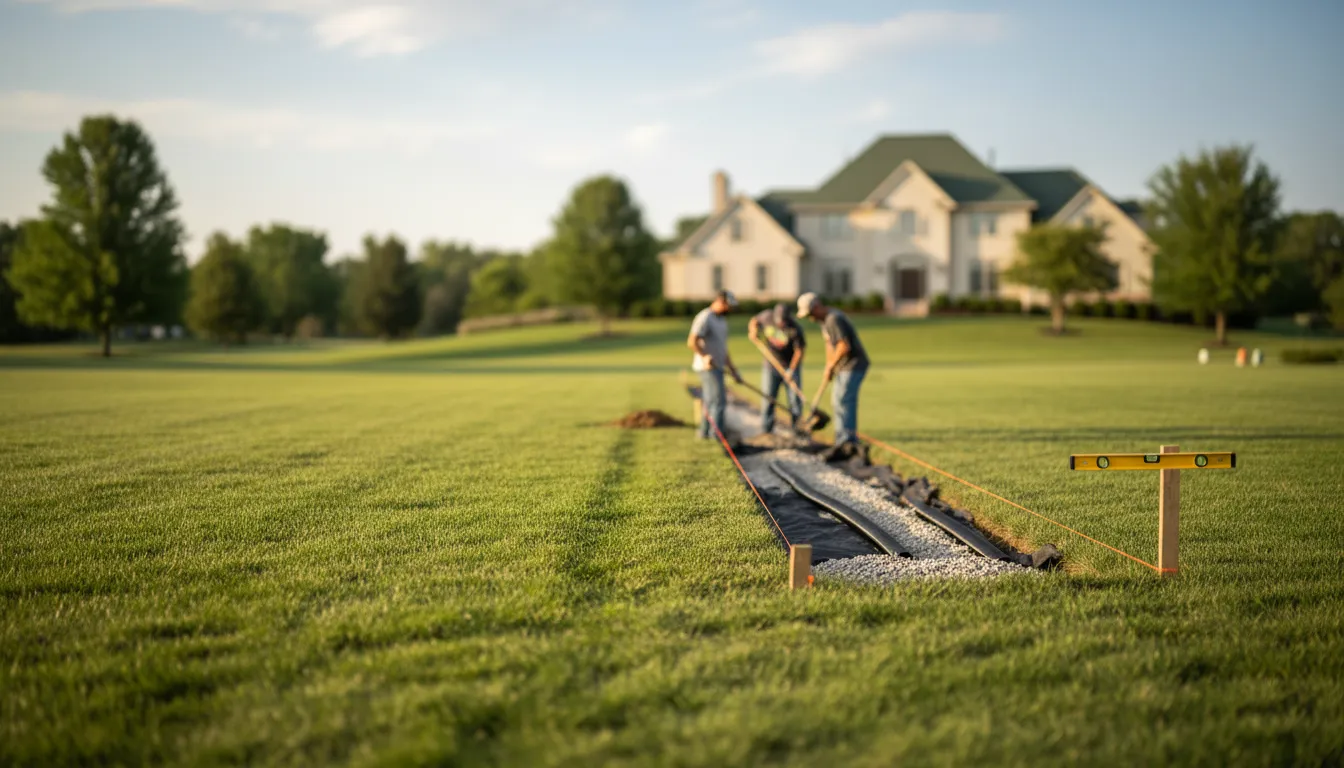
A French drain is a versatile subsurface drainage system. It consists of a trench filled with gravel and a perforated pipe that collects groundwater and surface runoff, channeling it away from problem areas. They are ideal for yards with persistent soggy spots or where water tends to seep toward the foundation.
Catch Basins and Channel Drains
For capturing large volumes of surface water quickly, catch basins and channel drains are highly effective. A catch basin is a grated inlet installed in a low spot, connected to an underground pipe that carries water to the storm sewer. Channel drains are long, narrow grates often used across driveways or patio entrances to intercept flowing water. These systems are crucial for managing heavy runoff from hardscapes like driveways.
Downspout and Gutter Management
Your roof collects a massive amount of water. If downspouts simply dump it next to your foundation, you're inviting trouble. Extending downspouts to discharge water at least 5-10 feet away from the house is a simple, cost-effective step. For better management, downspouts can be connected to underground pipes that lead to a drainage system or a designated drainage area 3.
Permeable Hardscaping
Replacing solid concrete or asphalt with permeable materials like pavers, gravel, or permeable concrete allows rainwater to soak into the ground rather than becoming runoff. This reduces the burden on your drainage system and helps replenish groundwater.
Rainwater Harvesting and Rain Gardens
For an eco-friendly approach, consider capturing water for later use. Rain barrels or cisterns collect water from your roof for irrigation. A rain garden is a landscaped depression planted with water-tolerant native plants; it collects runoff from roofs or driveways and allows it to percolate slowly into the soil, filtering pollutants in the process.
Find the perfect yard drainage contractors for your needs
Get personalized recommendations and expert advice
The Professional Drainage Project Process
Tackling a significant drainage issue is a multi-step process that often requires professional expertise, especially for permitting and complex engineering.
-
Site Assessment: A professional begins by identifying problem areas-where water pools, how it flows across your property, and any signs of foundation vulnerability. They will look for low spots, soggy soil, and erosion.
-
Design and Permitting: For anything beyond a simple fix, a detailed plan is needed. A landscape architect, civil engineer, or specialized contractor will design a system tailored to your property. In Garden Grove, projects that significantly alter the flow of water or connect to the city storm drain often require permits and must comply with the California Building Code and local ordinances. Engineers may prepare precise grading plans to submit for approval4.
-
Excavation and Installation: This is the construction phase. It involves regrading the soil, digging trenches for French drains or pipes, installing catch basins, and setting up any related hardscape or landscaping elements.
-
Testing and Verification: After installation, the system should be tested, ideally during a rain event or with a hose, to verify water flows as intended and does not pool in unwanted areas.
Understanding Costs for Drainage Work
Costs for drainage and grading solutions in Garden Grove vary widely based on the complexity of the problem, the size of your yard, materials, and labor. Below is a general range to help you set expectations:
- Simple Downspout Extensions: $100 - $400
- Catch Basin or Basic French Drain: $500 - $2,000+
- Yard Regrading or Sod Removal: $500 - $2,500+ (depends heavily on area and complexity)
- Permeable Patio or Driveway Installation: $15 - $30+ per square foot
- Comprehensive Landscape Drainage System: $2,000 - $10,000+ (can be significantly higher for projects requiring engineering plans and city permits)
These figures are estimates, and actual pricing can fluctuate. The best way to get an accurate cost is to obtain detailed quotes from licensed contractors who can assess your specific property 5 6.
Maintaining Your Drainage System
Once installed, a drainage system requires minimal but important maintenance. Regularly clear debris from gutter guards, catch basin grates, and channel drains to prevent clogging. Inspect downspout extensions to ensure they are securely in place and discharging water correctly. Periodically check the outlets of French drains or pipe systems to make sure they are not blocked. A little preventative care ensures your system functions properly for years to come.
Frequently asked questions
Sources
Footnotes
-
12 Residential Backyard Drainage Solutions - Protect Your Yard - https://wilsonslawncare.com/12-residential-backyard-drainage-solutions/2024/ ↩
-
How to Grade a Yard for Drainage | Benefits of Yard Grading - https://crawlspaceninja.com/uncategorized/how-to-grade-a-yard-for-drainage/ ↩
-
Storm Drain | City of Garden Grove - https://ggcity.org/environmental-compliance/storm-drain ↩
-
Full page photo - City of Garden Grove - https://ggcity.org/sites/default/files/www/pw/engineering/sample%20precise%20grading%20plan%20for%20industrial%20project/sample%20precise%20grading%20plan%20for%20industrial%20project.pdf ↩
-
Drainage and Grading Plans - https://www.hcd.ca.gov/mmh/park/construction-alterations/drainage-grading ↩
-
Rain Gardens: Stormwater Management Solution - https://www.horstexcavating.com/news-and-blog/are-rain-gardens-a-good-solution-for-stormwater-management/ ↩