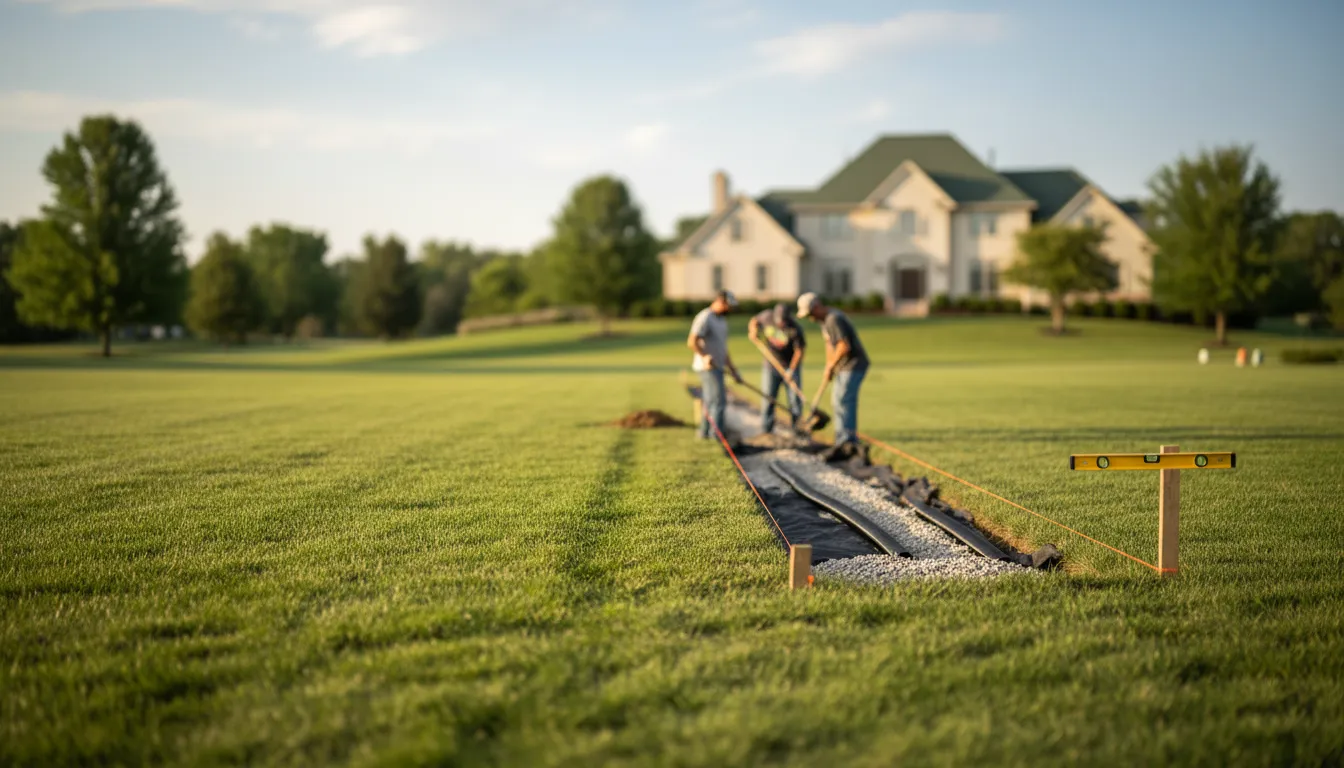
Find the Best Yard Drainage Contractors for Your Business
No obligation • Fast responses • Nationwide coverage

Why you can trust Landscape Atlas
Landscape Atlas is a leading United States resource for evaluating landscaping, lawn care, and outdoor service providers. Our team researches each category in depth, focusing on service quality, safety, and customer experience. Listings and rankings are based on independent criteria and user feedback, and companies cannot pay to influence our assessments or recommendations.
Search providers near you
Top Yard Drainage Contractors in Mountain View, California Ranked
Proper yard drainage and grading are essential for protecting your Mountain View home from water damage, preventing soil erosion, and contributing to a healthier local watershed. When rainwater isn't managed correctly, it can pool around foundations, create muddy, unusable areas in your landscape, and contribute to stormwater pollution in local creeks and the San Francisco Bay. This guide explains the core solutions for managing surface water and subsurface water, from simple grading adjustments to integrated drainage systems, helping you understand your options and connect with local specialists who can assess your property and implement an effective plan.
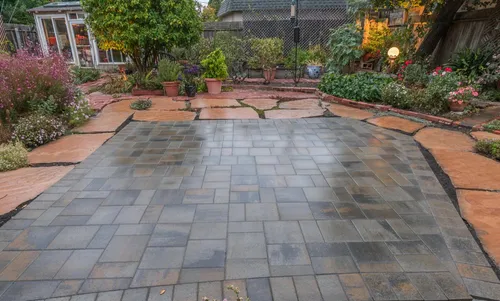
Ideal Landscape & Concrete
921 N Amphlett Blvd, San Mateo, CA 94401
Ideal Landscape & Concrete is a landscape and hardscape construction company based in San Jose, CA. Founded in 1981, they offer a range of services including fence installation, landscape lighting, yard drainage, sprinkler system installation and repair, landscaping, and hardscaping such as pavers and retaining walls. They also specialize in irrigation system installation and maintenance to support water conservation in the drought-prone Bay Area. Their capabilities include concrete and masonry construction, as well as erosion control and low-voltage lighting installation.
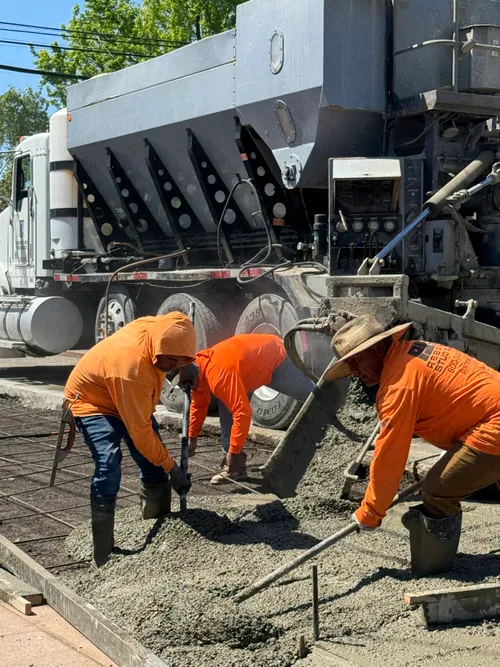
Lamata Concrete
San Francisco, CA
Lamata Concrete is a San Francisco, CA-based company with over 35 years of experience specializing in concrete foundation and flatwork solutions. They offer services for residential and small commercial projects, including driveways, patios, walkways, retaining walls, foundations, and drainage systems. Their expertise in local soil conditions supports durable and stable installations. Lamata Concrete also handles commercial work such as sidewalks, curbs, gutters, stairs, and ADA-compliant ramps.
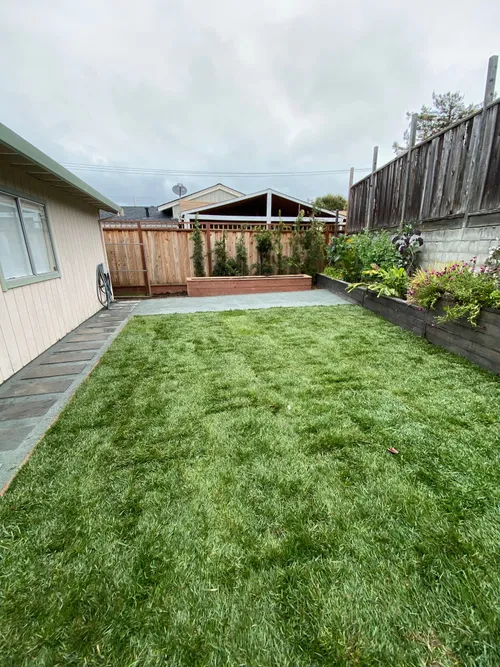
Greener Bay Landscaping Inc.
San Jose, CA
Greener Bay Landscaping Inc. is a family-owned landscaping contractor based in San Jose, CA, serving the Bay Area and Peninsula. They provide a wide range of services including landscape design, sod and synthetic lawn installation, irrigation system setup, fence and deck construction, hardscaping with pavers and retaining walls, yard drainage, and ongoing lawn care and maintenance. With over 15 years of experience, the company emphasizes quality craftsmanship and attention to detail, completing more than 1500 projects across Northern California. Their licensed and insured team works closely with clients to create customized outdoor spaces that combine beauty and function.
Jenn's Gardening
Fremont, CA
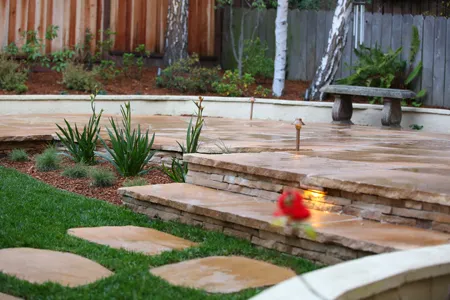
Jenn's Gardening is a full-service landscaping company based in Fremont, CA, serving the Peninsula area. Since 1993, owner Jennifer France and her team have provided a wide range of services including lawn mowing, fertilization, weed control, sod installation, irrigation system installation and repair, tree pruning and removal, hardscaping with pavers and retaining walls, and yard drainage solutions. They specialize in water-wise irrigation systems and use environmentally safe methods for disease and pest control to maintain healthy, attractive gardens. Jenn's Gardening combines decades of experience with personalized care to create functional and beautiful outdoor spaces.
Onelawn
16120 Ashland Ave, San Lorenzo, CA 94580
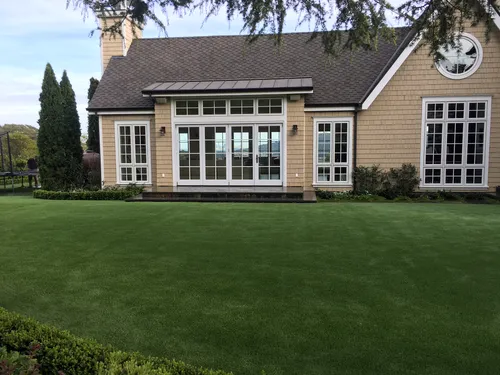
Onelawn is a synthetic turf installation and landscape design company serving San Jose, CA, and the greater Bay Area. Since 2008, they have specialized in artificial grass installation for residential lawns, commercial properties, playgrounds, pet areas, putting greens, bocce courts, and rooftop landscaping. Their expertise includes using high-quality, US-made synthetic fibers and advanced installation techniques to create durable, low-maintenance lawns that conserve water and reduce environmental impact. Onelawn works closely with clients to design customized outdoor spaces that combine aesthetic appeal with practical benefits.
Why Proper Drainage is Critical in Mountain View
Mountain View's climate, with its wet winters and dry summers, presents a unique challenge. Intense rainfall can overwhelm poorly draining soil, leading to immediate problems like basement flooding or soggy lawns. Over time, this excess moisture can compromise your home's structural integrity, damage landscaping investments, and create ideal conditions for mold and pests 1. Furthermore, uncontrolled runoff from properties carries pollutants like oil, fertilizers, and sediment into the storm drain system, which flows directly into local waterways without treatment 1. Implementing effective stormwater management on your property is not just a home maintenance issue; it's a key part of environmental stewardship in the Santa Clara Valley.
Common Drainage and Grading Solutions
There is no one-size-fits-all solution for water management. The right approach depends on your property's slope, soil type, and the specific areas where water accumulates. Here are the most common techniques used by landscape and drainage professionals in the area.
Regrading and Swales
The most fundamental form of water management is controlling the lay of the land. Regrading involves adjusting the slope of your soil to create a gentle, consistent pitch that directs water away from your home's foundation and toward a safe discharge point, like a street gutter or a dry well. A swale is a shallow, grassy ditch designed to channel water across a slope. It's a more subtle form of earthworks that can be integrated attractively into a landscape while effectively guiding surface runoff.
Subsurface Drainage Systems
When surface grading isn't enough or isn't practical, subsurface solutions move water underground. A French drain is a gravel-filled trench containing a perforated pipe that collects and redirects groundwater and water that seeps below the surface. It's highly effective for relieving hydrostatic pressure against foundation walls or drying out perpetually wet spots in a yard. For properties with space, a dry well or infiltration basin acts as an underground storage chamber where collected runoff can slowly percolate back into the soil over time, recharging groundwater.
Water Capture and Reuse
Turning a problem into a resource is a cornerstone of modern landscape design. Rain barrels or larger cisterns connected to your downspouts capture roof runoff, which can then be used to irrigate your garden during dry periods. This simple step reduces your municipal water use and mitigates the volume of water rushing off your property during a storm.
Permeable Surfaces
Traditional concrete and asphalt create impervious surfaces that generate rapid runoff. Permeable paving options-including special pavers, porous concrete, and gravel-allow rainwater to seep through the surface into a stone reservoir below, where it slowly infiltrates the ground. This is an excellent solution for driveways, patios, and walkways that helps manage runoff at its source.
Bioretention: Rain Gardens
A rain garden is a landscaped depression planted with native, water-tolerant plants. It's designed to collect runoff from roofs or paved areas, allowing the water to pool and slowly soak into the ground. The plants and soil filter out pollutants, making this a beautiful, ecological, and highly effective drainage solution that supports local biodiversity.
Find the perfect yard drainage contractors for your needs
Get personalized recommendations and expert advice
The Professional Installation Process
Implementing a lasting drainage solution typically follows a structured process. Understanding these steps can help you collaborate effectively with a landscape drainage contractor.
-
Site Assessment and Problem Identification: A professional will start by examining your property during or after a rain event to identify the source of water, its flow paths, and where it pools. They will look for signs of erosion, foundation dampness, and soil saturation. This assessment is crucial for diagnosing the root cause, not just the symptoms.
-
Design and Planning: Using the assessment, the contractor will design a system that may combine several solutions. For example, they might plan a swale to collect water from a slope, direct it into a French drain, and then outlet it into a rain garden. This planning phase often involves referencing best management practices (BMPs) for stormwater, such as those outlined in local resources like the Santa Clara Valley Urban Runoff Pollution Prevention Program (SCVURPPP) handbook 2. For complex projects, this may involve formal landscape design and even checking with the City of Mountain View regarding permits for significant earthmoving or connections to public storm systems 2.
-
Preparation and Earthwork: This is the construction phase. It involves the excavation for trenches, basins, or gardens and the critical task of regrading the land to establish the correct slopes. Proper compaction and shaping of the soil are essential for long-term stability and function.
-
Installation of Components: The specific drainage components are installed. This includes laying perforated pipe and gravel for French drains, constructing dry wells, setting permeable pavers, or planting a rain garden with appropriate soil mixes and vegetation.
-
Finishing and Testing: The final step involves restoring the site-sodding over swales, covering drains with decorative gravel or mulch, and ensuring all downspouts are properly connected. A good contractor will test the system, often by running a hose to simulate rain, to verify water flows as designed and does not create new problems.
Understanding Project Costs
The investment for drainage and grading work varies widely based on the solutions chosen, the size and complexity of your property, and labor costs. Here is a general breakdown to help you budget:
-
Low-Cost Solutions & DIY Projects: Simple interventions like installing a rain barrel ($100 - $300) or creating a small swale or rain garden ($200 - $1,000 for plants and soil) can be manageable for homeowners. Minor grading to adjust slope near a foundation might cost $300 - $800 if the area is small and accessible 3 4.
-
Moderate Professional Installations: Installing a French drain for a specific problem area typically ranges from $500 to $2,000 or more, depending on length and depth. Permeable paving is a larger investment, with material and installation often costing between $10 and $30 per square foot 5.
-
High-Cost, Extensive Systems: A comprehensive landscape drainage overhaul that combines regrading, multiple subsurface drains, and dry wells can range from $3,000 to over $10,000. A standalone dry well or infiltration basin system can cost between $1,500 and $5,000+, influenced by depth, size, and soil conditions 6 7.
Always remember that these are estimates. The most accurate way to understand the cost for your home is to obtain quotes from several qualified local professionals who can assess your specific site conditions.
Frequently asked questions
Sources
Footnotes
-
How Stormwater Affects Your Rivers - https://www.americanrivers.org/threats-solutions/clean-water/stormwater-runoff/ ↩ ↩2
-
C.3 Stormwater Handbook - https://scvurppp.org/wp-content/uploads/2024/11/SCVURPPP-C3-Handbook-chapters-2024-Oct-update.pdf ↩ ↩2
-
Control Heavy Runoff - Solving Drainage and Erosion Problems - https://www.fairfaxcounty.gov/soil-water-conservation/drainage-problem-control-runoff ↩
-
What You Can Do to Soak Up the Rain | US EPA - https://www.epa.gov/soakuptherain/what-you-can-do-soak-rain ↩
-
Stormwater Best Management Practices - https://spcwater.org/topics/stormwater-management/stormwater-best-management-practices-2/ ↩
-
Urban Stormwater Runoff Capture and Management Resource ... - https://water.ca.gov/-/media/DWR-Website/Web-Pages/Programs/California-Water-Plan/Docs/RMS/2025/Urban-Stormwater-RMS---2025.pdf ↩
-
12 Yard Drainage Solutions for your Landscape Design - https://cclandscapes.ca/yard-drainage-solutions/ ↩