Find the Best Yard Drainage Contractors for Your Business
No obligation • Fast responses • Nationwide coverage

Why you can trust Landscape Atlas
Landscape Atlas is a leading United States resource for evaluating landscaping, lawn care, and outdoor service providers. Our team researches each category in depth, focusing on service quality, safety, and customer experience. Listings and rankings are based on independent criteria and user feedback, and companies cannot pay to influence our assessments or recommendations.
Search providers near you
Top Yard Drainage Contractors in Pleasanton, California Ranked
Managing water flow on your property is a critical part of homeownership in Pleasanton. Proper yard drainage and grading systems prevent water from pooling near your foundation, protect your landscaping investment, and help manage the local watershed by reducing runoff pollution. This guide explains the common solutions used by Pleasanton homeowners, from simple grading to complex French drains, and how you can find local expertise to assess and solve your property's unique water management challenges.
Ideal Landscape & Concrete
921 N Amphlett Blvd, San Mateo, CA 94401
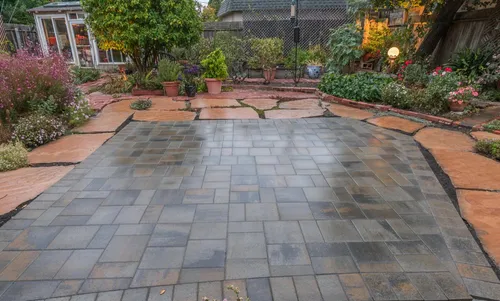
Ideal Landscape & Concrete is a landscape and hardscape construction company based in San Jose, CA. Founded in 1981, they offer a range of services including fence installation, landscape lighting, yard drainage, sprinkler system installation and repair, landscaping, and hardscaping such as pavers and retaining walls. They also specialize in irrigation system installation and maintenance to support water conservation in the drought-prone Bay Area. Their capabilities include concrete and masonry construction, as well as erosion control and low-voltage lighting installation.
Lamata Concrete
San Francisco, CA
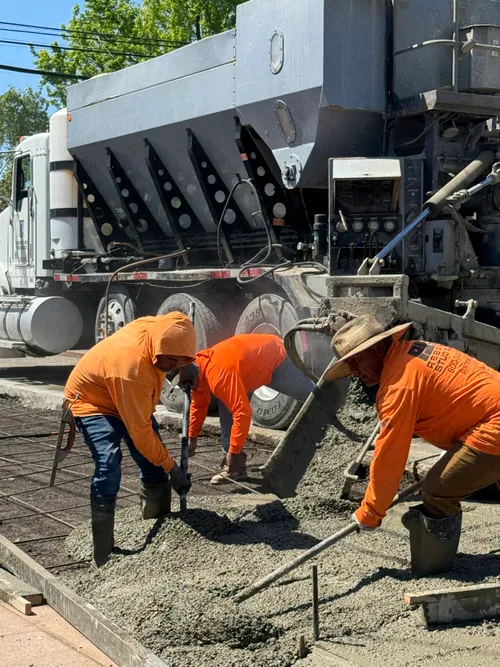
Lamata Concrete is a San Francisco, CA-based company with over 35 years of experience specializing in concrete foundation and flatwork solutions. They offer services for residential and small commercial projects, including driveways, patios, walkways, retaining walls, foundations, and drainage systems. Their expertise in local soil conditions supports durable and stable installations. Lamata Concrete also handles commercial work such as sidewalks, curbs, gutters, stairs, and ADA-compliant ramps.
Greener Bay Landscaping Inc.
San Jose, CA
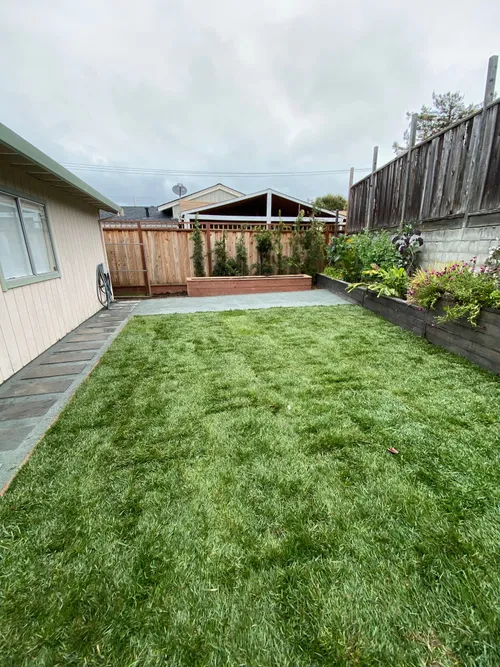
Greener Bay Landscaping Inc. is a family-owned landscaping contractor based in San Jose, CA, serving the Bay Area and Peninsula. They provide a wide range of services including landscape design, sod and synthetic lawn installation, irrigation system setup, fence and deck construction, hardscaping with pavers and retaining walls, yard drainage, and ongoing lawn care and maintenance. With over 15 years of experience, the company emphasizes quality craftsmanship and attention to detail, completing more than 1500 projects across Northern California. Their licensed and insured team works closely with clients to create customized outdoor spaces that combine beauty and function.
Atlas Tree Service Inc.
150 Medburn St, Concord, CA 94520
Atlas Tree Service Inc. is a tree and landscape specialist serving Oakland, CA, and the surrounding Northern California area. Established in 1962, the company offers a wide range of services including tree removal, pruning, stump grinding, land clearing, and landscape design. They have a large fleet equipped with cranes and bucket trucks to handle large tree demolition and installation. Atlas Tree Service also provides grading, drainage system installation, and concrete and paving services. The company operates 24/7, offering emergency tree services at any time.
Jenn's Gardening
Fremont, CA
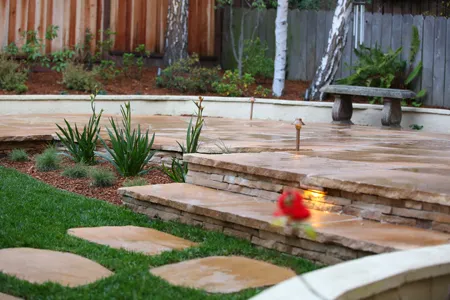
Jenn's Gardening is a full-service landscaping company based in Fremont, CA, serving the Peninsula area. Since 1993, owner Jennifer France and her team have provided a wide range of services including lawn mowing, fertilization, weed control, sod installation, irrigation system installation and repair, tree pruning and removal, hardscaping with pavers and retaining walls, and yard drainage solutions. They specialize in water-wise irrigation systems and use environmentally safe methods for disease and pest control to maintain healthy, attractive gardens. Jenn's Gardening combines decades of experience with personalized care to create functional and beautiful outdoor spaces.
Why Proper Drainage Matters in Pleasanton
A well-designed drainage system does more than just keep your basement dry. In Pleasanton, managing stormwater runoff is a community effort to protect local creeks and the broader watershed. When water pools in your yard or flows unchecked, it can lead to soil erosion, foundation cracks, mold growth, and damaged plants. More importantly, uncontrolled runoff can carry pollutants like fertilizers, pesticides, and pet waste into the storm drain system, which often flows untreated into local waterways. Implementing effective site grading and water diversion strategies safeguards your property's structural integrity and contributes to cleaner water for the entire Tri-Valley area.
Common Yard Drainage Solutions
Pleasanton homeowners have a toolkit of effective methods to control water. The right solution depends on your yard's slope, soil type, and the specific problem areas.
Grading and Sloping
This is the foundational step for most properties. Grading involves reshaping the soil to create a gentle, consistent slope-typically a drop of at least 6 inches over the first 10 feet-away from your home's foundation. This direct approach ensures surface water flows away from structures, preventing seepage and pooling. Proper lot grading is often the first recommendation from local contractors when addressing new construction or major landscape renovations.
French Drains
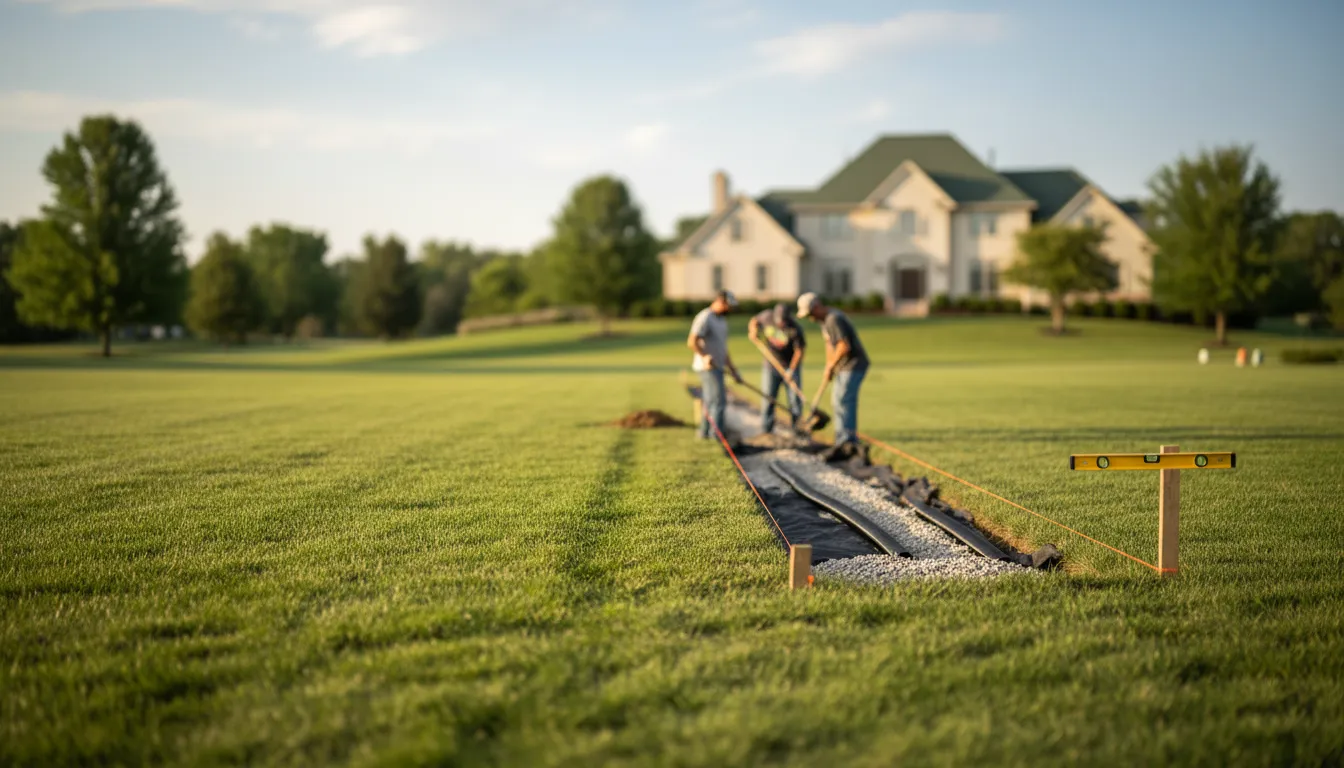
A French drain is a subsurface solution for yards with persistent soggy spots or where surface grading isn't enough. It consists of a trench filled with gravel and a perforated pipe that collects groundwater and redirects it to a safer discharge point, like a street gutter or dry well. These systems are particularly useful at the base of slopes or in areas with high water tables, acting as a reliable channel for subsurface water.
Rain Gardens and Dry Creek Beds
These landscaped features manage water beautifully. A rain garden is a shallow, planted depression that collects runoff from roofs or paved areas, allowing it to slowly infiltrate the soil while filtering pollutants. Native plants that tolerate both wet and dry conditions are ideal. A dry creek bed, or swale, is a rock-lined channel that mimics a natural stream, guiding water across your property while adding aesthetic appeal. Both are considered "green infrastructure" and are encouraged for their environmental benefits.
Disconnected Downspouts and Rain Harvesting
Instead of funneling roof water directly into the storm sewer, downspouts can be disconnected and redirected into landscaped areas, rain barrels, or cisterns. This simple step reduces the volume of runoff and provides a free source of water for irrigation. The City of Pleasanton promotes these practices as part of its stormwater pollution prevention program.
Pervious Surfaces
Replacing solid concrete or asphalt with permeable materials like gravel, permeable pavers, or turf blocks allows rainwater to soak into the ground directly below. Using these materials for patios, walkways, or driveways can significantly reduce runoff from your property.
The Professional Process: From Assessment to Installation
Tackling a water management project involves several key steps. While a homeowner might handle a simple downspout extension, most grading and drainage work benefits from professional assessment.
- Identify the Problem: The first step is observation. After a rain, walk your property and mark areas where water pools, flows toward your house, or causes erosion. This helps define the scope of the issue1.
- Professional Site Assessment: A local drainage specialist or landscaper will evaluate your property's topography, soil composition, and water flow patterns. They identify high points (water sources) and low points (accumulation zones) to design an effective solution.
- Solution Design & Planning: Based on the assessment, the professional will recommend a plan. This may involve a single technique or a combination-for example, regrading the lawn slope and installing a French drain at the property's low side 2. For larger projects, they will handle any necessary permits from the City of Pleasanton.
- Installation: This phase involves excavation, trenching for drains, moving soil for grading, installing pipes and filter fabric, and placing rock or plants 3. Professionals have the equipment and expertise to ensure proper depth, slope, and integration with existing landscapes.
- Testing and Maintenance: Once installed, the system should be tested with water. Homeowners need to maintain their drainage systems by keeping drains clear of debris, ensuring downspouts are connected, and occasionally checking the slope of graded areas4.
Find the perfect yard drainage contractors for your needs
Get personalized recommendations and expert advice
Understanding Costs and Investment
The investment for yard drainage work in Pleasanton varies widely based on the solution's complexity and scale. Costs are primarily driven by materials, labor for excavation and installation, and the project's size.
- Basic Grading/Regrading: For adjusting the slope of a yard, costs are influenced by the amount of soil to be moved and the accessibility of the area for machinery.
- French Drains and Channel Drains: These involve more labor and materials (trenching, pipe, gravel, filter fabric). The length and depth of the trench are major cost factors5.
- Landscaped Features (Rain Gardens, Dry Creek Beds): Costs include excavation, soil amendments, rocks (for creek beds), and the plants themselves. While potentially moderate in cost, they add significant landscape value6 7.
- Permeable Pavers: This is often a higher-cost option due to the price of the specialized pavers and the required subsurface preparation to ensure proper drainage8.
For accurate budgeting, it's essential to get detailed quotes from several local Pleasanton contractors. They can assess your specific situation and provide estimates that reflect current material and labor rates in the Bay Area9 10. Remember, an investment in proper drainage can prevent far more costly repairs to your home's foundation or landscape later.
Choosing the Right Local Expertise
Not every landscaper specializes in complex water management. When looking for help, seek out professionals who specifically mention yard drainage, grading services, or stormwater management in their service offerings. Look for experience with the local Pleasanton soil conditions and familiarity with municipal guidelines for stormwater 11. A reputable contractor will perform a thorough site evaluation, explain the proposed solution clearly, provide a detailed written estimate, and discuss how the work will be integrated with your existing landscape. Checking reviews and asking for local references can provide peace of mind that the job will be done correctly.
Frequently asked questions
Sources
Footnotes
-
12 Residential Backyard Drainage Solutions - Protect Your Yard - https://wilsonslawncare.com/12-residential-backyard-drainage-solutions/2024/ ↩
-
Grading & Drainage Basics for Residential Landscaping in North ... - https://www.honeycutt-landscaping-inc.com/grading-and-drainage-in-residential-yard-design/ ↩
-
Swales, Drains, and Site Grading for Stormwater Control - https://basc.pnnl.gov/resource-guides/swales-drains-and-site-grading-stormwater-control ↩
-
How to Grade a Yard: Step-by-Step Guide for Proper Drainage - https://www.schmittwaterproofing.com/blog/yard-grading-101-how-to-grade-a-yard-for-proper-drainage-step-by-step/ ↩
-
Drainage Contractor - CLA Construction - Pleasanton CA - https://claconstruction.net/drainage.html ↩
-
Stormwater Pollution Prevention for Residents - City of Pleasanton - https://www.cityofpleasantonca.gov/our-government/pleasanton-water/clean-water-program/stormwater-pollution-prevention-for-residents/ ↩
-
Control Heavy Runoff - Solving Drainage and Erosion Problems - https://www.fairfaxcounty.gov/soil-water-conservation/drainage-problem-control-runoff ↩
-
Stormwater Best Management Practices - https://spcwater.org/topics/stormwater-management/stormwater-best-management-practices-2/ ↩
-
Professional Yard Drainage in Pleasanton - https://tjsyarddrainage.com/yard-drainage/ca/pleasanton/yard-drainage ↩
-
TOP 10 BEST Yard Drainage in Pleasanton, CA - Updated 2025 - Yelp - https://m.yelp.com/search?find_desc=Yard+Drainage&find_loc=Pleasanton%2C+CA ↩
-
Grading & Drainage | Serving The San Francisco Bay Area - https://techconcorp.com/services/drainage/ ↩