Find the Best Yard Drainage Contractors for Your Business
No obligation • Fast responses • Nationwide coverage

Why you can trust Landscape Atlas
Landscape Atlas is a leading United States resource for evaluating landscaping, lawn care, and outdoor service providers. Our team researches each category in depth, focusing on service quality, safety, and customer experience. Listings and rankings are based on independent criteria and user feedback, and companies cannot pay to influence our assessments or recommendations.
Search providers near you
Top Yard Drainage Contractors in San Mateo, California Ranked
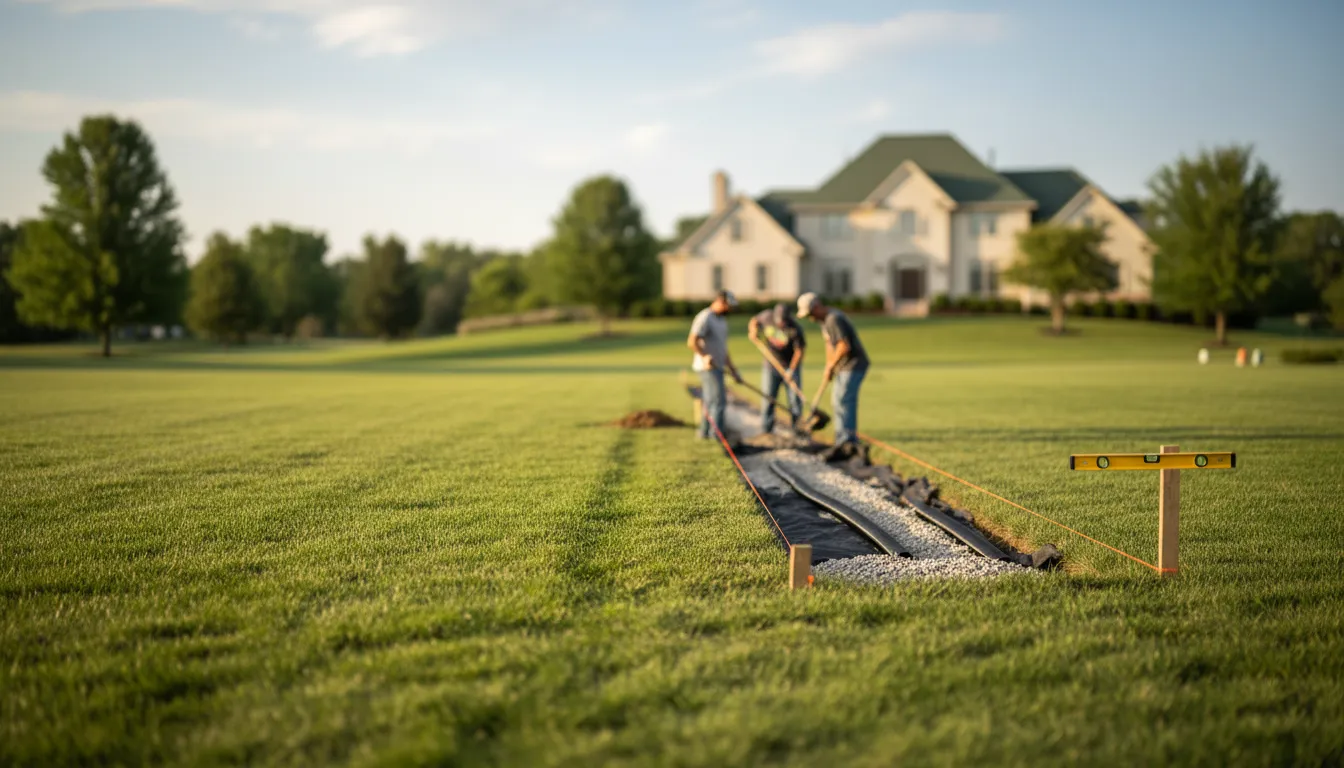
Proper yard drainage and grading are essential for protecting your San Mateo home from water damage, managing stormwater responsibly, and creating a healthy, usable outdoor space. In a region where managing runoff and protecting local waterways is a priority, effective stormwater management and land grading are not just home improvements-they are community responsibilities. This guide will help you understand the common solutions, local regulations, and process for addressing drainage issues on your property, connecting you with the expertise needed for a successful project.
Ideal Landscape & Concrete
921 N Amphlett Blvd, San Mateo, CA 94401
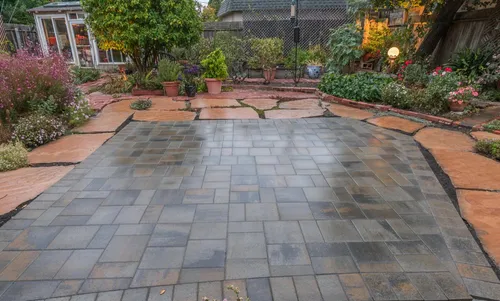
Ideal Landscape & Concrete is a landscape and hardscape construction company based in San Jose, CA. Founded in 1981, they offer a range of services including fence installation, landscape lighting, yard drainage, sprinkler system installation and repair, landscaping, and hardscaping such as pavers and retaining walls. They also specialize in irrigation system installation and maintenance to support water conservation in the drought-prone Bay Area. Their capabilities include concrete and masonry construction, as well as erosion control and low-voltage lighting installation.
Lamata Concrete
San Francisco, CA
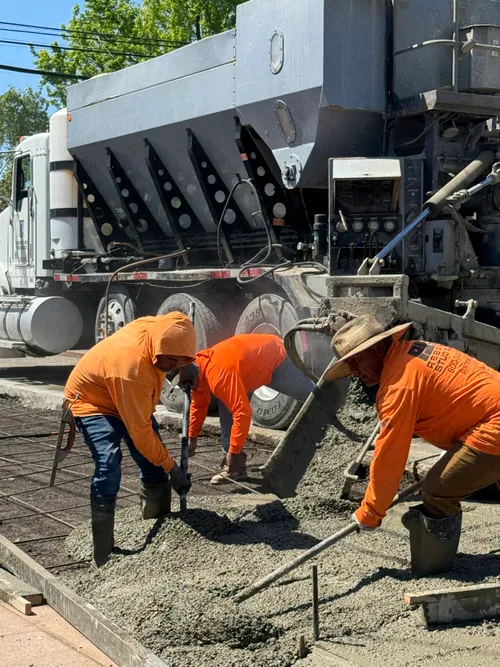
Lamata Concrete is a San Francisco, CA-based company with over 35 years of experience specializing in concrete foundation and flatwork solutions. They offer services for residential and small commercial projects, including driveways, patios, walkways, retaining walls, foundations, and drainage systems. Their expertise in local soil conditions supports durable and stable installations. Lamata Concrete also handles commercial work such as sidewalks, curbs, gutters, stairs, and ADA-compliant ramps.
Greener Bay Landscaping Inc.
San Jose, CA
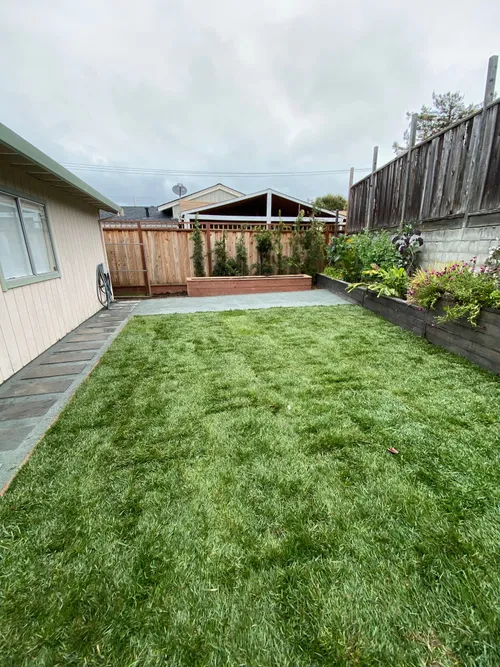
Greener Bay Landscaping Inc. is a family-owned landscaping contractor based in San Jose, CA, serving the Bay Area and Peninsula. They provide a wide range of services including landscape design, sod and synthetic lawn installation, irrigation system setup, fence and deck construction, hardscaping with pavers and retaining walls, yard drainage, and ongoing lawn care and maintenance. With over 15 years of experience, the company emphasizes quality craftsmanship and attention to detail, completing more than 1500 projects across Northern California. Their licensed and insured team works closely with clients to create customized outdoor spaces that combine beauty and function.
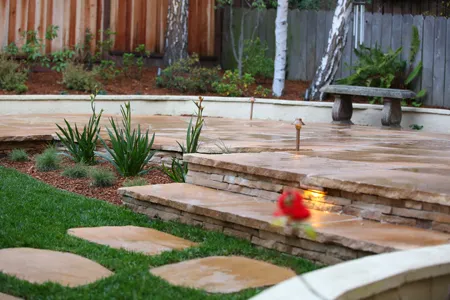
Jenn's Gardening
Fremont, CA
Jenn's Gardening is a full-service landscaping company based in Fremont, CA, serving the Peninsula area. Since 1993, owner Jennifer France and her team have provided a wide range of services including lawn mowing, fertilization, weed control, sod installation, irrigation system installation and repair, tree pruning and removal, hardscaping with pavers and retaining walls, and yard drainage solutions. They specialize in water-wise irrigation systems and use environmentally safe methods for disease and pest control to maintain healthy, attractive gardens. Jenn's Gardening combines decades of experience with personalized care to create functional and beautiful outdoor spaces.
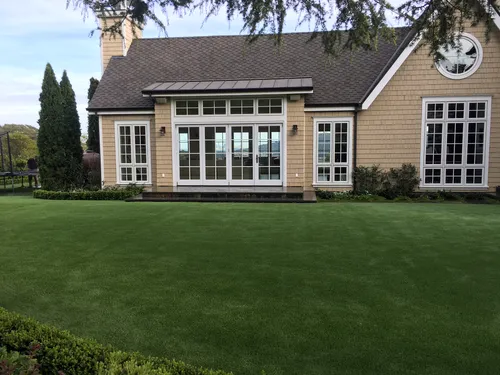
Onelawn
16120 Ashland Ave, San Lorenzo, CA 94580
Onelawn is a synthetic turf installation and landscape design company serving San Jose, CA, and the greater Bay Area. Since 2008, they have specialized in artificial grass installation for residential lawns, commercial properties, playgrounds, pet areas, putting greens, bocce courts, and rooftop landscaping. Their expertise includes using high-quality, US-made synthetic fibers and advanced installation techniques to create durable, low-maintenance lawns that conserve water and reduce environmental impact. Onelawn works closely with clients to design customized outdoor spaces that combine aesthetic appeal with practical benefits.
Why Drainage and Grading Matter in San Mateo
Inadequate drainage can lead to a host of problems, from foundational cracks and basement flooding to soil erosion and mosquito breeding grounds. For San Mateo homeowners, the stakes are even higher due to local environmental goals. The city and county emphasize Best Management Practices (BMPs) and Low Impact Development (LID) strategies designed to minimize runoff and increase on-site rainwater retention 1 2. These regulations aim to protect the San Francisco Bay and local creeks from pollution carried by stormwater. Essentially, managing water on your property isn't just about protecting your investment; it's about being a good steward of the local watershed 3 4.
Common Drainage & Grading Solutions
There is no one-size-fits-all solution for water management. The right approach depends on your property's slope, soil type, and the specific problem areas. Here are the most effective techniques used by professionals in San Mateo.
Foundation Grading and Slope Correction
The first line of defense is ensuring the ground slopes away from your home's foundation. A minimum slope of 3% (about a 3-inch drop over 8 feet) is recommended to direct surface water away from the structure. Regrading may involve moving soil to create this positive slope, which is often a fundamental part of any comprehensive drainage plan.
Source Control Measures
These solutions capture or redirect water at its origin.
- Rain Barrels and Cisterns: Simple yet effective, these systems capture roof runoff from downspouts for later use in irrigation, reducing the volume of water entering your yard during a storm.
- Downspout Extensions: Redirecting gutter water several feet away from the foundation using extensions or splash blocks is a basic, critical step.
Infiltration Measures
These strategies allow water to soak into the ground naturally, recharging groundwater and filtering pollutants.
- Rain Gardens / Bioretention Basins: These are landscaped depressions filled with specific soil mixes and water-tolerant plants. They are designed to capture runoff from roofs or driveways, allowing it to pool and slowly infiltrate while plants filter out contaminants 5.
- Dry Wells: An underground structure, often a large pit filled with gravel, that collects water and allows it to percolate slowly into the surrounding soil. They are useful in areas with adequate soil infiltration rates.
- Soil Amendment: Improving soil quality by adding organic matter can significantly enhance its permeability and water-holding capacity, reducing surface runoff.
Conveyance Systems
When water needs to be moved from one area to another, these systems are employed.
- French Drains: A gravel-filled trench containing a perforated pipe. It collects subsurface water and redirects it to a safer discharge point, such as a street gutter or dry well. They are ideal for solving soggy lawn issues or relieving hydrostatic pressure against foundations.
- Channel Drains (Trench Drains): These long, narrow drains with grated tops are installed across driveways, patios, or walkways to intercept surface water before it can pool or flow toward the house.
- Grassy Swales: Shallow, vegetated channels that transport runoff while slowing its flow, which promotes infiltration and filters sediment.
Permeable Surfaces
Reducing impervious area is a key LID principle. Replacing traditional concrete or asphalt with permeable pavers for driveways, walkways, or patios allows rainwater to drain directly through the surface into a stone reservoir below, drastically reducing runoff 6.
Find the perfect yard drainage contractors for your needs
Get personalized recommendations and expert advice
Navigating San Mateo's Regulations and Permits
For new development or significant landscaping projects, drainage work in San Mateo is regulated. The process ensures that projects comply with local codes designed to prevent erosion, manage stormwater, and protect public infrastructure 7.
Is a Permit Required?
Not all drainage projects require a permit. Simple downspout extensions or small rain gardens may not. However, any project involving significant earthmoving, grading, or the installation of engineered systems like dry wells or extensive French drain networks likely will 8. The city's C.3 and C.6 Development Review Checklist is the official tool to determine if your project is regulated and requires formal plan submission 9. When in doubt, consulting with a professional or the City of San Mateo Planning and Building Department is the best course of action.
The Professional Project Process
For regulated projects, the typical workflow involves:
- Initial Assessment: A professional evaluates your site's drainage issues, slope, soil, and proximity to property lines.
- Plan Preparation: A civil engineer or qualified designer prepares detailed drainage and grading plans, including erosion and sediment control measures, especially for sloped sites 10 11.
- Permit Application: The plans are submitted to the city or county for review against the Drainage Manual and other standards 12.
- Permit Issuance & Construction: Once approved, permits are issued, and construction can begin, adhering strictly to the approved plans.
- Inspection & Certification: City/county inspectors verify compliance. For engineered plans, the design engineer may need to certify that the final grades match the approved plans 13.
Understanding Project Costs
Costs for drainage and grading work in San Mateo vary tremendously based on scale, materials, soil conditions, and labor. Professional installation ensures proper function and code compliance but is a significant investment compared to DIY.
| Project Type | Example Considerations & Cost Factors |
|---|---|
| French Drain | Cost depends heavily on length, depth, and soil type. DIY material bundles (pipe and aggregate) can range from $49 to $248+, but professional installation includes trenching, labor, and proper discharge, increasing the total cost substantially 14. |
| Channel Drain | Prices vary by length and material (plastic vs. steel grates). Installation kits may range from $60 to $248+, but integrating them into a hardscape like a driveway adds complexity and cost. |
| Catch Basin | Used to collect surface water, costs depend on size, material, and grate type, with kits ranging from $55 to $342+ 15. |
| Grading/Regrading | This is often the most variable cost. It depends on the area's size, the existing topography, the amount of soil to move or import, and the need for professional machinery like skid-steers or excavators. A professional assessment is crucial for an accurate quote. |
For significant issues, especially those involving slope stability or foundational concerns, investing in a professional drainage contractor or civil engineer is essential to create a lasting, compliant solution 16 17.
Frequently asked questions
Sources
Footnotes
-
Surface Water Management | County of San Mateo, CA - https://www.smcgov.org/planning/surface-water-management ↩
-
Keeping Our Waterways Clean - San Mateo County - https://www.smcsustainability.org/water-protection/keeping-our-waterways-clean/ ↩
-
Erosion and Sediment Control | County of San Mateo, CA - https://www.smcgov.org/planning/erosion-and-sediment-control ↩
-
1 COUNTY OF SAN MATEO ORDINANCE NO. - https://www.smcsustainability.org/wp-content/uploads/Stormwater-Ordinance-Final-Draft-2024-06-17.pdf ↩
-
Control Heavy Runoff - Solving Drainage and Erosion Problems - https://www.fairfaxcounty.gov/soil-water-conservation/drainage-problem-control-runoff ↩
-
How Do Stormwater Treatment Measures Work? - San Mateo County - https://www.smcgov.org/planning/how-do-stormwater-treatment-measures-work ↩
-
23.72.100 GRADING DESIGN PLAN. | City of San Mateo Law ... - https://law.cityofsanmateo.org/us/ca/cities/san-mateo/code/23.72.100 ↩
-
Grading and Land Clearing Permits | County of San Mateo, CA - https://www.smcgov.org/planning/grading-and-land-clearing-permits ↩
-
C.3 and C.6 Development Review Checklist - CityOfSanMateo.org - https://www.cityofsanmateo.org/DocumentCenter/View/45155/C3_C6_Checklist-Final-15-03-30 ↩
-
Erosion and Sediment Control Plan Requirements - https://www.smcgov.org/planning/erosion-and-sediment-control-plan-requirements ↩
-
Erosion and Sediment Control Plan Requirements | County of San ... - https://www.smcgov.org/planning/erosion-and-sediment-control-plan-requirements ↩
-
Stormwater Treatment Requirements | County of San Mateo, CA - https://www.smcgov.org/planning/stormwater-treatment-requirements ↩
-
Drainage and Grading Plans - https://www.hcd.ca.gov/mmh/park/construction-alterations/drainage-grading ↩
-
Best Drainage Fixes for Sloped Bay Area Yards - R & J Landscaping - https://www.randjlandscaping.net/landscaping-articles/best-drainage-fixes-sloped-bay-area-yards ↩
-
Sloped Yard Drainage: 12 Best DIY Solutions for 2024 - https://salcorplandscaping.com/sloped-yard-drainage/ ↩
-
Drainage Manual | County of San Mateo, CA - https://www.smcgov.org/planning/drainage-manual ↩
-
TECHNICAL SPECIFICATIONS | San Mateo RCD - https://www.sanmateorcd.org/wp-content/uploads/2020/01/DG-TECHNICAL-SPECIFICATION-100-01-16-2020.pdf ↩