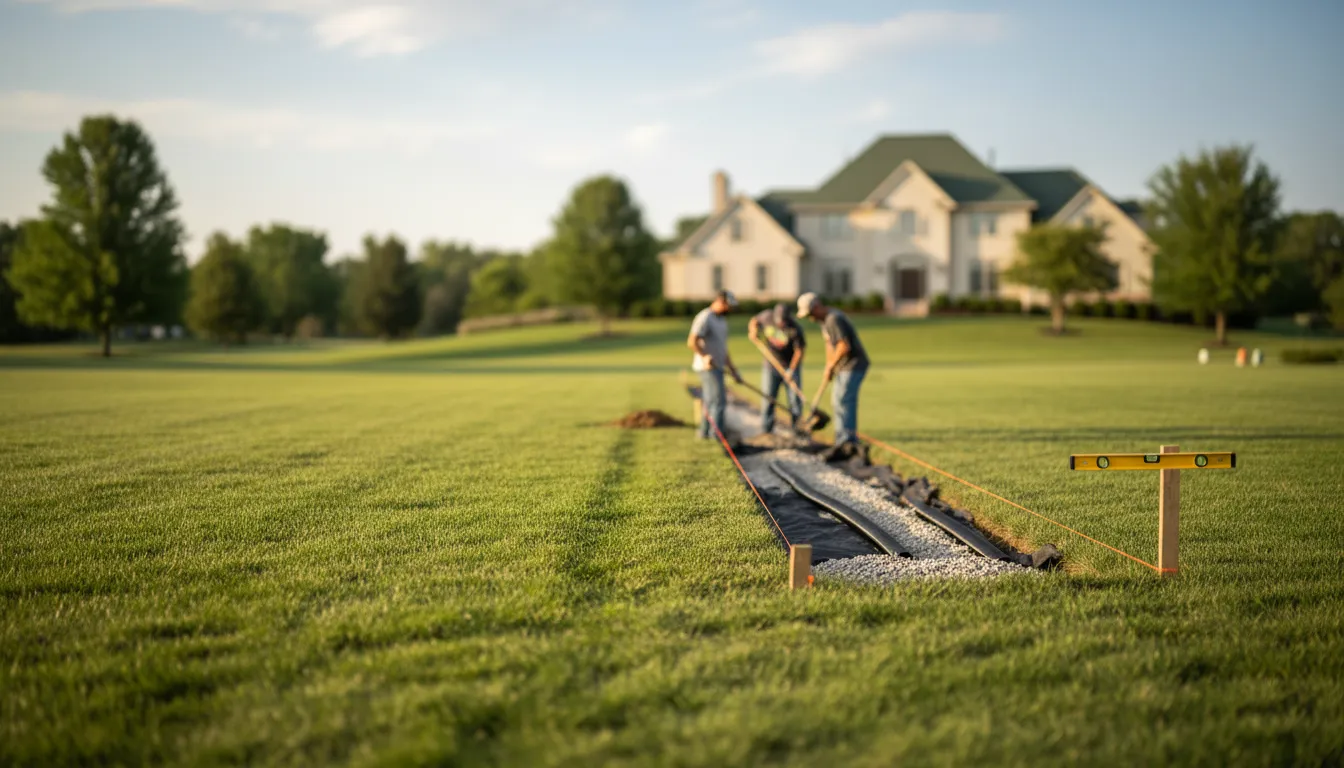
Find the Best Yard Drainage Contractors for Your Business
No obligation • Fast responses • Nationwide coverage

Why you can trust Landscape Atlas
Landscape Atlas is a leading United States resource for evaluating landscaping, lawn care, and outdoor service providers. Our team researches each category in depth, focusing on service quality, safety, and customer experience. Listings and rankings are based on independent criteria and user feedback, and companies cannot pay to influence our assessments or recommendations.
Search providers near you
Top Yard Drainage Contractors in Santa Clara, California Ranked
Proper yard drainage and land grading are essential for protecting your Santa Clara home from water damage, preventing soggy lawns, and ensuring your outdoor space is both functional and beautiful. Water management is a critical concern for local homeowners, especially given the region's unique soil composition and seasonal rainfall. This guide will help you understand the common solutions, costs, and local regulations for residential stormwater management, empowering you to find the right local expertise for your property's needs.
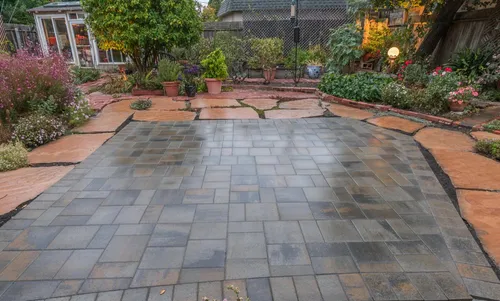
Ideal Landscape & Concrete
921 N Amphlett Blvd, San Mateo, CA 94401
Ideal Landscape & Concrete is a landscape and hardscape construction company based in San Jose, CA. Founded in 1981, they offer a range of services including fence installation, landscape lighting, yard drainage, sprinkler system installation and repair, landscaping, and hardscaping such as pavers and retaining walls. They also specialize in irrigation system installation and maintenance to support water conservation in the drought-prone Bay Area. Their capabilities include concrete and masonry construction, as well as erosion control and low-voltage lighting installation.
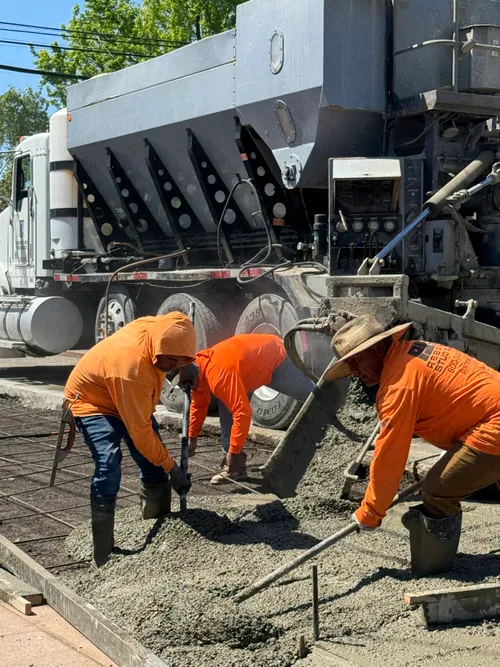
Lamata Concrete
San Francisco, CA
Lamata Concrete is a San Francisco, CA-based company with over 35 years of experience specializing in concrete foundation and flatwork solutions. They offer services for residential and small commercial projects, including driveways, patios, walkways, retaining walls, foundations, and drainage systems. Their expertise in local soil conditions supports durable and stable installations. Lamata Concrete also handles commercial work such as sidewalks, curbs, gutters, stairs, and ADA-compliant ramps.
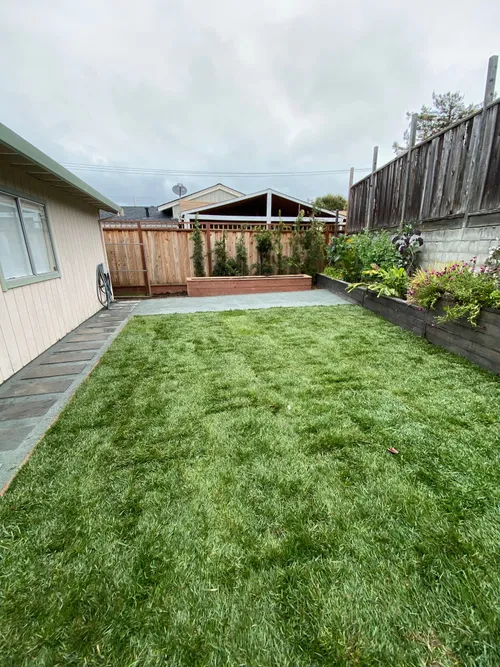
Greener Bay Landscaping Inc.
San Jose, CA
Greener Bay Landscaping Inc. is a family-owned landscaping contractor based in San Jose, CA, serving the Bay Area and Peninsula. They provide a wide range of services including landscape design, sod and synthetic lawn installation, irrigation system setup, fence and deck construction, hardscaping with pavers and retaining walls, yard drainage, and ongoing lawn care and maintenance. With over 15 years of experience, the company emphasizes quality craftsmanship and attention to detail, completing more than 1500 projects across Northern California. Their licensed and insured team works closely with clients to create customized outdoor spaces that combine beauty and function.
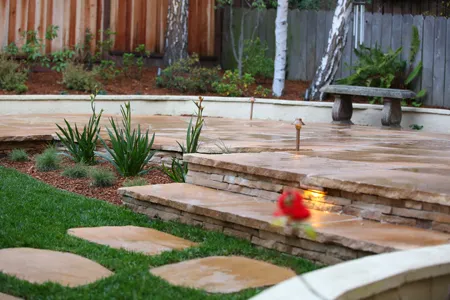
Jenn's Gardening
Fremont, CA
Jenn's Gardening is a full-service landscaping company based in Fremont, CA, serving the Peninsula area. Since 1993, owner Jennifer France and her team have provided a wide range of services including lawn mowing, fertilization, weed control, sod installation, irrigation system installation and repair, tree pruning and removal, hardscaping with pavers and retaining walls, and yard drainage solutions. They specialize in water-wise irrigation systems and use environmentally safe methods for disease and pest control to maintain healthy, attractive gardens. Jenn's Gardening combines decades of experience with personalized care to create functional and beautiful outdoor spaces.
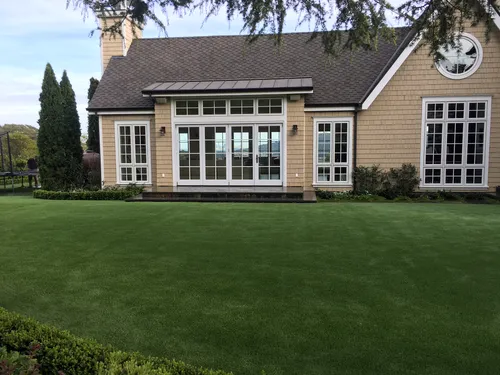
Onelawn
16120 Ashland Ave, San Lorenzo, CA 94580
Onelawn is a synthetic turf installation and landscape design company serving San Jose, CA, and the greater Bay Area. Since 2008, they have specialized in artificial grass installation for residential lawns, commercial properties, playgrounds, pet areas, putting greens, bocce courts, and rooftop landscaping. Their expertise includes using high-quality, US-made synthetic fibers and advanced installation techniques to create durable, low-maintenance lawns that conserve water and reduce environmental impact. Onelawn works closely with clients to design customized outdoor spaces that combine aesthetic appeal with practical benefits.
Understanding Santa Clara's Drainage Challenges
Effective residential water management begins with understanding local conditions. Santa Clara's climate features a distinct wet season, and the area's underlying clay-heavy soils present a specific challenge 1. These soils have slow permeability, meaning water does not soak in quickly, leading to surface pooling and runoff. Without a proper drainage plan, this excess water can seep into basements or crawl spaces, erode landscaping, create muddy patches, and even damage your home's foundation over time. Addressing these issues isn't just about fixing a wet spot; it's about implementing a system that works with the local environment to protect your property's value and integrity.
Common Residential Drainage Solutions
Professional contractors in Santa Clara utilize a combination of surface and subsurface techniques to control runoff. The right solution depends on your property's specific grading, the source of the water, and your landscaping goals.
Surface Grading and Swales
The first line of defense is often regrading or resloping your yard. This process involves moving soil to create a gentle slope (typically at least a 2% grade) away from your home's foundation, ensuring surface water flows to a safer discharge area. For directing water across larger areas, contractors may install drainage swales. These are shallow, vegetated ditches that slow down and channel surface runoff, often blending seamlessly into the landscape as a natural-looking solution 2.
Subsurface Drainage Systems
When surface water isn't the main issue, or when pooling occurs in the middle of a lawn, subsurface solutions are key.
- French Drains: This is one of the most common and effective subsurface drainage methods. A sloped trench is dug, filled with gravel, and contains a perforated pipe that collects and redirects groundwater away from problem areas 3.
- Underground Downspout Extensions: A fundamental and cost-effective measure involves connecting your gutter downspouts to solid, buried pipes that carry roof runoff far away from your foundation to a designated discharge point.
- Catch Basins: These are in-ground boxes with grates installed in low-lying areas of a yard, patio, or driveway. They collect surface water and connect to an underground pipe system, effectively removing standing water from paved surfaces 4.
Infiltration and Sustainable Solutions
Modern stormwater management also emphasizes slowing runoff and allowing it to soak into the ground.
- Dry Wells: An underground chamber filled with gravel or a pre-fabricated tank that collects stormwater from downspouts or drains and allows it to slowly percolate into the surrounding soil 5.
- Rain Gardens/Bioretention Areas: These are landscaped depressions planted with native, water-tolerant vegetation. They are designed to capture, filter, and absorb runoff from roofs and driveways, combining effective drainage with an attractive garden feature 6.
- Permeable Pavers: For hardscapes like driveways, patios, or walkways, permeable pavers allow water to pass through the joints and infiltrate the ground below, significantly reducing runoff from paved surfaces 7.
Find the perfect yard drainage contractors for your needs
Get personalized recommendations and expert advice
The Professional Drainage Project Process
A typical professional yard drainage installation in Santa Clara follows a structured process to ensure effectiveness and compliance.
- Site Assessment and Diagnosis: A qualified drainage contractor will inspect your property to identify the source of water intrusion, evaluate soil conditions, and determine the natural flow of water. They will locate the best points for water collection and a legal, effective discharge point.
- System Design and Permitting: The contractor develops a detailed plan for the drainage system. In Santa Clara County, a Drainage Permit is required if your project creates over 2,000 square feet of new impervious surface area (like a new large patio or driveway) or significantly alters existing drainage patterns 8. Your contractor can typically manage the permit application process, which is crucial for ensuring the work meets all local codes.
- Excavation and Installation: Trenches are dug for pipes and drains, catch basins or dry wells are set in place, and the entire system is assembled. This phase can involve significant temporary disruption to your existing landscaping.
- System Connection and Discharge: The drainage system must be connected to an approved discharge point. This could be a dry well, a swale leading to the street (in accordance with local rules), or, in some cases, a connection to the municipal storm sewer system-which requires specific city approval 9.
- Backfill and Restoration: Once the system is tested, trenches are backfilled, often with specific gravel and soil layers. The contractor will then restore the site with topsoil, sod, seed, or mulch to blend the work into your yard.
Cost Considerations for Drainage Work in Santa Clara
The investment for yard drainage and grading solutions varies widely based on the complexity of the problem, the size of your yard, the solutions chosen, and the soil conditions. In Santa Clara, residential projects often range from $2,000 to $7,000 on average 10. Below is a breakdown of typical costs for common components (including labor and materials):
| System Type | Typical Cost Range |
|---|---|
| French Drain | $10 - $50 per linear foot, or $1,000 - $10,000 total project cost |
| Yard Grading/Excavation | $1,400 - $6,000 total |
| Underground Downspout Extensions | $200 - $2,000 per downspout |
| Catch Basin (Plastic) | $200 - $500 each |
| Dry Well | $1,150 - $4,350 total 11 |
| Permits (Santa Clara County) | Approximately $400 to over $2,300, depending on project scope 12 |
It's important to get detailed, written estimates from local professionals who can assess your specific situation. Hiring a licensed and insured contractor familiar with Santa Clara County's regulations is the best way to ensure your drainage system is built correctly, functions as intended, and protects your home for years to come.
Frequently asked questions
Sources
Footnotes
-
sunnyvale series - California Soil Resource Lab - https://casoilresource.lawr.ucdavis.edu/sde/?series=Sunnyvale ↩
-
Control Heavy Runoff - Solving Drainage and Erosion Problems - https://www.fairfaxcounty.gov/soil-water-conservation/drainage-problem-control-runoff ↩
-
Subsurface Drainage System 101: A Guide for Homeowners - https://www.bluecollarscholars.net/subsurface-drainage-systems/ ↩
-
How Much Does it Cost to Install a Storm Drainage System? - https://drainagefirst.com/how-much-does-it-cost-to-install-a-storm-drainage-system/ ↩
-
Stormwater Best Management Practices - https://spcwater.org/topics/stormwater-management/stormwater-best-management-practices-2/ ↩
-
Sustainable Urban Design for Stormwater Management: Concepts and Reviews - https://link.springer.com/chapter/10.1007/978-981-97-4924-9_9 ↩
-
Cost of Permeable Paver Driveway: 7 Powerful 2025 Benefits - https://dubepropertymaintenance.com/cost-of-permeable-paver-driveway/ ↩
-
Apply for a Drainage Permit - https://plandev.santaclaracounty.gov/services/development-services/land-development-engineering/apply-drainage-permit ↩
-
Chapter 13.20 STORM DRAINS AND DISCHARGES - https://www.codepublishing.com/CA/SantaClara/html/SantaClara13/SantaClara1320.html ↩
-
How Much Does Yard Drainage Cost in 2025? Homeowner's ... - https://warelandscaping.com/how-much-does-yard-drainage-cost-in-2025 ↩
-
How Much Does It Cost to Install a Drainage System in Your ... - https://www.homeadvisor.com/cost/landscape/install-drainage/ ↩
-
Grading and drainage | County of Santa Clara - https://plandev.santaclaracounty.gov/services/development-services/land-development-engineering/grading-and-drainage ↩