Find the Best Yard Drainage Contractors for Your Business
No obligation • Fast responses • Nationwide coverage

Why you can trust Landscape Atlas
Landscape Atlas is a leading United States resource for evaluating landscaping, lawn care, and outdoor service providers. Our team researches each category in depth, focusing on service quality, safety, and customer experience. Listings and rankings are based on independent criteria and user feedback, and companies cannot pay to influence our assessments or recommendations.
Search providers near you
Top Yard Drainage Contractors in Visalia, California Ranked
Proper yard drainage and grading are essential for protecting your Visalia home from water damage, soil erosion, and foundation issues. Managing rainfall and irrigation runoff effectively prevents pooling water, protects your landscape investment, and contributes to local water quality. This guide will help you understand the common solutions for surface water management and stormwater control in the Central Valley, so you can find the right local expertise for your property.

Why Proper Drainage is Critical in Visalia
Visalia's climate, with its seasonal rains and reliance on irrigation, makes effective water management a year-round concern. Without proper grading and drainage systems, water can pool in low spots, saturate soil, seep into basements or crawl spaces, and even damage your home's foundation over time. Managing this runoff isn't just about protecting your property; it's also about being a good steward of local waterways, as urban runoff can carry pollutants into the Tulare County watershed. A well-designed drainage plan directs water away from structures and into areas where it can be safely absorbed or conveyed.
Core Solutions for Managing Water Runoff
There are several proven methods for controlling surface water and subsurface water on residential properties. The right approach often combines two or more of these techniques based on your yard's specific slope, soil type, and problem areas.
Regrading and Slope Correction
This is the foundational step for most drainage projects. Grading involves shaping the soil to create a gentle slope (typically a 1-2% grade) away from your home's foundation. This ensures that rainwater and irrigation runoff flow away from the structure, preventing pooling against walls. For many homes, correcting the slope of the soil is the most effective first line of defense against water intrusion.
Subsurface Drainage Systems
When surface grading isn't enough, or when dealing with soggy lawns and saturated subsoil, subsurface solutions are key.
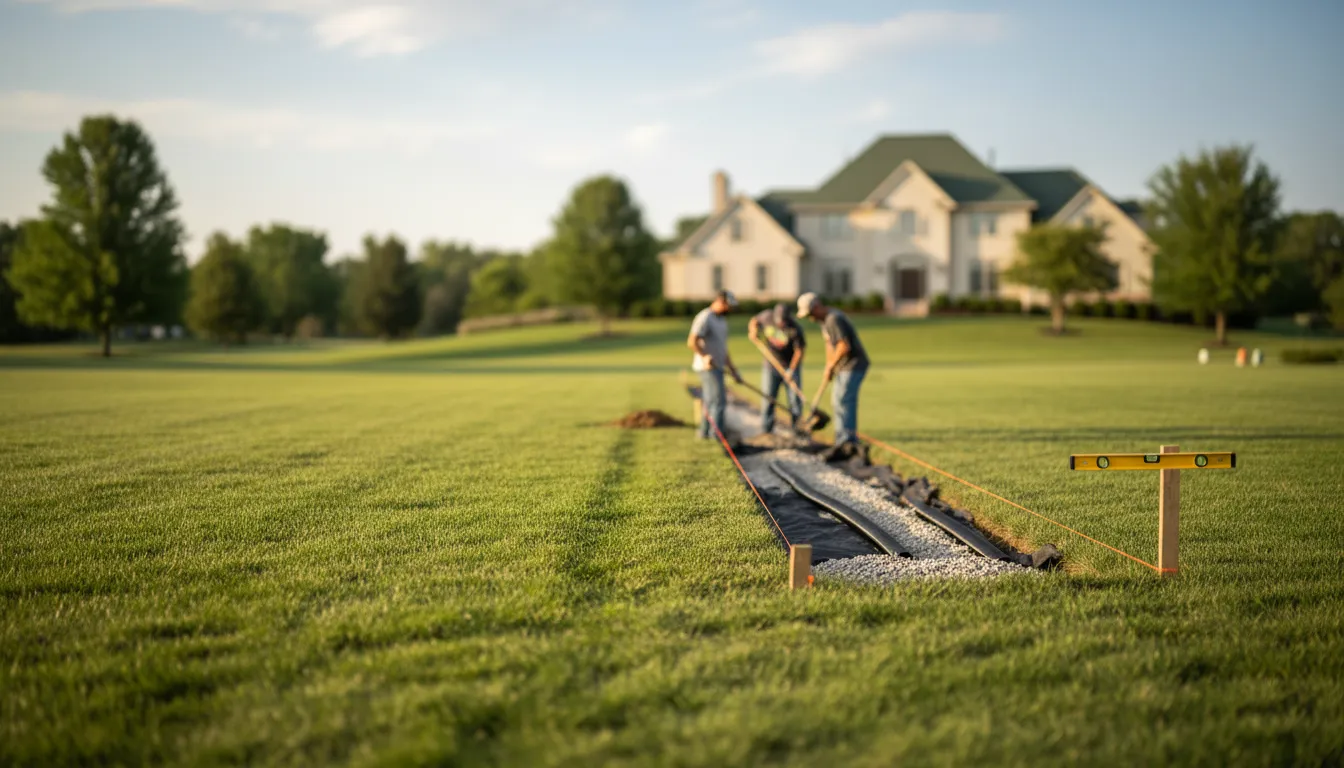
- French Drains: A trench filled with gravel and a perforated pipe that collects and redirects groundwater and surface water. They are excellent for relieving hydrostatic pressure around foundations and draining wet areas.
- Catch Basins: These are grated inlets installed in low points or at the end of downspouts to collect large volumes of surface water and channel it into an underground pipe system that carries it to a safe discharge point.
Surface Channeling and Infiltration
These solutions work with the landscape to manage water visibly and naturally.
- Swales: These are shallow, vegetated channels designed to move water slowly across your yard. They can be attractive landscape features that replace unsightly, eroding ditches 1.
- Rain Gardens: A landscaped depression planted with native, water-tolerant plants. It collects runoff from roofs or paved areas and allows it to slowly infiltrate the ground, filtering pollutants in the process.
- Dry Wells or Infiltration Trenches: Underground structures filled with gravel that collect water and allow it to percolate into the surrounding soil over time.
Downspout and Hardscape Management
Often, the problem starts at the roof. Redirecting downspouts away from the foundation with extensions or splash blocks is a simple, critical step. For paved areas, replacing solid concrete with permeable pavers or gravel creates a surface that allows water to soak through rather than run off.
Find the perfect yard drainage contractors for your needs
Get personalized recommendations and expert advice
The Process: From Assessment to Maintenance
A successful drainage correction project follows a logical sequence.
- Site Assessment: A professional will identify problem areas (like persistent puddles or damp foundation walls), evaluate soil composition, and determine the natural flow direction of water across your property.
- Solution Design: Based on the assessment, a plan is created. This may involve a combination of grading, drain placement, and landscape features. The design must account for where collected water will be safely discharged, such as a street gutter, storm drain, or dry well.
- Permitting: For significant regrading or connection to public storm systems, you may need to check with the City of Visalia's Public Works Department for any permit requirements2.
- Installation: This is the construction phase. It can involve excavation for regrading, trenching for pipe, installing drain components and gravel, preparing and planting rain gardens or swales, or installing permeable paving materials.
- Testing and Maintenance: Once installed, the system should be tested with water. Regular maintenance, like keeping drain grates clear of debris and ensuring downspouts are connected, is crucial for long-term performance.
Understanding Project Investment
The cost for drainage and grading work in Visalia varies widely based on the scale and solutions chosen. Simple DIY projects like adding downspout extensions or a rain barrel can start in the $50-$300 range3. Professional regrading or installing a vegetated swale might range from $300 to $1,000 or more, depending on the yard size4. More involved solutions like a French drain system can cost between $1,000 and $3,000+ for a 100-foot run, factoring in materials and labor5. Installing a rain garden typically involves costs for plants, soil amendments, and labor, ranging from $200 to $1,5006. For permeable paving, material and installation costs can range from $10 to $25 or more per square foot7.
Choosing the Right Approach for Your Home
Not every solution fits every yard. A property with heavy clay soil might require more subsurface drainage, while a sandy lot might benefit greatly from infiltration basins. A home with a large, flat lawn could be ideal for a rain garden, while a property with significant slope might need a series of swales and catch basins to control erosion. Consulting with a professional who understands local Visalia soil conditions and regulations is the best way to develop an effective, long-lasting plan to manage stormwater and protect your home.
Frequently asked questions
Sources
Footnotes
-
Attractive Ways to Manage Stormwater Runoff - https://piedmontmastergardeners.org/attractive-ways-to-manage-stormwater-runoff/ ↩
-
Prevent Water Pollution from Urban Runoff - City of Visalia - https://www.visalia.city/depts/public_works/urban_runoff_management/default.asp ↩
-
What You Can Do to Soak Up the Rain | US EPA - https://www.epa.gov/soakuptherain/what-you-can-do-soak-rain ↩
-
Swales, Drains, and Site Grading for Stormwater Control - https://basc.pnnl.gov/resource-guides/swales-drains-and-site-grading-stormwater-control ↩
-
Best Drainage Systems To Deal with Stormwater - This Old House - https://www.thisoldhouse.com/driveways/best-drainage-systems-to-deal-with-storm-water ↩
-
Rainscaping Your Yard to Protect Water Quality - https://www.aces.edu/blog/topics/fish-water/rainscaping-your-yard-to-protect-water-quality/ ↩
-
Homeowners' Guide to Landscaping for Water Runoff - https://www.lyngsogarden.com/community-resources/homeowners-guide-to-landscaping-for-water-runoff/ ↩