Find the Best Yard Drainage Contractors for Your Business
No obligation • Fast responses • Nationwide coverage

Why you can trust Landscape Atlas
Landscape Atlas is a leading United States resource for evaluating landscaping, lawn care, and outdoor service providers. Our team researches each category in depth, focusing on service quality, safety, and customer experience. Listings and rankings are based on independent criteria and user feedback, and companies cannot pay to influence our assessments or recommendations.
Search providers near you
Top Yard Drainage Contractors in Watsonville, California Ranked
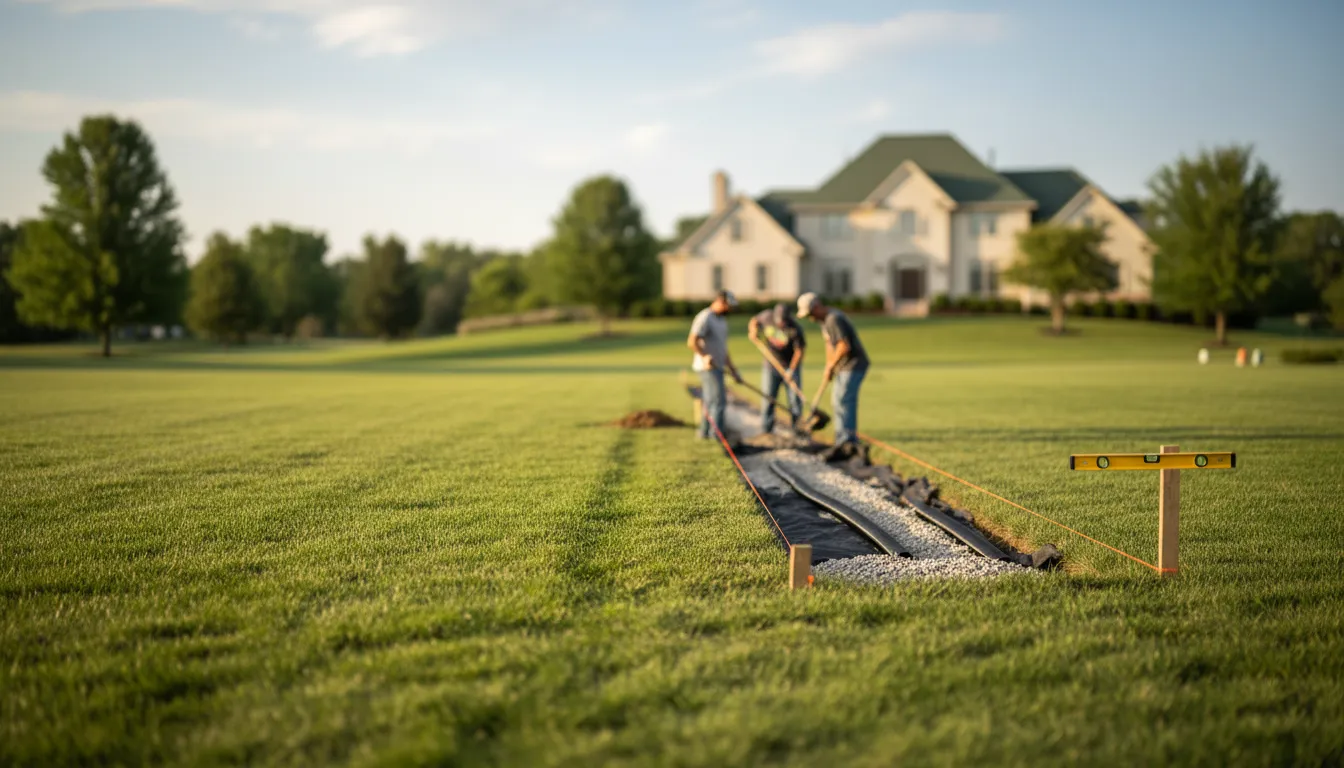
Managing stormwater is a critical part of homeownership in Watsonville. The coastal climate brings rainy winters that can lead to soggy lawns, foundation seepage, and erosion if water isn't properly directed. Effective yard drainage and grading involves shaping your land and implementing systems to control surface water, protecting your property's integrity and contributing to the health of local waterways that flow into Monterey Bay. This guide explains the core solutions for residential stormwater management and how you can connect with local specialists to assess your property and implement a lasting fix.
Greener Bay Landscaping Inc.
San Jose, CA
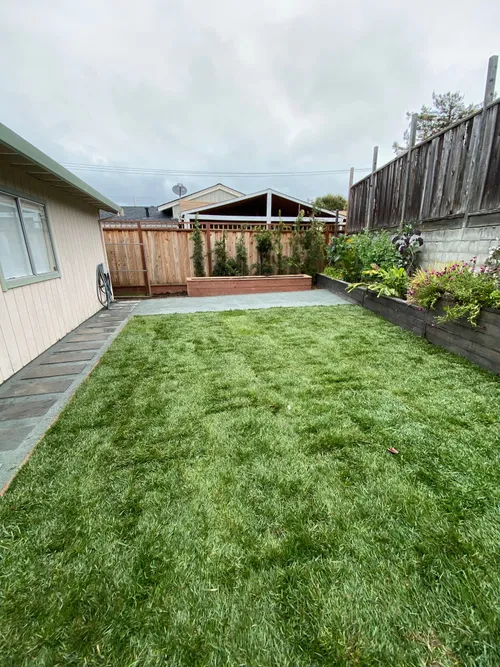
Greener Bay Landscaping Inc. is a family-owned landscaping contractor based in San Jose, CA, serving the Bay Area and Peninsula. They provide a wide range of services including landscape design, sod and synthetic lawn installation, irrigation system setup, fence and deck construction, hardscaping with pavers and retaining walls, yard drainage, and ongoing lawn care and maintenance. With over 15 years of experience, the company emphasizes quality craftsmanship and attention to detail, completing more than 1500 projects across Northern California. Their licensed and insured team works closely with clients to create customized outdoor spaces that combine beauty and function.
Westack Landscaping
221 San Jose Ave, San Jose, CA 95125
Westack Landscaping is a full-service landscaping and outdoor remodeling company based in San Jose, CA. They serve the Bay Area, including San Mateo and Redwood City, offering a wide range of services such as artificial turf installation, custom paver patios, landscape design, tree services, yard drainage, sprinkler systems, and outdoor lighting. Their team manages projects from design to completion, focusing on durable, eco-conscious solutions tailored to California's climate and water restrictions. Westack Landscaping is licensed, insured, and BBB-accredited, with over 100 completed projects and a strong local reputation.
Geoland Landscape Inc
2647 Sequoia Creek Dr, San Jose, CA 95121
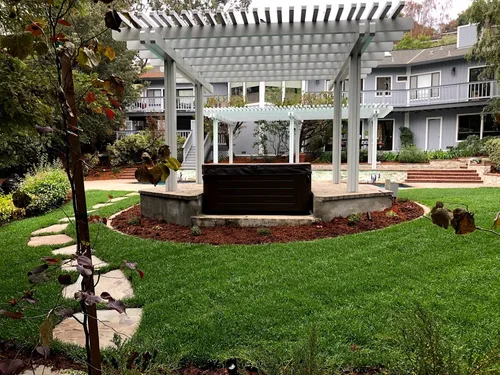
Geoland Landscape Inc is a family-owned landscaping company based in San Jose, CA, serving Northern California including cities like Sunnyvale, Mountain View, and Palo Alto. Established in 1996, they provide a wide range of residential and commercial landscaping services such as landscape design, fence installation, irrigation, yard drainage, and hardscaping. Their capabilities include custom outdoor fireplaces, retaining walls, stamped concrete, paver patios, and low voltage lighting among others. With over two decades of experience, Geoland Landscape Inc delivers comprehensive landscape construction and maintenance solutions.
Outertainment Construction Inc
1754 Hamilton Ave, San Jose, CA 95125
Outertainment Construction Inc is a licensed landscape design and construction company based in San Jose, CA. They specialize in creating custom outdoor living spaces, including backyard designs, outdoor kitchens, swimming pools, lighting, hardscaping, and irrigation systems. The company manages the entire design-build process in-house, offering 3D and virtual reality previews to help clients visualize their projects before construction begins. Since 2005, they have provided tailored backyard transformations that combine creativity, functionality, and sustainability, serving San Jose and nearby Bay Area cities.
Evergreen Construction & Landscaping
3015 Silverland Dr, San Jose, CA 95135
Evergreen Construction & Landscaping is a licensed, bonded, and insured company based in San Jose, CA, serving the South Bay area and Santa Clara County. Since 2007, they have specialized in residential construction and landscaping, offering services such as landscape design, outdoor lighting installation, yard drainage solutions, sprinkler system installation and repair, and hardscaping including pavers and retaining walls. Their capabilities include custom outdoor living spaces with features like pergolas, automated irrigation, French drains, decorative concrete, and fire pits. Evergreen Construction & Landscaping emphasizes transparent communication and adheres to strict safety standards throughout their projects.
Why Proper Drainage is Essential in Watsonville
Watsonville's commitment to protecting Monterey Bay means stormwater management isn't just a personal concern-it's a community-wide environmental priority. When rainwater runs off impervious surfaces like driveways and roofs, it can pick up pollutants before entering storm drains that often lead directly to local creeks and the bay 1. On your property, poor drainage can lead to a host of problems: saturated soil that kills grass and plants, water pooling against your home's foundation leading to cracks and moisture issues, and erosion that washes away valuable topsoil and creates unsightly gullies. Implementing proper site grading and water diversion strategies safeguards your investment and aligns with local water quality goals.
Core Strategies for Managing Stormwater Runoff
Tackling a wet yard or erosion issue starts with understanding the available methods. Professionals typically recommend a combination of techniques tailored to your property's specific slope, soil type, and problem areas.
Green Infrastructure: Soaking Up Water Naturally
This approach uses landscaping to mimic natural water absorption processes. It's often the most aesthetically pleasing and environmentally beneficial way to handle runoff.
- Rain Gardens: These are shallow, planted depressions designed to collect and absorb runoff from roofs, driveways, and other hard surfaces. They are filled with native, water-tolerant plants and amended soil that filters water and allows it to percolate into the ground slowly.
- Bioswales: These are vegetated, gently sloping channels designed to convey and treat stormwater runoff. They slow down water flow, filter out sediments, and encourage infiltration along their path 2.
- Strategic Planting: Simply planting trees, shrubs, and deep-rooted native grasses can significantly increase your soil's capacity to absorb water, reducing surface runoff and stabilizing soil.
Grading and Earthwork: Directing the Flow
This is the foundational work of reshaping the land itself to control where water goes. Proper yard grading is often the first step in solving chronic drainage problems.
- Re-sloping: The process of adjusting the grade or slope of your yard so that surface water flows away from your home's foundation and toward a suitable discharge point, like a street gutter or a dry well.
- Swales: These are broad, shallow ditches that can be grass-lined or rock-lined. They are used to channel water across a property, often directing it to a rain garden or other absorption area.
- Downspout Management: A simple but critical step. Redirecting downspouts away from the foundation and onto permeable surfaces, into rain barrels, or toward a swale can solve many basement moisture problems.
Infiltration and Capture Systems
These systems collect water and either store it for later use or help it seep into the groundwater table.
- Dry Wells: Underground structures, often filled with gravel or rubble, that collect stormwater from downspouts or area drains and allow it to infiltrate into the surrounding subsoil.
- Permeable Pavers: An alternative to solid concrete or asphalt. These pavers are laid on a base of gravel and sand, allowing rainwater to seep through the joints and into the ground below, reducing runoff from patios, walkways, and driveways 3.
- Rain Barrels and Cisterns: Capture and store rainwater from your roof for later use in irrigation. While they have a limited capacity, they are an excellent first step in reducing runoff and conserving water.
Find the perfect yard drainage contractors for your needs
Get personalized recommendations and expert advice
The Professional Process: From Assessment to Maintenance
Successfully solving a drainage issue follows a logical sequence. Local drainage contractors typically guide homeowners through these key stages:
- Site Assessment: A specialist will visit your property to identify problem areas, trace water flow paths, evaluate soil composition, and determine the root cause of the drainage issue. This often happens after a rain event.
- Design and Planning: Based on the assessment, a plan is created. This may include a sketch of recommended regrading, the location and size of a rain garden or swale, or the layout for a subsurface drain system. This is when solutions are tailored to your landscape and budget.
- Permitting: In Watsonville, significant soil grading and earth disturbance projects require an Erosion and Sediment Control Plan to be submitted to the city. A reputable contractor will handle this permitting process, ensuring the project complies with local stormwater regulations designed to protect our waterways.
- Implementation: This is the construction phase, which may involve excavation, installing French drains or catch basins, reshaping the land, planting, or laying permeable pavers.
- Maintenance: All drainage solutions require some upkeep. This includes cleaning debris from drains and gutters, pruning plants in a rain garden, checking downspout connections, and ensuring swales remain clear of obstructions 4.
Understanding Investment and Local Compliance
The cost of drainage solutions varies widely based on the scale and complexity of the problem. A simple DIY downspout extension and splash block might cost $100-$500 in materials 5. A professionally installed residential rain garden or bioswale typically ranges from $500 to $2,000, depending on size and plants 5 6. More intensive projects like regrading a yard or installing a dry well system can range from $2,000 to $10,000 or more, especially if significant excavation or permitting is involved 6 7. Replacing a section of driveway with permeable pavers is a larger investment, often starting around $1,500 and going up to $5,000+ for professional installation 6.
It's crucial to work with professionals familiar with Watsonville's specific rules. The City enforces post-construction stormwater management requirements, and any project involving over 50 cubic yards of earth movement (about 5 standard dump truck loads) will likely need a permit and an approved erosion control plan 8. This local context, focused on the coastal environment and protecting the Monterey Bay National Marine Sanctuary, makes expert guidance invaluable 9.
Frequently asked questions
Sources
Footnotes
-
Stormwater runoff pollution and how to reduce it - King County, Washington - https://kingcounty.gov/en/dept/dnrp/nature-recreation/environment-ecology-conservation/stormwater-surface-water-management/stormwater-services/stormwater-runoff ↩
-
Residential Stormwater Management: Best Practices & Remediation ... - https://www.valorenv.com/residential-stormwater-management-best-practices-remediation/ ↩
-
What You Can Do to Soak Up the Rain | US EPA - https://www.epa.gov/soakuptherain/what-you-can-do-soak-rain ↩
-
Control Heavy Runoff - Solving Drainage and Erosion Problems - https://www.fairfaxcounty.gov/soil-water-conservation/drainage-problem-control-runoff ↩
-
14 Ways To Manage Stormwater Runoff - Lawn Love - https://lawnlove.com/blog/manage-stormwater-runoff/ ↩ ↩2
-
12 Yard Drainage Solutions for your Landscape Design - https://cclandscapes.ca/yard-drainage-solutions/ ↩ ↩2 ↩3
-
Best Drainage Systems To Deal with Stormwater - This Old House - https://www.thisoldhouse.com/driveways/best-drainage-systems-to-deal-with-storm-water ↩
-
Stormwater Regulations - Watsonville.gov - https://www.watsonville.gov/741/Stormwater-Regulations ↩
-
Model Urban Runoff Program - California Water Boards - https://www.waterboards.ca.gov/water_issues/programs/stormwater/docs/murp_revised.pdf ↩