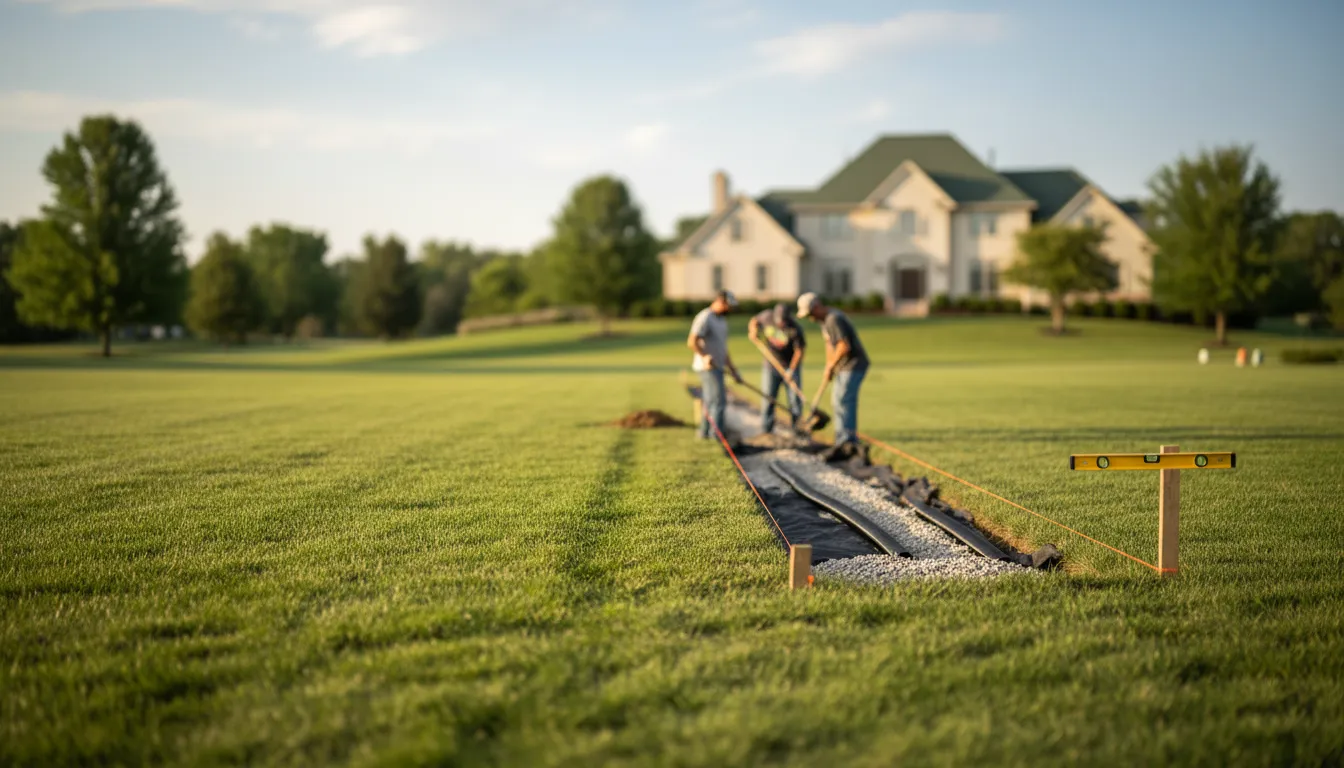
Find the Best Yard Drainage Contractors for Your Business
No obligation • Fast responses • Nationwide coverage

Why you can trust Landscape Atlas
Landscape Atlas is a leading United States resource for evaluating landscaping, lawn care, and outdoor service providers. Our team researches each category in depth, focusing on service quality, safety, and customer experience. Listings and rankings are based on independent criteria and user feedback, and companies cannot pay to influence our assessments or recommendations.
Search providers near you
Top Yard Drainage Contractors in Austin, Texas Ranked
Proper yard drainage and grading are essential for protecting your Austin home from water damage, soil erosion, and foundation issues. Managing stormwater runoff effectively prevents soggy lawns, protects your landscaping investment, and can even impact your utility bill. This guide will help you understand the common solutions, processes, and considerations for addressing water problems on your property, connecting you with the knowledge to find qualified local specialists.
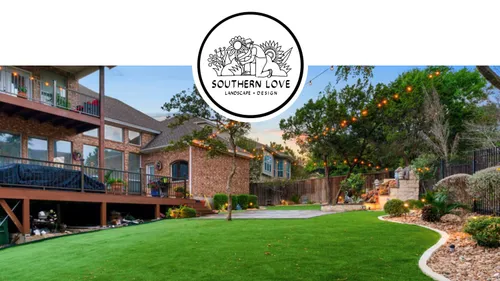
Southern Love Landscaping & Design
111 Congress Ave. Suite 400, Austin, TX 78701
Southern Love Landscaping & Design is a landscaping and outdoor living company based in Austin, TX. They offer a wide range of services including custom landscaping, fire pits, patios, sod installation, irrigation installation and repair, fence installation, retaining walls, and landscape lighting. The company serves Austin and nearby areas such as Cedar Park and Round Rock, providing tailored outdoor solutions that enhance both residential and commercial properties. Their expertise includes building durable retaining walls and designing functional irrigation systems to support healthy landscapes. Southern Love Landscaping & Design emphasizes personalized service and craftsmanship to meet client needs.
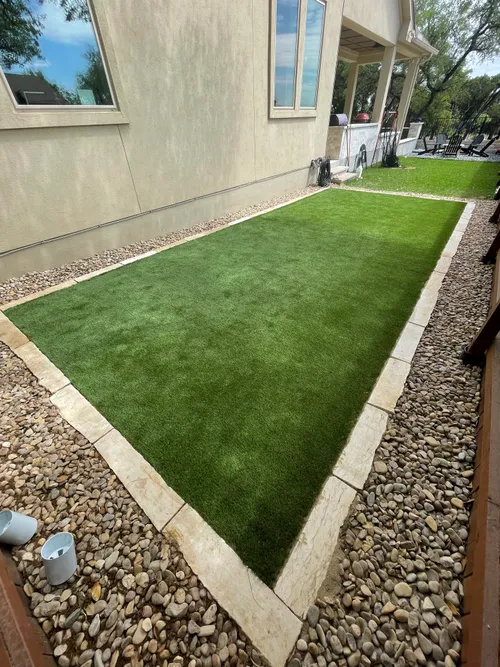
Lone Star Artificial Turf Austin
Austin, TX
Lone Star Artificial Turf Austin is a landscaping contractor based in Austin, TX, specializing in artificial turf installation, yard drainage, and grading services. They provide customized turf solutions designed for residential and commercial properties, including safe, hypoallergenic turf options suitable for kids and pets. Their installations feature perforated turf for effective drainage and site preparation to prevent water issues, ensuring a mud-free yard year-round. Lone Star offers a 10 to 15-year warranty on turf and installation, supporting customers with ongoing service and repairs, including correcting previous poor installations.

ABC Home & Commercial Services
9016 Old Manor Rd, Austin, TX 78724
ABC Home & Commercial Services offers a wide range of landscaping and outdoor improvement services in Austin, TX. Their team handles everything from lawn care, fertilization, and weed control to sod installation, fence building, landscape lighting, and tree services. They also specialize in hardscaping projects such as patios, retaining walls, and outdoor kitchens, and provide solutions for yard drainage and irrigation systems. ABC is a certified Belgard installer with decades of experience creating customized landscape designs that suit various styles and climates, including water-wise and drought-resistant options. They work closely with clients to develop and implement projects in stages if needed, and can perform work while homeowners are away for convenience.
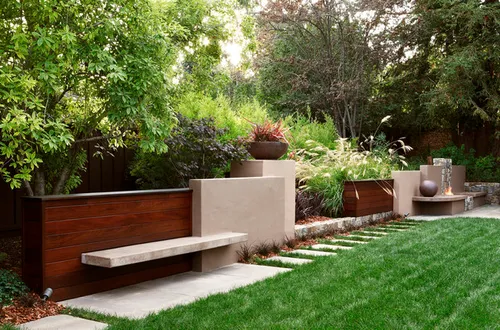
Thrive Landscape And Design LLC
316 W 12th St suite 400, Austin, TX 78701
Thrive Landscape And Design LLC is a landscaping and outdoor living company based in Austin, TX. They offer a wide range of services including landscape design, sod and artificial turf installation, fence installation, landscape lighting, tree services, yard drainage, sprinkler system installation and repair, as well as hardscaping such as pavers and retaining walls. The company is led by Travis Odom, who has over 20 years of experience creating functional and sustainable outdoor spaces in Louisiana and Central Texas. Thrive handles all installation work with in-house teams and focuses on quality and customer satisfaction throughout the project process.
Rocky Excavation
Colorado Springs, CO
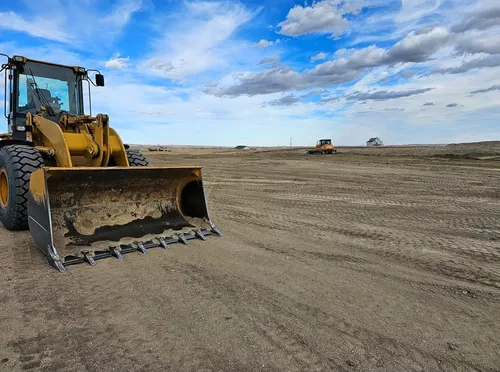
Rocky Excavation is a yard drainage and grading contractor based in Colorado Springs, CO. The company specializes in driveways, access roads, site preparation, building pads, drainage, erosion control, debris removal, demolition, and material supply. They use appropriately sized equipment for each job and focus on local projects rather than volume, with the owner personally overseeing each project from start to finish.
Understanding Austin's Drainage Challenges
Austin's weather presents unique challenges for homeowners. Intense thunderstorms can drop significant rainfall in a short period, while the region's clay-heavy soil is slow to absorb water. This combination often leads to pooling, runoff, and potential flooding in low-lying areas of a yard. Furthermore, the City of Austin implements a Drainage Charge on utility bills based on the amount of impervious cover (like roofs and driveways) on your property, which directly influences how much stormwater runs off your land1. Addressing drainage isn't just about a dry basement; it's about responsible property management and protecting your home's structural integrity.
Common Yard Drainage Solutions
Professional drainage contractors utilize a range of techniques to control water flow. The right solution depends on whether you're dealing with surface water, subsurface saturation, or a combination of both.
Grading and Regrading
This foundational process involves reshaping the soil's slope to direct surface water away from your home's foundation toward a suitable discharge point, such as a street gutter or a dry well. Proper grading is often the first and most critical step in solving drainage issues2. Costs for professional grading can vary widely, typically from $0.08 to $4.00 per square foot, depending on the scope of earthmoving and site accessibility3 4.
French Drain Systems
A French drain is a trench filled with gravel containing a perforated pipe. It's designed to intercept and redirect subsurface water that saturates the soil. These systems are excellent for relieving hydrostatic pressure against foundation walls and eliminating chronically soggy areas in a landscape. Installation of a French drain system for a typical backyard project often ranges from $2,000 to over $7,000, depending on length, depth, and complexity.
Catch Basins and Trench Drains
For collecting surface water from patios, driveways, or downspouts, catch basins (grated inlets) and trench drains are highly effective. They capture water at the source and channel it into an underground pipe system that carries it away5 6. A simple catch basin installation may start around $600, while more extensive trench drain systems can range from $2,500 to $8,0007.
Downspout Management and Extensions
Often an overlooked fix, simply redirecting roof runoff is a crucial and cost-effective measure. This can involve installing above-ground extensions or burying downspout pipes to channel water several feet away from the foundation. This is frequently the first recommendation from a drainage assessment.
Rain Gardens and Permeable Surfaces
These are "green" solutions that help manage water by absorbing it. A rain garden is a shallow, planted depression that collects runoff from roofs or driveways, allowing it to slowly infiltrate the soil while being filtered by native plants. Permeable pavers for patios or walkways also reduce impervious cover, letting rainwater seep through rather than run off.
Find the perfect yard drainage contractors for your needs
Get personalized recommendations and expert advice
The Professional Drainage Assessment and Installation Process
Solving a water problem effectively requires a systematic approach. Here is a typical process when working with a drainage specialist.
1. Initial Observation and Assessment The first step is to identify the problem during or immediately after a heavy rain. Walk your property to note where water originates (roof runoff, neighboring property, hillside) and where it accumulates (soggy spots, erosion, pooling against the foundation). This information is invaluable when you consult a professional.
2. Professional Evaluation Contact a local drainage contractor or a civil engineer for a site evaluation. Companies specializing in stormwater management can use tools like laser levels to map your property's exact slope and pinpoint the hydraulic issues. For complex problems involving property lines or significant regrading, a professional engineer may be needed to design the system.
3. Design and Planning The professional will develop a comprehensive strategy. This may integrate multiple solutions-for example, connecting downspouts to a buried pipe that feeds into a French drain, which then discharges into a rain garden8. This stage may also involve checking with the city for any necessary permits, especially if work involves altering water flow to public rights-of-way.
4. Installation This is the construction phase, which can include excavation, trenching for pipes, installing catch basins, backfilling with gravel, final grading, and replanting disturbed areas. For a regrading project, this means carefully moving and compacting soil to create the correct slope.
5. Testing and Final Adjustments A reputable contractor will test the system, often by running water through it or waiting for the next rain, to ensure water flows as designed and away from critical areas. They will make any necessary tweaks to the grading or components.
Factors Influencing Drainage Project Costs
The investment for fixing yard drainage varies significantly. Understanding what drives the cost can help you budget and evaluate quotes.
- System Complexity: A simple downspout extension project may cost a few hundred dollars, while a whole-property solution combining French drains, catch basins, and significant regrading can easily exceed $10,0009 10.
- Site Accessibility: Difficult-to-reach backyards or properties with steep slopes require more labor and specialized equipment, increasing costs.
- Materials Used: The type and diameter of pipe, quality of gravel, and kind of catch basin grates all affect material costs.
- Engineering and Permits: Projects that require formal engineered drawings or city permits will have additional upfront costs but are necessary for compliance and effectiveness on complex sites.
- Extent of Earthwork: As noted, grading costs are tied to the square footage and depth of soil that needs to be moved and shaped.
Maintaining Your Drainage System
Once installed, most subsurface drainage systems require minimal maintenance. However, periodic checks are wise:
- Inspect and clear catch basin grates of leaves and debris, especially before the rainy season.
- Ensure downspout extensions are intact and not clogged.
- Observe your yard during heavy rain to confirm water is moving as intended.
- Avoid planting deep-rooted shrubs or trees over buried drain lines.
Frequently asked questions
Sources
Footnotes
-
Drainage Charge - AustinTexas.gov - https://www.austintexas.gov/department/drainage-charge ↩
-
Grading Yard for Drainage: A Homeowner's Step-by-Step Guide - https://tamuradesigns.com/grading-yard-for-drainage/ ↩
-
How Much Does Land Grading Cost in 2026? - Lawn Love - https://lawnlove.com/blog/land-grading-cost/ ↩
-
How much does Landscape grading & resloping cost? - Yelp - https://www.yelp.com/costs/landscape_grading ↩
-
Top 8 Backyard Drainage Solutions for Your South Texas Property - Fischer Landscaping - https://fischerlandscapingusa.com/backyard-drainage-solutions/ ↩
-
What You Can Do to Soak Up the Rain | US EPA - https://www.epa.gov/soakuptherain/what-you-can-do-soak-rain ↩
-
What are Three Backyard Drainage Solutions - https://austindrainagespecialist.com/blog/backyard-drainage-solutions/ ↩
-
The Texas Manual on Rainwater Harvesting - https://www.twdb.texas.gov/publications/brochures/conservation/doc/RainwaterHarvestingManual_3rdedition.pdf ↩
-
Drainage and Stormwater Management Contractor, Austin, TX - https://www.watercache.com/drainage ↩
-
Residential Yard and Lawn Drainage Contractor for Austin, Texas - https://www.watercache.com/drainage/residential ↩