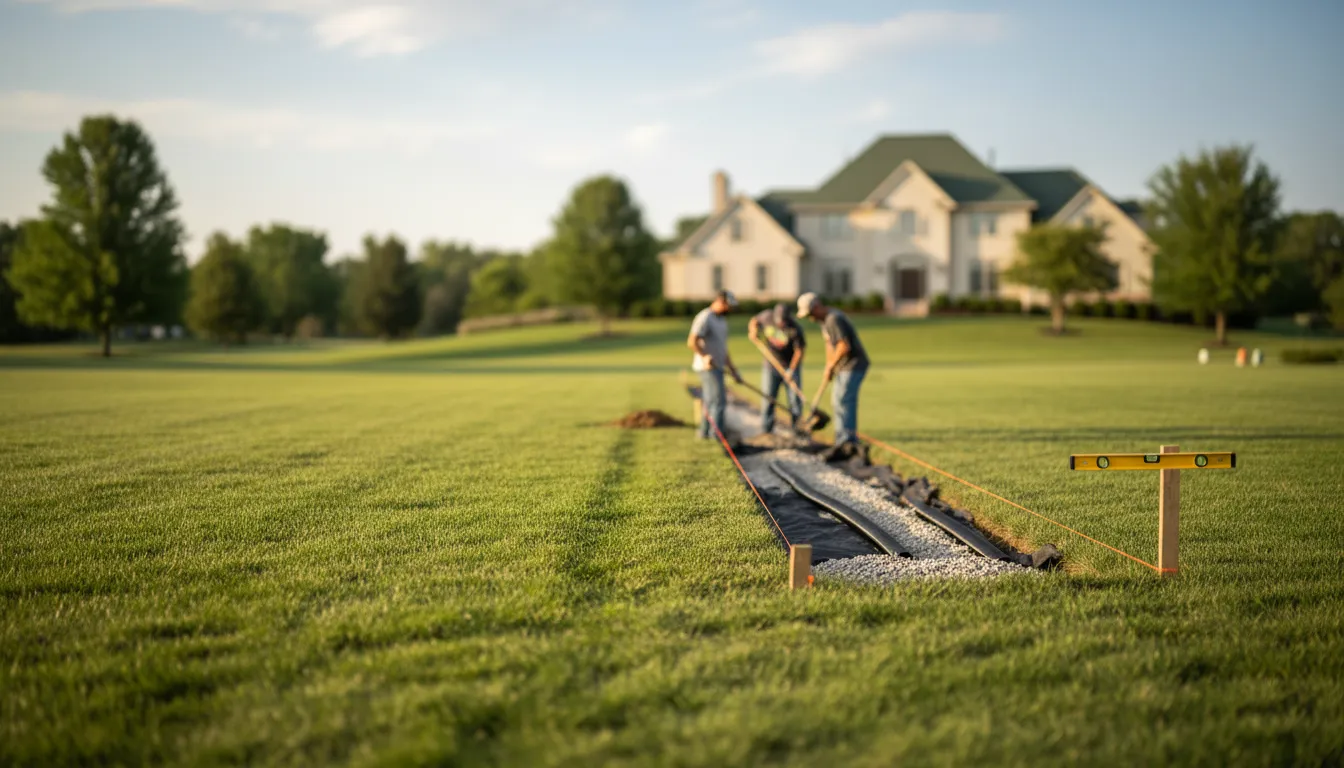
Find the Best Yard Drainage Contractors for Your Business
No obligation • Fast responses • Nationwide coverage

Why you can trust Landscape Atlas
Landscape Atlas is a leading United States resource for evaluating landscaping, lawn care, and outdoor service providers. Our team researches each category in depth, focusing on service quality, safety, and customer experience. Listings and rankings are based on independent criteria and user feedback, and companies cannot pay to influence our assessments or recommendations.
Search providers near you
Top Yard Drainage Contractors in North Richland Hills, Texas Ranked
Proper yard drainage and land grading are essential for protecting your North Richland Hills home from water damage. When rainwater pools around your foundation or flows toward your house, it can lead to costly structural issues, basement flooding, and landscape erosion. Effective water management involves reshaping the land's slope and installing systems to guide runoff safely away from your property. This guide will help you understand the common solutions, local considerations, and steps to take to find a qualified professional to assess and correct your drainage problems.

Casas Irrigation Drainage & More
110A Rose Ln Suite 204, Frisco, TX 75036
Casas Irrigation Drainage & More provides drainage, irrigation, and landscape lighting services in Dallas, TX. They offer sprinkler installation, repair, and maintenance, along with grading and yard drainage solutions tailored to local environmental needs. Their expertise includes fixing broken sprinkler heads, underground leaks, low water pressure, and uneven coverage to maintain healthy lawns and efficient water use. The company serves the Dallas area with a focus on customized outdoor lighting and irrigation systems designed to enhance both function and appearance.
Magnolia Turf Co. Dallas
3200 Garden Brook Dr, Farmers Branch, TX 75234
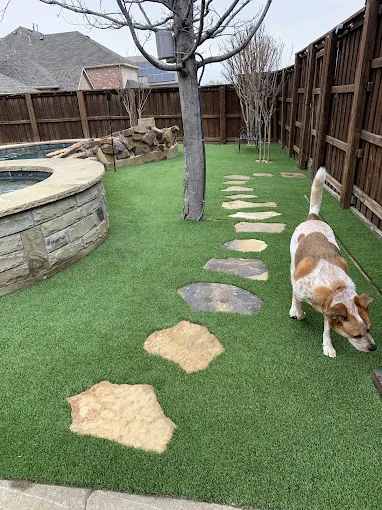
Magnolia Turf Co. Dallas provides artificial grass installation and yard drainage services in Dallas, TX. They specialize in installing premium artificial turf designed to withstand the Texas heat and offer durable, low-maintenance lawn solutions. Their projects often include grading and drainage improvements to enhance yard functionality and safety. With over 10 years of experience and more than 10,000 installations, Magnolia Turf Co. Dallas serves both residential and commercial clients, delivering turf that maintains color and resilience under intense sunlight.
Bird's Landscape and Irrigation LLC
Fort Worth, TX
Bird's Landscape and Irrigation LLC is based in Fort Worth, TX, providing a range of landscaping and irrigation services. They specialize in irrigation and drainage system design and installation, including gravity propelled and sump pump powered water management. The company also offers sod installation, landscape lighting, hardscaping, and sprinkler system services for both residential and commercial properties. With over 24 years of experience, Bird's Landscape and Irrigation delivers expert solutions focused on improving yard appearance and home curb appeal.
Landscape Legends & Holiday Lighting
Fort Worth, TX
Landscape Legends & Holiday Lighting is a landscaping and lawn care company based in Fort Worth, TX. They provide a wide range of services including lawn mowing, weed control, fertilization, shrub and tree trimming, landscape lighting installation, hardscaping, irrigation system installation and repair, and seasonal clean-ups. The company is known for personalized service and eco-friendly practices, tailoring projects to the unique needs of each client. They have been serving the area for over five years and also offer holiday lighting installation.
American Sprinkler Repair
250 N Mill St STE 4, Lewisville, TX 75057
American Sprinkler Repair is a family-owned company serving Dallas, TX, and the surrounding North Texas area since 1954. They specialize exclusively in sprinkler system repair, addressing issues such as broken valves, sprinkler heads, controller malfunctions, pipe leaks, backflow preventer problems, and water pressure concerns. Their licensed technicians bring extensive experience and carry parts for major irrigation brands to complete most repairs on the first visit. The company offers emergency sprinkler repair services for urgent situations that require immediate attention.
Why Proper Drainage is Critical in North Richland Hills
The soil composition and weather patterns in the Dallas-Fort Worth metroplex, including North Richland Hills, make effective water management a priority for homeowners. Heavy rains can quickly overwhelm flat or improperly sloped yards, leading to standing water that damages grass, attracts pests, and compromises your home's structural integrity. The primary goal of any drainage or grading project is to protect your foundation by ensuring water flows away from it, not toward it. A well-designed system not only safeguards your investment but also enhances the usability and health of your outdoor space.
Core Principles of Effective Yard Grading
Grading is the process of reshaping the land's contour to control surface water flow. It is the foundational step in any drainage plan. The standard rule is to create a slope that falls away from your home's foundation at a minimum grade of 3% (a drop of about 3 inches for every 8 feet) for at least the first 10 feet 1. This simple yet crucial measure directs the majority of rainwater away from your basement or crawlspace.
Beyond the immediate foundation, the grading of your entire yard should encourage water to flow toward a safe discharge point, such as a street gutter, storm drain, or a dry well on your property. Professionals often use techniques like regrading to fill in low spots where water collects and create gentle swales (broad, shallow channels) to guide runoff naturally. Proper land grading is often the most cost-effective long-term solution to persistent puddling and soggy lawns.
Common Drainage Solutions for North Richland Hills Homes
When grading alone isn't sufficient, specific drainage systems are installed to manage water. The right solution depends on your yard's specific issues, whether it's surface water, subsurface saturation, or water from downspouts.
French Drains
A French drain is a gravel-filled trench containing a perforated pipe. It's designed to intercept and redirect groundwater or surface water that has seeped into the soil. They are ideal for solving problems in chronically soggy areas, along property lines, or at the base of slopes. Installation involves digging a trench with a slight slope, laying the pipe, and filling it with gravel. Costs typically range from $10 to $50 per linear foot, depending on depth and materials.
Swales and Dry Creek Beds
Swales are shallow, vegetated ditches that blend into the landscape to channel runoff. A dry creek bed is a more decorative version, using rocks and stones to create a natural-looking streambed that only carries water during rain. These are excellent, low-impact solutions for managing surface flow across a yard, especially in areas with gentle slopes 2. They can be both functional and attractive landscape features.
Catch Basins and Trench Drains
Catch basins (or drain inlets) are boxes set into the ground with a grate on top. They collect large volumes of surface water from driveways, patios, or low spots and connect to an underground pipe that carries the water away. Trench drains are long, narrow grates that run across a surface, like a driveway entrance, to intercept sheet flow. These are crucial for hardscape areas where water cannot permeate 3.
Downspout and Gutter Management
Your roof sheds a tremendous amount of water. Simply discharging it from a downspout directly next to the foundation defeats the purpose of other drainage work. Solutions include adding long downspout extensions, burying downspout lines that connect to a drainage pipe, or using splash blocks to direct water away. This is often the first and most impactful correction a homeowner can make.
Permeable Surfaces
Reducing runoff at the source is another strategy. Using permeable pavers for patios or walkways, or opting for gravel in certain areas, allows rainwater to soak into the ground directly below rather than becoming surface runoff that needs to be managed elsewhere 4.
Find the perfect yard drainage contractors for your needs
Get personalized recommendations and expert advice
The Professional Drainage Project Process
Understanding the steps a professional will take can help you plan and communicate effectively.
- Site Assessment & Diagnosis: A specialist will inspect your property during or after a rain to identify the source of water (roof runoff, yard slope, neighbor's property), its flow path, and where it pools. They will also check your soil type and look for any existing drainage structures 5.
- System Design & Planning: Based on the assessment, a plan is created. This includes determining the necessary slope for grading, mapping the layout for any pipes or drains, and, most importantly, identifying a legal and effective discharge point for the collected water. This stage must consider City of North Richland Hills regulations.
- Preparation & Excavation: The work area is marked, and any necessary excavation begins. This could involve digging trenches for French drains, creating the shape for a swale, or removing soil for regrading.
- Installation: This is the construction phase: laying perforated pipe in trenches, setting catch basins, connecting downspouts, and reshaping the earth to the precise grade. Materials like gravel, filter fabric, and concrete are used as needed 6.
- Finishing & Restoration: Pipes are covered with gravel and soil, trenches are filled, and the surface is restored with sod, seed, or rock. The goal is to make the system as invisible as possible while ensuring it functions.
- Testing & Verification: A good contractor will test the system, often by running water from a hose through it, to verify proper flow and function before considering the job complete.
Understanding Costs and Investment
The cost of drainage and grading work in North Richland Hills varies widely based on the yard's size, the problem's complexity, and the solutions chosen. Here's a general breakdown based on typical project scales:
- Basic Grading/Regrading: Reshaping the soil in a specific area can cost between $500 and $2,000+, heavily dependent on the amount of soil to be moved and labor.
- French Drain Installation: A typical residential French drain project can range from $1,000 to $4,000, or $10 to $50 per linear foot.
- Catch Basins: The basin unit itself ranges from $200 for a basic plastic model to $5,000 or more for a large, heavy-duty concrete installation, not including labor and piping.
- Complete Yard Drainage System: For a whole-property solution combining grading, multiple drains, and basins, homeowners can expect investments from $800 for a small, simple fix to $12,000 or more for large, complex properties with significant challenges 7.
Important Local Regulations in North Richland Hills
The City of North Richland Hills has ordinances in place to manage stormwater. It is illegal to concentrate runoff or block a neighbor's natural drainage 8. This means your drainage plan cannot simply pipe all your water onto your neighbor's lot or into the street in a way that causes erosion or flooding. Discharge must be planned responsibly, often into a dedicated storm sewer inlet, a dry well on your own property, or a drainage easement. For complex issues, consulting with a civil engineer or a drainage specialist familiar with local codes is highly recommended to ensure your system is both effective and compliant 8.
Maintaining Your Drainage System
Once installed, most subsurface drainage systems require minimal maintenance. However, it's wise to periodically check grate-covered basins to ensure they are clear of leaves and debris. Inspect the outlets of any pipes after heavy rains to confirm water is flowing freely. For surface solutions like swales or dry creek beds, keep them clear of excessive mulch or plant overgrowth that could impede water flow.
Frequently asked questions
Sources
Footnotes
-
Yard Grading 101: Everything you need to know - This Old House - https://www.thisoldhouse.com/lawns/yard-grading ↩
-
Sloped Yard Drainage: 12 Best DIY Solutions for 2024 - https://salcorplandscaping.com/sloped-yard-drainage/ ↩
-
Grading & Drainage Basics for Residential Landscaping in North ... - https://www.honeycutt-landscaping-inc.com/grading-and-drainage-in-residential-yard-design/ ↩
-
12 Residential Backyard Drainage Solutions - Protect Your Yard - https://wilsonslawncare.com/12-residential-backyard-drainage-solutions/2024/ ↩
-
City of North Richland Hills, TX Public Works Design Manual - https://ecode360.com/46068975 ↩
-
Yard Drainage | MainLine Irrigation | North Richland Hills, Texas - https://www.mainlineirrigationdfw.com/yard-drainage ↩
-
Drainage Solutions - North Richland Hills, Texas - Lee Sprinkler - https://leesprinklerdrainage.com/drainage-solutions-in-north-richland-hills/ ↩
-
Storm Water Drainage | North Richland Hills, TX - Official Website - https://www.nrhtx.com/628/Storm-Water-Drainage ↩ ↩2